Easy Travel in Japan
Nikko
A UNESCO shrine complex in the mountains north of Tokyo, paired with the lakes and waterfalls of Nikko National Park.
Nikko is a city in Tochigi Prefecture, roughly 140 km north of Tokyo and about two hours away by train. Its religious history began in 766, when the monk Shodo Shonin founded a temple here, later reaching the summit of sacred Mount Nantai in 782 and founding what became Futarasan Shrine. Nikko’s fame today rests on Toshogu, the elaborate mausoleum shrine built for Tokugawa Ieyasu, founder of the shogunate that ruled Japan for over 250 years; the complex was completed in 1617 and enlarged by his grandson in the 1630s. Together with Futarasan and Rinno-ji temple, it forms the “Shrines and Temples of Nikko,” inscribed as a UNESCO World Heritage Site in 1999 — and a long-standing Japanese saying holds that you shouldn’t say “splendid” until you’ve seen Nikko.
Highlights & things to do
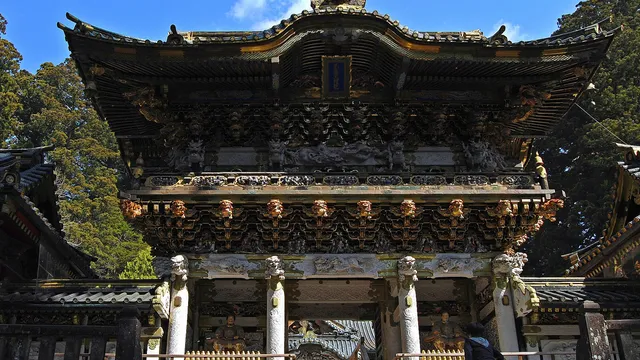
Toshogu Shrine spreads across more than a dozen buildings in a forest setting, decorated with wood carvings and gold leaf far more lavish than most Shinto shrines. Its Yomeimon Gate carries around 500 carvings of children, sages, and mythical creatures; the Sacred Stable bears the original carving of the “see no evil, hear no evil, speak no evil” three wise monkeys; and a small, celebrated sleeping cat carving sits above a doorway on the Sakashitamon Gate. Because the Meiji-era separation of Shinto and Buddhism was never fully carried out here, Toshogu and the neighboring Rinno-ji Temple — whose Sanbutsudo hall, the largest wooden structure in eastern Japan, houses three seven-meter gilded Buddhist statues — still sit side by side.
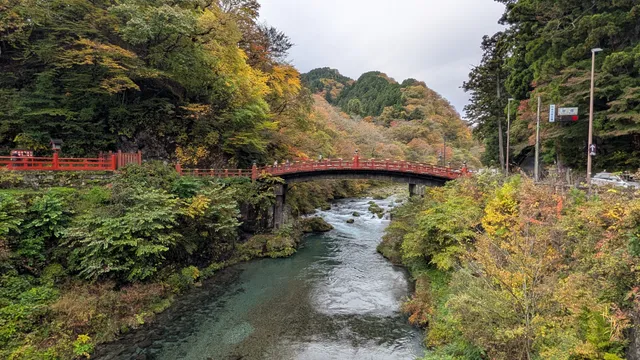
Futarasan Shrine, founded in 782, predates Toshogu by centuries and its formally designated precincts extend to the peaks of Mount Nantai and Mount Nyoho. The vermilion Shinkyo Sacred Bridge, marking the traditional entrance to Nikko’s sacred precinct, is ranked among Japan’s three finest bridges.
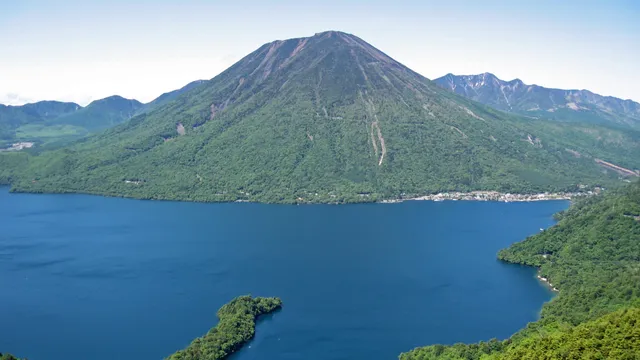
Beyond the shrine complex, the “Okunikko” area up the winding Irohazaka road holds Kegon Falls, a roughly 97-meter single-drop waterfall regarded as one of Japan’s three most famous, viewable from a free upper platform or a paid elevator down to a closer lower deck. Lake Chuzenji, formed around 20,000 years ago when a Mount Nantai eruption dammed the river, sits at over 1,200m elevation and was a favored retreat for foreign embassies in the Meiji era. Nearby, the Senjogahara Marshland — a Ramsar-listed wetland home to over 350 plant species — has a boardwalk trail running several kilometers between Yumoto Onsen and the lake.
Food & local cuisine
Yuba (tofu skin) is Nikko’s signature specialty, a tradition rooted in the area’s many Buddhist temples, which needed protein-rich, meat-free food for monks, and in the purity of Nikko’s mountain water. Nikko-style yuba is folded in half as it’s lifted from the soy milk, making it noticeably thicker than the Kyoto style. It’s served as sashimi-style slices, in simmered or fried dishes, and as a soba topping — Age Yuba Manju, a deep-fried sweet bun made with yuba-enriched dough, is a well-known street snack.
Culture & traditions
Nikko’s central story is the veneration of Tokugawa Ieyasu as a deity, enshrined here a year after his death. Toshogu holds two major annual festivals featuring a procession of roughly 1,200 participants in Edo-period armor and costume escorting three portable shrines: the Spring Grand Festival on May 17–18, which includes a yabusame mounted-archery demonstration, and a smaller Autumn Grand Festival on October 16–17.
Nature & scenery
Nikko National Park, one of Japan’s earliest national parks, spans the Nasu volcanic zone across three prefectures. Its wide elevation range — from around 200m in the city up to 2,000m in the mountains — gives it a long, staggered autumn foliage season, and makes the Okunikko area’s lakes, waterfalls, and marshland noticeably cooler than Tokyo in summer.
Seasonal travel
Autumn is Nikko’s signature season: color typically appears first in the higher Okunikko area in early-to-mid October, then moves down to Lake Chuzenji by late October, and finally reaches central Nikko around early-to-mid November. Summer draws visitors to Okunikko’s higher elevations for hiking, birdwatching, and cooler air. Winter brings snow and skiing around Lake Chuzenji, with Kegon Falls partially freezing in cold years. Spring offers cherry blossoms around the lake with far fewer crowds than autumn.
Recommended experiences
Walk the UNESCO shrine and temple precinct — Toshogu, Rinno-ji, Futarasan, and Shinkyo Bridge — reachable on foot or by loop bus from Nikko Station. Ride the elevator down to Kegon Falls’ lower observation platform. Hike the Senjogahara boardwalk between Yumoto Onsen and Lake Chuzenji. Take the winding Irohazaka road up into Okunikko, especially striking during foliage season.
Getting there & practical info
From Tokyo, Tobu Railway’s limited express trains run directly from Asakusa to Tobu-Nikko Station in about 1 hour 50 minutes. An alternative route runs via the Tohoku Shinkansen to Utsunomiya, then the local JR Nikko Line. The historic shrine complex works well as a day trip, but seeing Okunikko’s lakes, falls, and marshland as well generally calls for an overnight stay.
Who this suits
A strong match for history and architecture enthusiasts, autumn foliage travelers, and hikers who want mountain scenery paired with one of Japan’s most important religious sites.
A closer look at Nikko
10 Best Things to Do in Nikko
A quick, friendly rundown of Nikko's biggest highlights — from the gold-leafed Toshogu Shrine to the elevator ride down to Kegon Falls — a good starting point for a first visit to this mountain shrine town.
The Perfect 2-Day Nikko Itinerary
A well-paced two days through Nikko: the UNESCO shrine complex on day one, then a waterfall, a volcanic lake, and a marshland boardwalk up in Okunikko on day two — everything you need for a proper overnight trip from Tokyo, not just a rushed day out.
The Ultimate Nikko Travel Guide
A UNESCO shrine complex in the mountains north of Tokyo, paired with a waterfall, a volcanic lake, and a marshland boardwalk — a friendly starting point for planning a trip built around gold leaf, forest, and a very long flight of stairs.