Easy Travel in Japan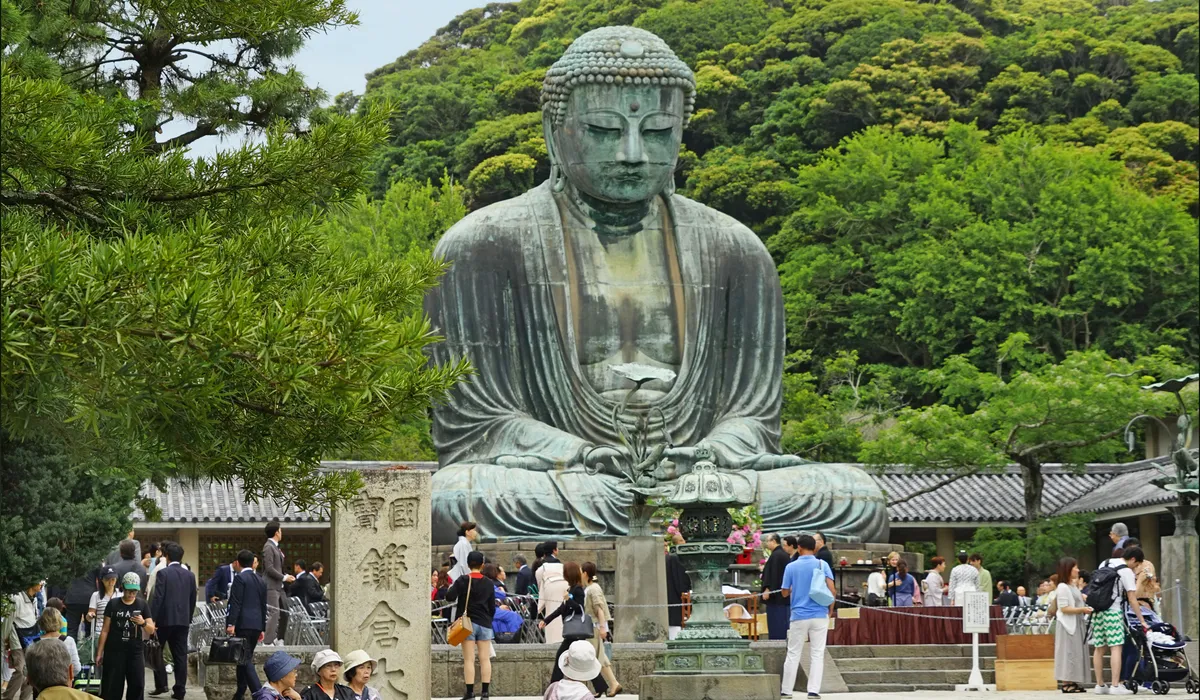
Kamakura
A coastal temple town near Tokyo, sometimes called "the Kyoto of eastern Japan."
Kamakura is a coastal city in Kanagawa Prefecture, roughly 50 km southwest of Tokyo, naturally sheltered by hills on three sides and open to Sagami Bay on the fourth. From 1185, Minamoto no Yoritomo made it the base of Japan’s first military government, the Kamakura shogunate, beginning a “dual government” model — emperor in Kyoto, shogun in Kamakura — that shaped Japanese politics for centuries. That era left the city with an unusually dense concentration of temples and shrines, which is why it’s often described as “the Kyoto of eastern Japan.” Today it’s one of the most popular single-day trips from Tokyo, reachable in under an hour by train.
Highlights & things to do
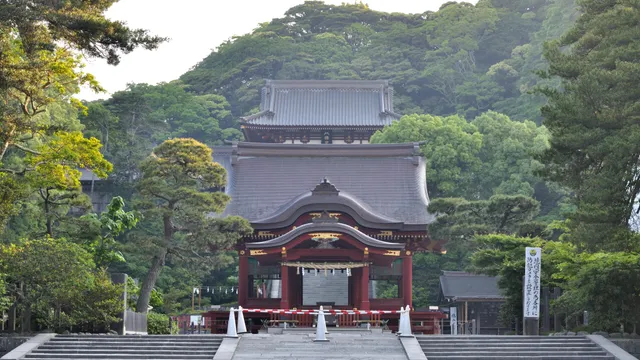
The Great Buddha at Kotoku-in — a seated bronze Amida Buddha roughly 11.3 meters tall, dated to 1252 and now a National Treasure — is Kamakura’s best-known sight; the hall that once sheltered it was destroyed by a storm and later an earthquake, so the statue has stood in the open air since the 15th century. Tsurugaoka Hachimangu, the city’s most important Shinto shrine, was relocated to its current site in 1180 by Yoritomo himself and became the spiritual center of his shogunate.
Hasedera houses an 11-headed wooden Kannon statue over 9 meters tall, said to be the tallest wooden statue in Japan, and its hillside grounds look out over Yuigahama beach and the coast. Kencho-ji, founded in 1253, is the oldest Zen training monastery in Japan and ranks first among the “Kamakura Gozan” — the five great Zen temples that still define the city’s religious landscape; it offers English-language zazen meditation sessions on weekend afternoons. Hokokuji, known as the “bamboo temple,” has a grove of around 2,000 bamboo stalks leading to a tea house where visitors can drink matcha among the trees.
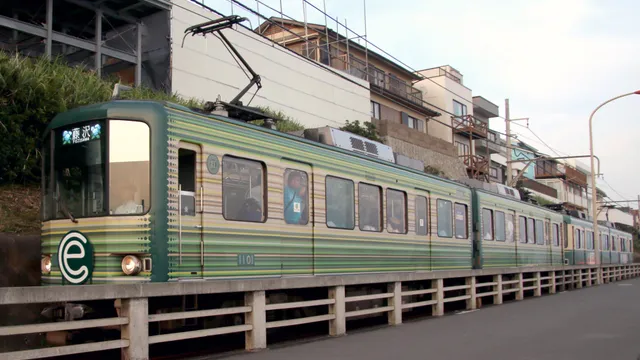
The Enoden, a nostalgic single-track railway opened in 1902 between Kamakura and Fujisawa, is as much an attraction as a way to get around, running along the coast and, in places, directly through neighborhood streets. For a walk rather than a ride, the Daibutsu Hiking Course and Ten-en Hiking Course link several temples through the wooded hills ringing the city, the latter offering panoramic views over Kamakura and Sagami Bay. Back at street level, Komachi-dori, a pedestrian lane running from the station toward Tsurugaoka Hachimangu, is lined with around 250 small restaurants and shops.
Food & local cuisine
Shirasu (whitebait), caught in Sagami Bay, is the signature local specialty, served raw over rice as shirasu-don, boiled, or as tempura; it’s a seasonal catch, generally available outside the winter breeding closure. Kamakura’s Zen temples also have a long tradition of shojin ryori, meat-free Buddhist temple cuisine — Kencho-ji in particular is credited with helping spread it, and is said to be the origin of kenchin-jiru, a vegan soup of tofu and root vegetables whose name plays on the temple’s own.
Culture & traditions
Kamakura’s Zen Buddhist heritage runs deep, formalized in the Kamakura Gozan ranking of its five great Zen temples. The Kamakura Matsuri, a week-long spring festival centered on Tsurugaoka Hachimangu from the second Sunday of April, culminates in yabusame — mounted archery performed in Kamakura-period costume, a tradition said to trace back to Yoritomo himself. Kamakura-bori, a carved and lacquered woodwork craft with roughly 700–800 years of history, developed here alongside the arrival of Zen Buddhism and was originally used for temple incense boxes before becoming popular for tea-ceremony utensils.
Nature & scenery
Yuigahama Beach, a sandy stretch about 900 meters long and a 15-minute walk from the station, is calm enough for swimming during its official July–August season and popular for surfing outside it. The wooded ridge followed by the Ten-en Hiking Course gives some of the best panoramic views of the city and bay, while Hasedera’s hillside Ajisai Path leads to a lookout over Kamakura and the coastline.
Seasonal travel
Spring brings cherry blossoms around late March to early April, timed with the Kamakura Matsuri in mid-April. Early summer (roughly late May to early July) is hydrangea season, with Meigetsu-in — nicknamed “Ajisaidera,” the hydrangea temple — and Hasedera’s dedicated Ajisai Path among the best-known spots. Summer is beach season at Yuigahama, official swimming runs July through August. Autumn foliage typically peaks later than Tokyo’s, generally late November into early December, at spots including the Great Buddha’s grounds and Hasedera.
Recommended experiences
Ride the Enoden along the coast toward Enoshima. Walk the Daibutsu or Ten-en hiking courses between temples. Join an English-language zazen session at Kencho-ji. Drink matcha inside the Hokokuji bamboo grove. Browse Komachi-dori for shirasu-don and Kamakura-bori crafts.
Getting there & practical info
The JR Yokosuka Line runs directly from Tokyo Station to Kamakura in just under an hour, and from Yokohama in about 30 minutes, making it a comfortable single-day trip. Given how much there is to see, an overnight stay lets you cover more ground without rushing. Kamakura Station and the Enoden’s coastal stations put most sights within walking or short-train reach.
Who this suits
A strong fit for history and Zen Buddhism enthusiasts, day-trippers from Tokyo or Yokohama who want temples, hiking, and coastline in a single trip, and seasonal travelers timing a visit around hydrangeas or autumn color.
A closer look at Kamakura
10 Best Things to Do in Kamakura
A quick, friendly rundown of Kamakura's biggest highlights — from the open-air Great Buddha to a bamboo grove tea house — a good starting point for a first visit to this coastal temple town.
The Perfect 1-Day Kamakura Itinerary
A well-paced day through Kamakura's temples, a coastal train ride, a beach, and a bamboo grove — everything you need to see the highlights in a single day trip from Tokyo.
The Ultimate Kamakura Travel Guide
A coastal temple town under an hour from Tokyo, dense with over 800 years of Zen Buddhist history — a friendly starting point for planning a day (or two) among the Great Buddha, bamboo groves, and a seaside train line.