Skip to content
Easy Travel in Japan
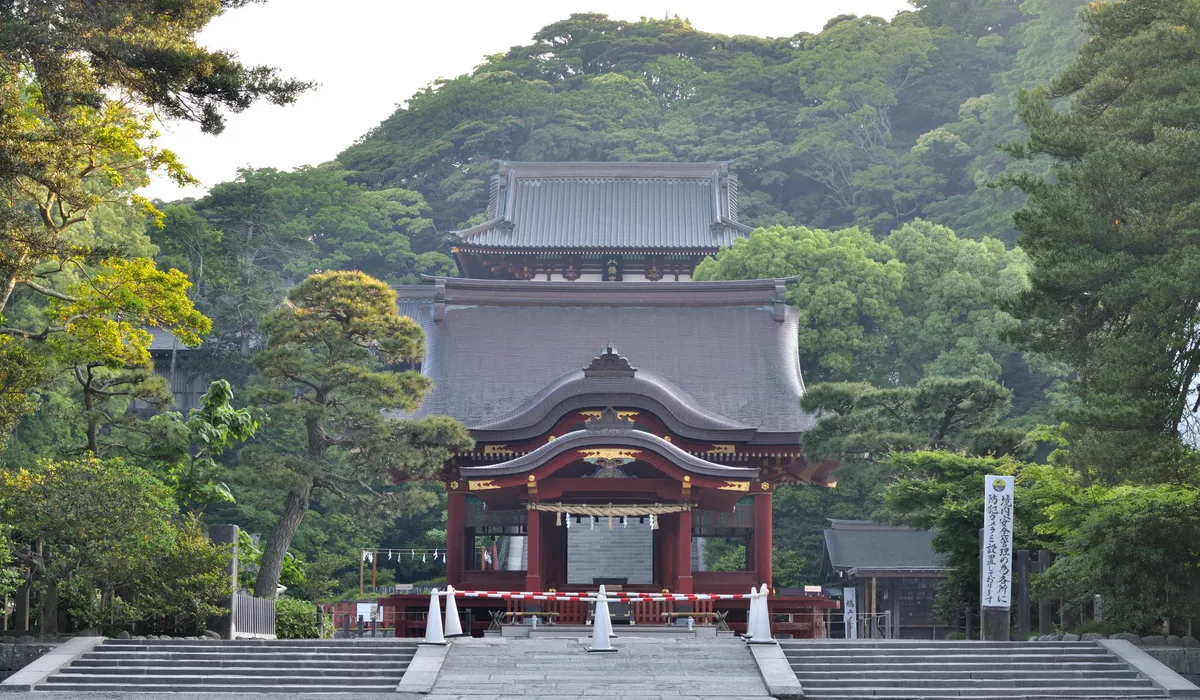
Tsurugaoka Hachimangu main hall, Kamakura

10 Best Things to Do in Kamakura

Short on time in Kamakura? Here are ten places and experiences first-time visitors and repeat travelers both keep coming back to — a quick list to work from if you’d rather not plan every hour of your trip.

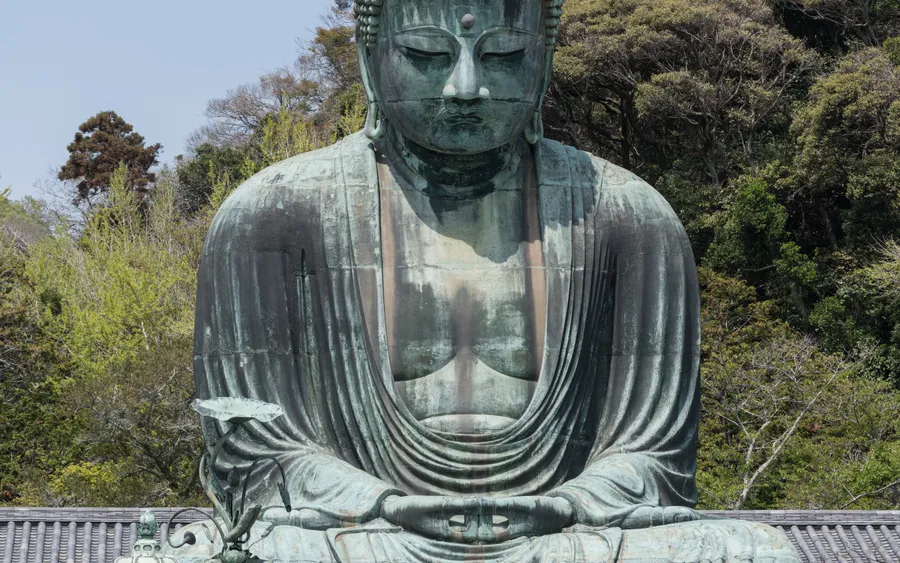
  1. Great Buddha of Kotoku-in, Kamakura1

    Great Buddha of Kotoku-in

    A seated bronze Amida Buddha roughly 11.3 meters tall and around 121 tons, with construction beginning in 1252. It's Kamakura's best-known landmark and a National Treasure, unusual among Japan's large Buddha statues for sitting entirely in the open air ever since the hall that once sheltered it was destroyed by a typhoon and later an earthquake. For an extra fee, you can step inside the hollow bronze statue and see the casting seams from within.

    8:00 AM – 5:30 PM (Apr–Sep); 8:00 AM – 5:00 PM (Oct–Mar), last entry 15 min before close4-2-28 Hase, Kamakura, Kanagawa 248-0016
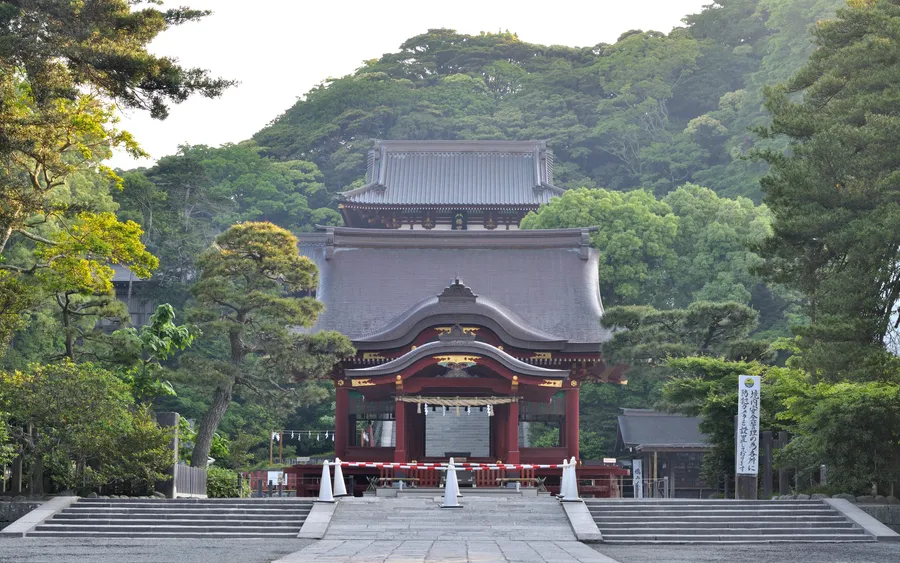
  2. Tsurugaoka Hachimangu main hall, Kamakura2

    Tsurugaoka Hachimangu

    Kamakura's most important Shinto shrine, moved to its current site in 1180 by Minamoto no Yoritomo, who made it the spiritual center of the shogunate he founded. A long, cherry-lined approach leads up to the vermilion dance platform and main hall, and the shrine hosts yabusame — mounted archery in Kamakura-period costume — during its spring festival. It's a flat, easy walk from Kamakura Station.

    5:00 AM – 9:00 PM (Apr–Sep); 6:00 AM – 9:00 PM (Oct–Mar), grounds free to enter2-1-31 Yukinoshita, Kamakura, Kanagawa 248-8588
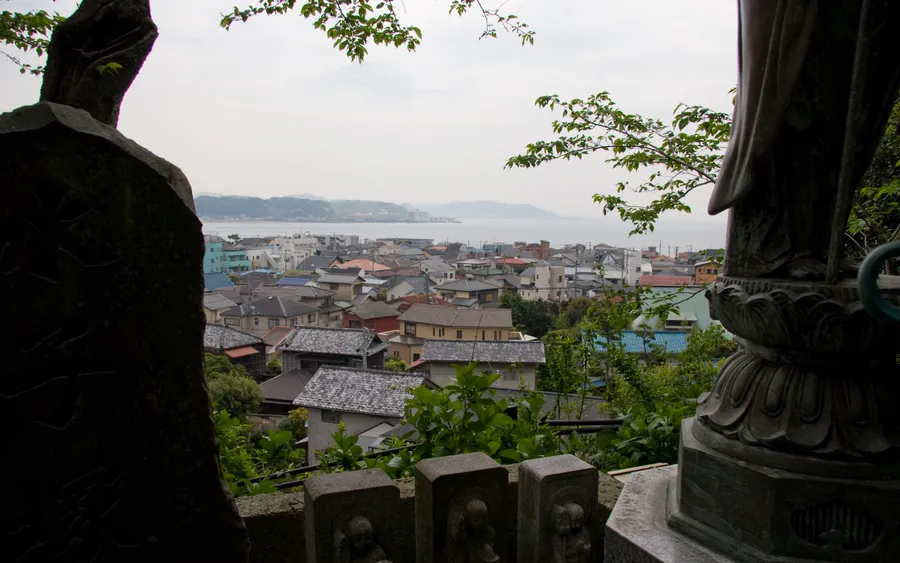
  3. View over Kamakura from Hasedera3

    Hasedera

    Home to an 11-headed wooden Kannon statue over 9 meters tall, said to be the tallest wooden statue in Japan — though the hillside grounds are just as much a draw. A short climb past rows of small Jizo statues opens onto a terrace looking out over Kamakura's rooftops toward Yuigahama beach, one of the better free views in the city. It's a five-minute walk from Kotoku-in, easy to pair with the Great Buddha.

    8:00 AM – 5:00 PM (Mar–Sep); 8:00 AM – 4:30 PM (Oct–Feb), last admission 30 min before close3-11-2 Hase, Kamakura, Kanagawa 248-0016
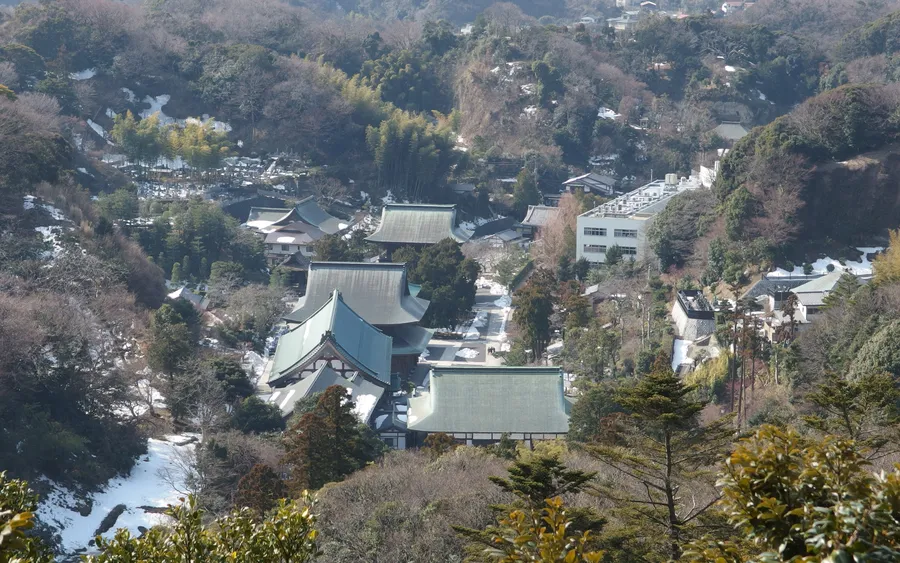
  4. Kencho-ji temple complex, Kamakura4

    Kencho-ji

    Founded in 1253, Kencho-ji is the oldest Zen training monastery in Japan and ranks first among the Kamakura Gozan, the five great Zen temples that still shape the city's religious life. Its grounds climb the hillside above Kita-Kamakura Station through a formal sequence of gates and halls, and English-language zazen meditation sessions are open to visitors on weekend afternoons. It's also credited with helping popularize shojin ryori, the meat-free Buddhist cooking still served in the area today.

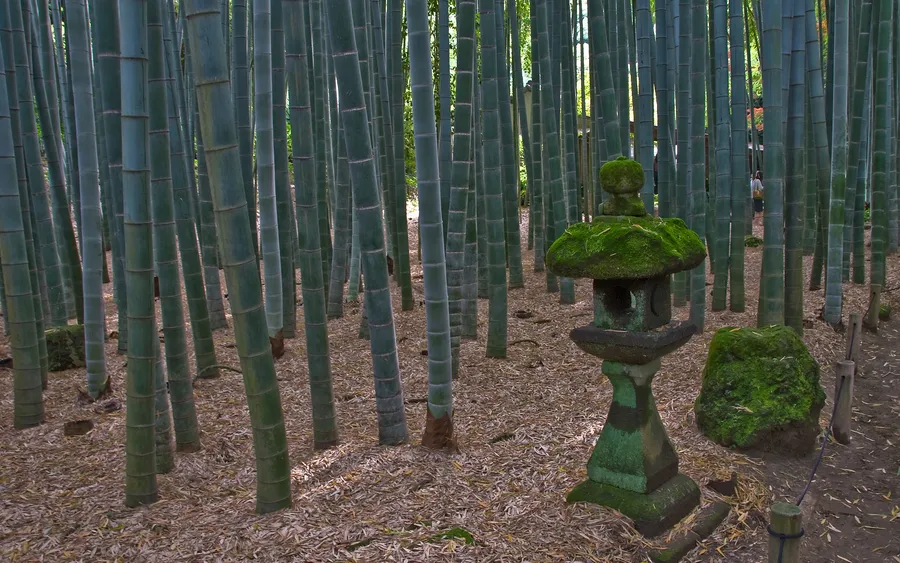
  5. Hokokuji bamboo forest, Kamakura5

    Hokokuji (the Bamboo Temple)

    Known for the roughly 2,000 bamboo stalks growing behind its main hall, tall enough to filter the daylight down to a soft green. Narrow paths wind through the grove to a small tea house at the far end, where for a modest fee you can sit and drink matcha looking out into the bamboo. It's tucked in the Jomyoji neighborhood east of the station, quieter than Kamakura's bigger-name temples.

    9:00 AM – 4:00 PM, daily (closed Dec 29 – Jan 3)2-7-4 Jomyoji, Kamakura, Kanagawa 248-0003
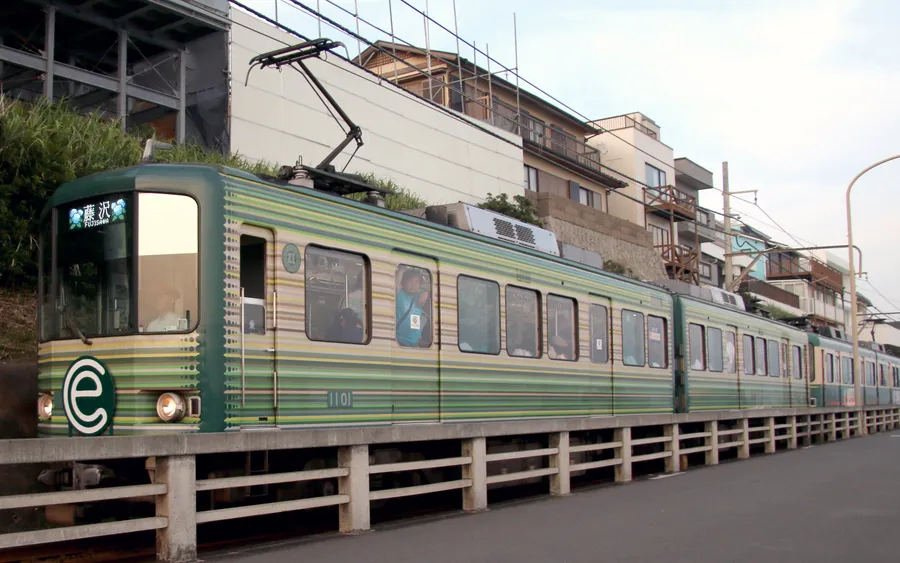
  6. Enoden train near Kamakurakoko-mae Station6

    A Ride on the Enoden

    The Enoshima Electric Railway has run along the coast between Kamakura and Fujisawa since 1902, and it's as much a part of visiting the area as any single temple. Much of the line hugs the shoreline directly, with the stretch near Kamakurakoko-mae Station running close enough to the water that the train and the ocean end up in the same photo. A one-day Enoden pass makes it easy to hop on and off along the way.

  7. Komachi-dori shopping street, Kamakura7

    Komachi-dori

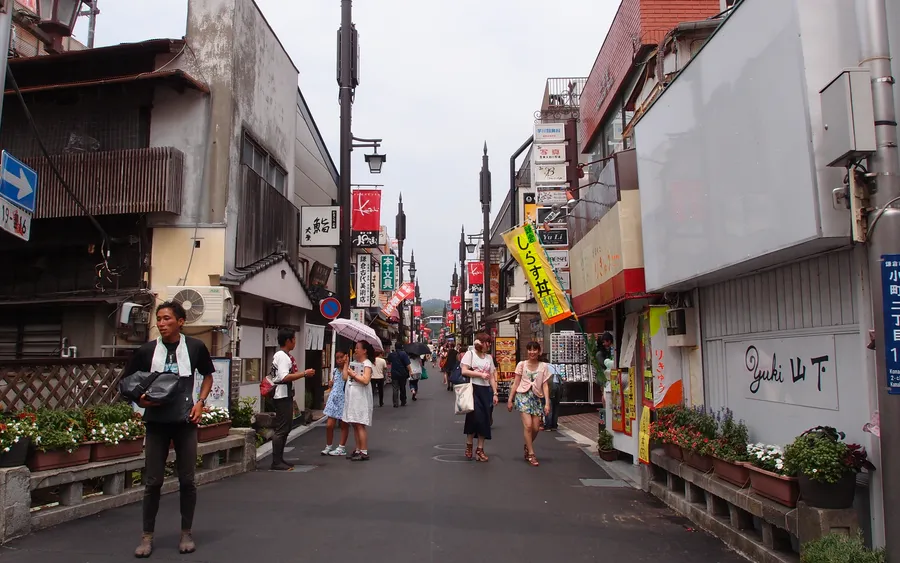
    A pedestrian lane running from just outside Kamakura Station toward Tsurugaoka Hachimangu, packed with roughly 250 small restaurants, craft shops, and snack stalls. It's the natural place to graze between temples, and Kamakura-bori — the carved and lacquered woodwork that developed here alongside Zen Buddhism roughly 700 to 800 years ago — shows up in several of the shops. It gets busy fast on weekends, so an early pass before the temples open is the quieter option.

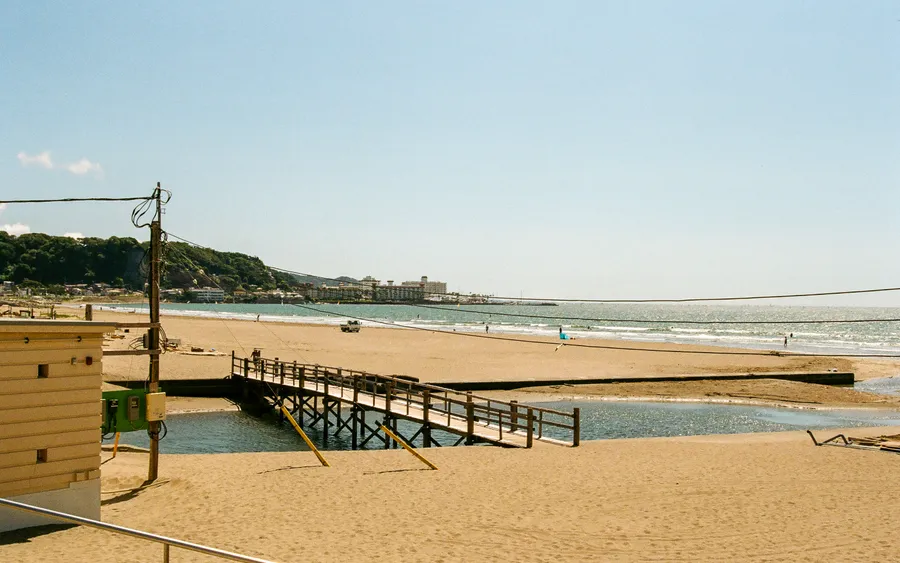
  8. Yuigahama Beach, Kamakura8

    Yuigahama Beach

    A roughly 900-meter stretch of sand about a 15-minute walk from Kamakura Station, calm enough for swimming during its official July–August season and a popular surf spot the rest of the year. It's a genuinely unusual pairing for a city this dense with temples — sandy beach, boardwalk cafes, and views out toward Enoshima and, on a clear day, Mount Fuji. A pleasant place to end a day of sightseeing, especially around sunset.

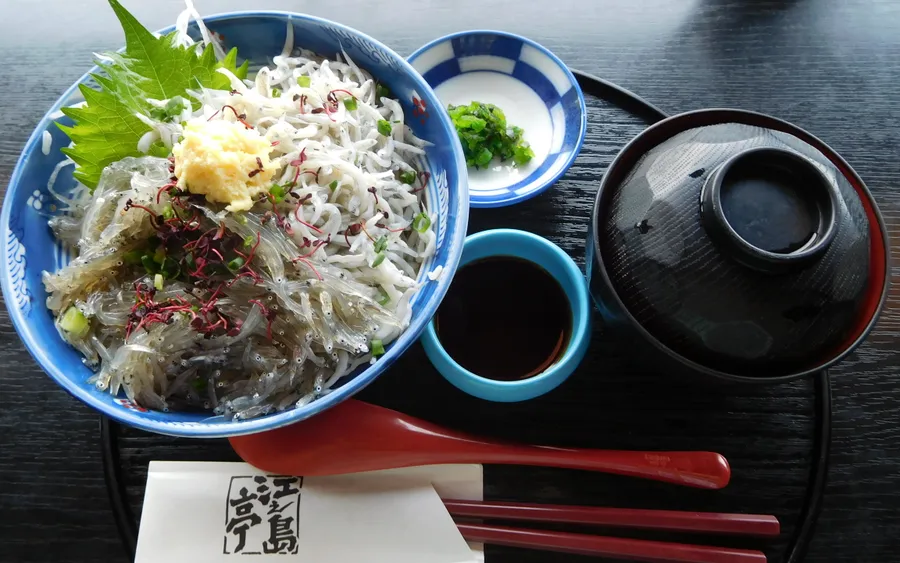
  9. Shirasu-don, whitebait rice bowl9

    Shirasu-don

    Tiny whitebait caught fresh from Sagami Bay, most often served raw or lightly boiled over a bowl of rice, is Kamakura's signature local dish. It's a seasonal catch, available outside the winter breeding closure, and restaurants near Yuigahama and along the coast toward Enoshima tend to serve it freshest. The raw version has a delicate, faintly sweet flavor that surprises first-timers.

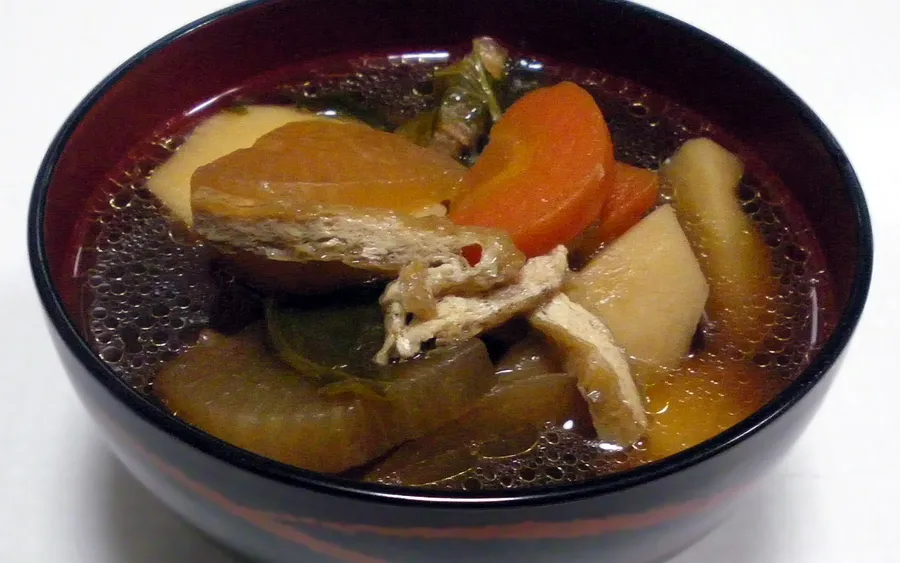
  10. Kenchin-jiru, tofu and root vegetable soup10

    Kenchin-jiru

    A clear, soy-flavored soup of tofu and root vegetables, its name a play on Kencho-ji, the Zen temple credited with popularizing it as part of Kamakura's shojin ryori tradition of meat-free Buddhist cooking. It's simple, warming food, still served today both at temple meals and in ordinary restaurants across the city. A good match for a cooler-weather visit, especially after a morning on the hiking trails around Kencho-ji.

Keep reading

More guides you might like

Nearby

Related destinations

Continue

Related services

Easy Travel in Japan