Easy Travel in Japan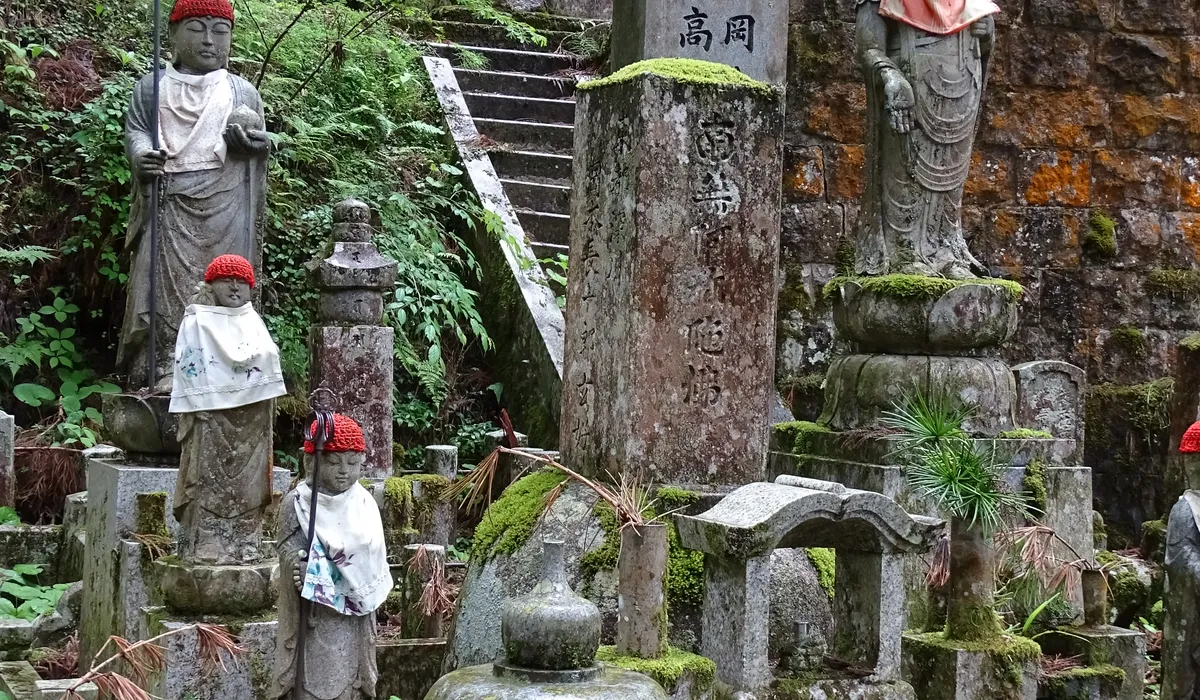
Koyasan
A mountaintop monastery town where visitors can sleep, eat, and pray inside a working Buddhist temple.
Koyasan, or Mount Koya, is a mountaintop temple town in Wakayama Prefecture and the headquarters of Shingon Buddhism. It was founded in 816, when the monk Kukai — later known as Kobo Daishi, and regarded as the founder of Japan’s Shingon sect — received imperial permission to establish a monastic training complex here after studying esoteric Buddhism in China. More than a hundred temples now cluster on the mountain, and around 50 of them still operate as shukubo, temple lodgings that let visitors stay inside a living monastic community rather than a museum piece. Together with the pilgrimage sites of Yoshino, Omine, and Kumano further south, Koyasan forms part of the UNESCO World Heritage listing “Sacred Sites and Pilgrimage Routes in the Kii Mountain Range,” inscribed in 2004.
Highlights & things to do
Okunoin, Japan’s largest cemetery, holds more than 200,000 tombstones and memorial monuments along a roughly two-kilometer approach through ancient cedar trees. At its far end stands the mausoleum of Kobo Daishi, whom Shingon tradition holds did not die but entered eternal meditation, awaiting a future Buddha; monks still bring him ritual meals twice a day. Nearby, the Lantern Hall holds thousands of donated lanterns, including two said to have burned continuously for over 900 years.
Kongobuji, the head temple of Koyasan Shingon Buddhism, was originally built in 1593 and is known for its painted sliding-screen doors and the Banryutei rock garden, completed in 1984 from 140 granite stones carried from Kukai’s native Shikoku, arranged to depict a pair of dragons. Danjo Garan, the mountain’s original core training ground, centers on the vermilion Konpon Daito, a roughly 48-meter pagoda considered the first of its architectural style built in Japan. The Daimon, Koyasan’s traditional entrance gate, stands about 25 meters tall in its 1705 form and houses two guardian statues said to be the second-largest of their kind in Japan after Todai-ji’s in Nara.
Food & local cuisine
Every shukubo on the mountain serves shojin ryori, Buddhist vegetarian cuisine that excludes meat, fish, and pungent ingredients like garlic and onion, typically as six to eight small dishes of simmered vegetables, tempura, pickles, and rice. Goma-dofu, a silky sesame-based tofu made without soybeans, is considered Koyasan’s own specialty and a staple of these meals.
Culture & traditions
Shukubo is a genuinely lived tradition here, not a tourist novelty, offering tatami rooms and access to religious practice alongside the meals. Daily morning prayer ceremonies, usually around 6 to 7 a.m., include sutra chanting, and some temples add a Goma fire ritual, a Shingon ceremony symbolizing the burning away of earthly desire. The Aoba Matsuri, celebrating Kobo Daishi’s birthday each June 14–15, traces its celebrations back to 1778, with a lantern parade on the eve and a formal procession the following day.
Nature & scenery
Koyasan sits on a forested plateau around 800 meters up in the Kii Mountains, ringed by eight peaks traditionally read as resembling the petals of a lotus flower. Okunoin’s approach path runs through ancient cedars, some with planting records dating back to 1012, giving the cemetery its serene, moss-covered atmosphere. The elevation keeps the mountain noticeably cooler than the Kansai lowlands year-round.
Seasonal travel
Autumn foliage typically peaks earlier here than in Kyoto or Osaka, given the elevation, generally from late October into the first week of November. Winter brings snow, sometimes from as early as mid-December, draping the temple complexes in white. Summer is markedly cooler than the surrounding lowlands, making Koyasan a traditional retreat from Kansai’s heat, and mid-August brings the Candle Festival at Okunoin, when around 100,000 candles light the cemetery approach for an Obon memorial service.
Recommended experiences
Stay overnight at a shukubo, with a shojin ryori dinner and breakfast and the option to join a morning prayer service. Walk Okunoin at night, either self-guided along the lantern-lit path or on a guided tour that explains its Shingon Buddhist symbolism. Dine on goma-dofu as part of a temple lodging stay.
Getting there & practical info
From Osaka’s Namba Station, the Nankai Railway’s Koya Line reaches Gokurakubashi in around 1 hour 15 minutes to 1 hour 40 minutes depending on the service, where a five-minute cable car climbs the final stretch to Koyasan. From Kyoto, there’s no direct line — the typical route runs via Osaka, taking roughly 2 to 2.5 hours in total. Nankai Railway sells a discounted World Heritage Ticket covering the round trip from Osaka plus local bus travel around the mountain.
Who this suits
Best suited to spiritually curious travelers and pilgrims, history and culture enthusiasts drawn to over a thousand years of continuous religious practice, and anyone wanting an authentic overnight temple stay unlike anything available in urban Japan.
A closer look at Koyasan
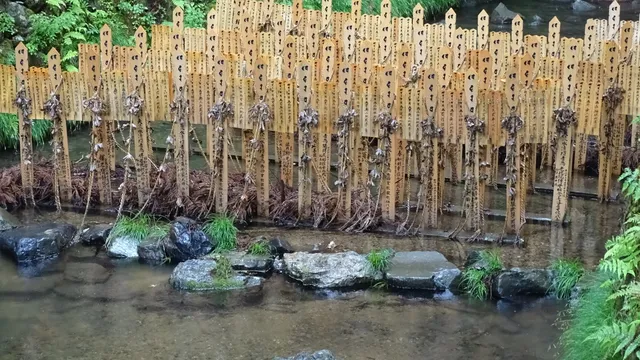
10 Best Things to Do in Koyasan
A quick, friendly rundown of Koyasan's pilgrim cemetery, vermilion pagoda, head temple, and temple-lodging traditions — a good starting point for a first visit to this mountaintop Buddhist monastery town founded in 816.
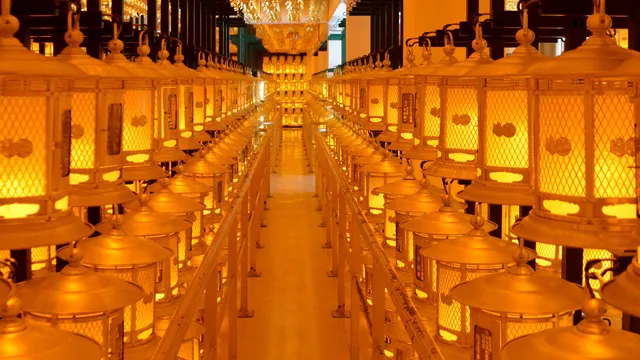
The Perfect 2-Day Koyasan Itinerary
A well-paced overnight visit to Koyasan: the great gate, pagoda, and head temple on day one, an evening walk through the lantern-lit Okunoin cemetery, a shojin ryori dinner and morning prayer at a shukubo, then a last look at the cemetery by daylight before heading back down the mountain.
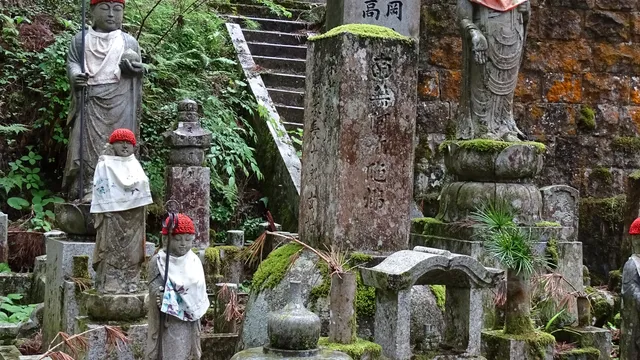
The Ultimate Koyasan Travel Guide
A mountaintop monastery town in Wakayama Prefecture where more than a hundred temples cluster around the site Kobo Daishi founded in 816 — the head temple of Shingon Buddhism, a cedar-lined pilgrim cemetery of over 200,000 tombstones, and around 50 working shukubo where visitors can eat, sleep, and pray inside a living Buddhist community.