Skip to content
Easy Travel in Japan
Kumamoto Castle

The Ultimate Kumamoto Travel Guide

Kumamoto is a city on Kyushu’s west coast, built around a castle the daimyo Kato Kiyomasa completed in 1607 into one of Japan’s largest and most sophisticated fortresses. The city has weathered repeated setbacks to that legacy — fire in 1877, major earthquake damage in 2016, and further damage from a 2026 quake — and each time has rebuilt, with the castle’s own restoration becoming something of a symbol of that resilience. Here’s a closer look at the castle, the garden, the volcano an hour away, and the food and festivals that make Kumamoto more than just a stop between Fukuoka and Kagoshima.

Attractions

One of Japan's largest and most storied castles, a strolling garden shaped like the old Tokaido road in miniature, the volcanic caldera that supplies the city's water, and the round-cheeked bear that became a national phenomenon.

  1. Kumamoto Castle1

    Kumamoto Castle

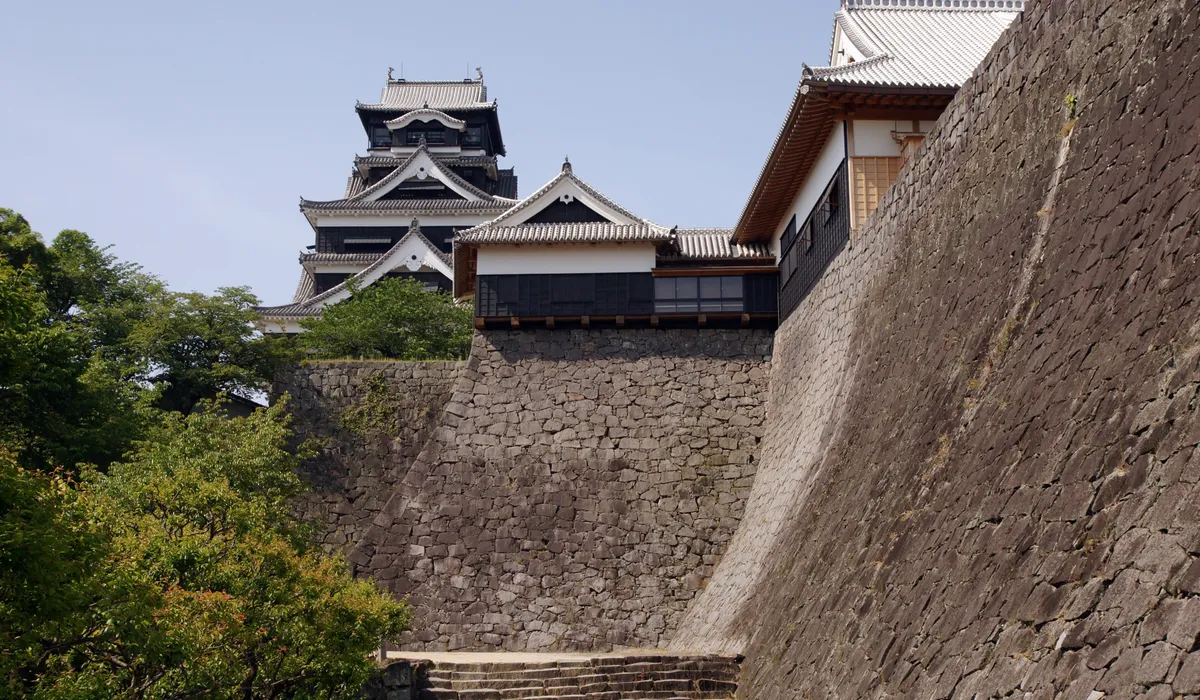
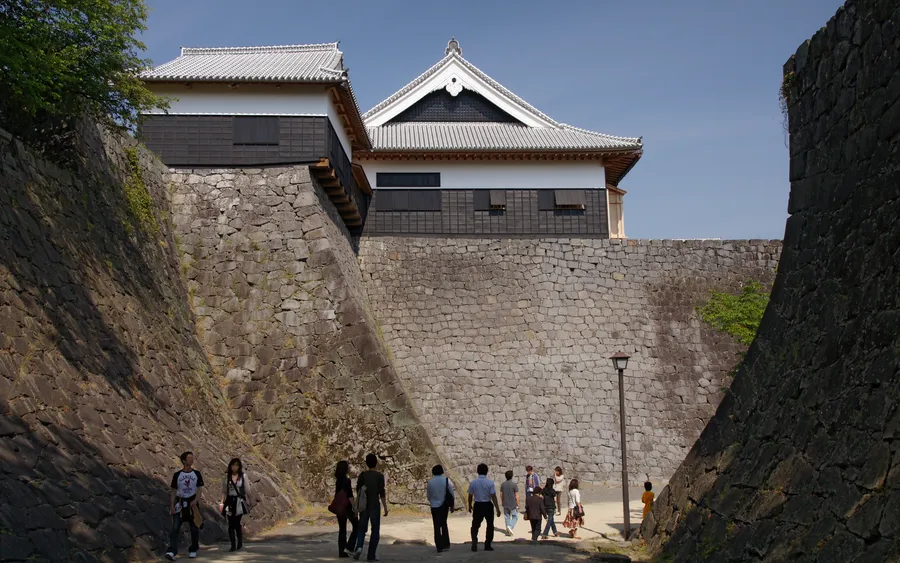
    Completed in 1607 by the daimyo Kato Kiyomasa, Kumamoto Castle was built as one of Japan's largest and most sophisticated fortresses, with 49 turrets and 47 gates across its grounds, and it's often grouped among the country's finest castles alongside names like Himeji or Matsumoto, depending on the source. The original keep burned during the 1877 Satsuma Rebellion and the reconstructed tower suffered extensive damage in the 2016 Kumamoto earthquakes, but a seismically reinforced restoration reopened the main keep in April 2021 — a magnitude-7.1 earthquake in late July 2026 caused further damage, and the castle reopened again on August 13, 2026 after safety inspections, so it's worth checking current access to specific structures before a visit. Within the castle's Honmaru grounds, Kato Shrine honors Kiyomasa himself, credited locally not just for the castle but for the flood-control and land-reclamation engineering that helped build the region's farmland.
    9:00 AM – 5:00 PM (Sep–Jun), 9:00 AM – 7:00 PM (Jul–Aug), last admission 30–90 min before close; ¥800 adult admission; check current access before visiting1-1 Honmaru, Chuo-ku, Kumamoto 860-0002
  2. Suizenji Jojuen Garden, Kumamoto2

    Suizenji Jojuen Garden

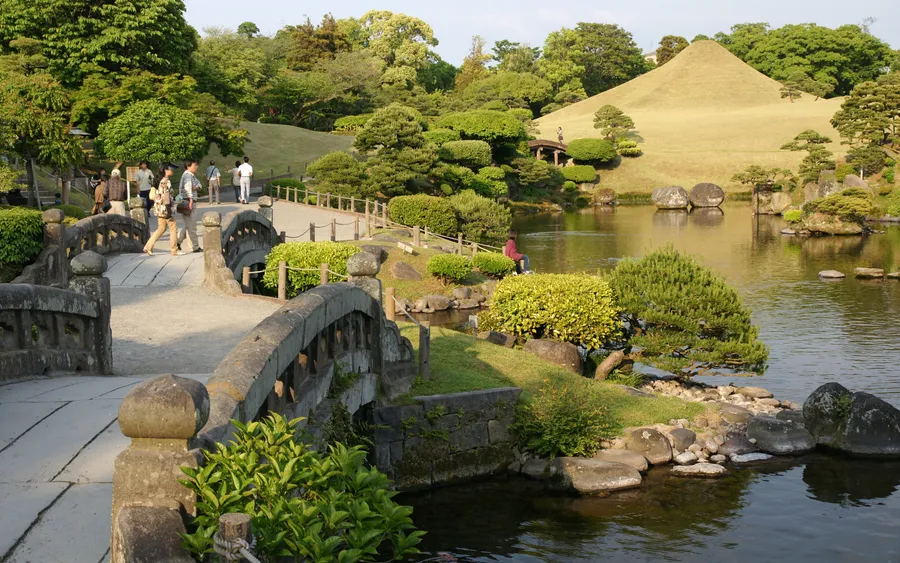
    Begun in 1632 by Hosokawa Tadatoshi, the first Hosokawa lord of the Kumamoto domain, and completed by his successors around 1671, Suizenji Jojuen is a strolling garden built around a spring-fed pond, its paths designed to be walked in sequence as a miniature recreation of the 53 post stations along the old Tokaido road between Edo and Kyoto. A grassy, cone-shaped hill near the pond stands in for Mount Fuji, the garden's best-known single feature and a favorite photo spot, framed by clipped pines and the clear groundwater the whole city is known for. It's a quieter, more contemplative counterpart to the castle, and an easy stop on the tram line running out from central Kumamoto.

    8:30 AM – 5:00 PM daily; ¥400 adult admission8-1 Suizenji-koen, Chuo-ku, Kumamoto 862-0956
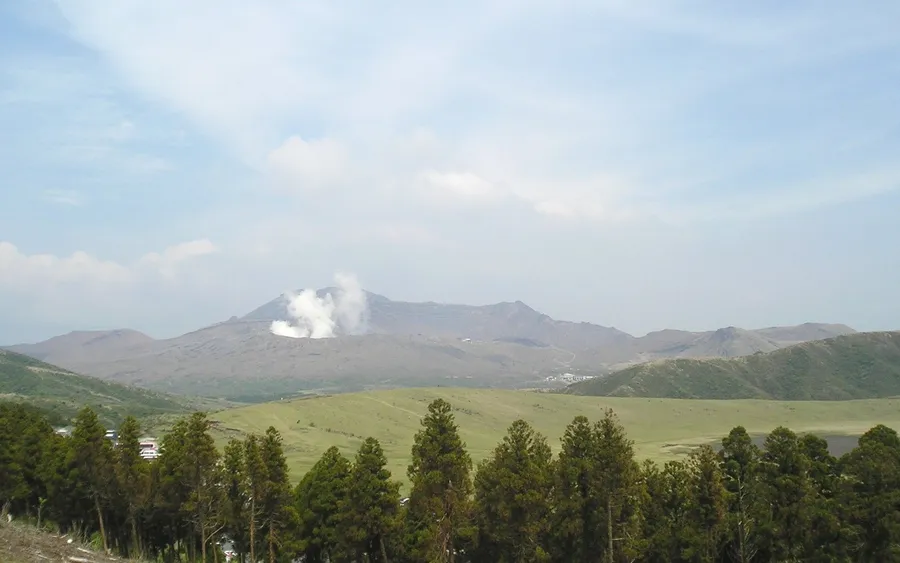
  3. Nakadake Crater from Kusasenri viewpoint, Mount Aso3

    Mount Aso & Kusasenri Plateau

    Roughly an hour and a half from Kumamoto by car, Mount Aso sits within one of the world's largest volcanic calderas, a basin up to 25 kilometers across that formed through a series of massive eruptions beginning some 270,000 years ago and now holds towns, farmland, and train lines within its rim. Nakadake, the caldera's currently active crater, remains one of the few volcanic craters in the world regularly open for close viewing when conditions allow, though the volcanic alert level periodically restricts approach — check current status before planning a visit. The nearby Kusasenri plateau, a broad grassy field with two shallow ponds and grazing horses, is a gentler counterpoint and home to the Aso Volcano Museum, which explains the region's geology even on days when the crater itself is off-limits.

  4. Kumamon, Kumamoto's mascot4

    Kumamon

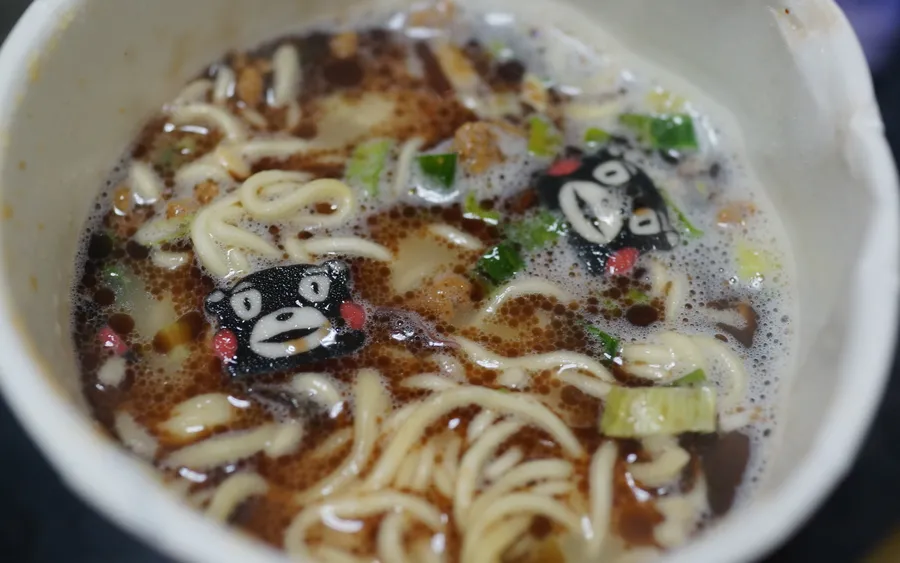
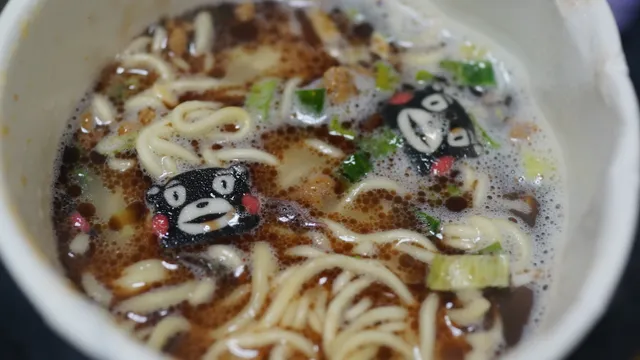
    Created in 2010 by Kumamoto Prefecture as part of a campaign to draw visitors after the Kyushu Shinkansen line opened, Kumamon — a black bear with round red cheeks and no visible mouth — won Japan's national mascot popularity contest the following year and turned into a genuine economic phenomenon, generating tens of billions of yen in merchandise sales within just a couple of years. Much of that success comes down to a deliberate licensing decision: Kumamoto Prefecture made Kumamon's image free for any company to use commercially, as long as the product promotes Kumamoto, which let the character spread across the country far faster than a tightly controlled mascot ever could. Kumamon Square, a dedicated shop and event space downtown, is the easiest place to see the character in person and pick up merchandise, though his round-cheeked face turns up on everything from train wraps to convenience store snacks across the city.

Events & Festivals

A 1,000-year-old shrine festival where samurai-dressed marchers and decorated horses fill the city streets every September.

  1. Fujisaki Hachimangu Grand Festival, Kumamoto1

    Fujisaki Hachimangu Grand Fall Festival

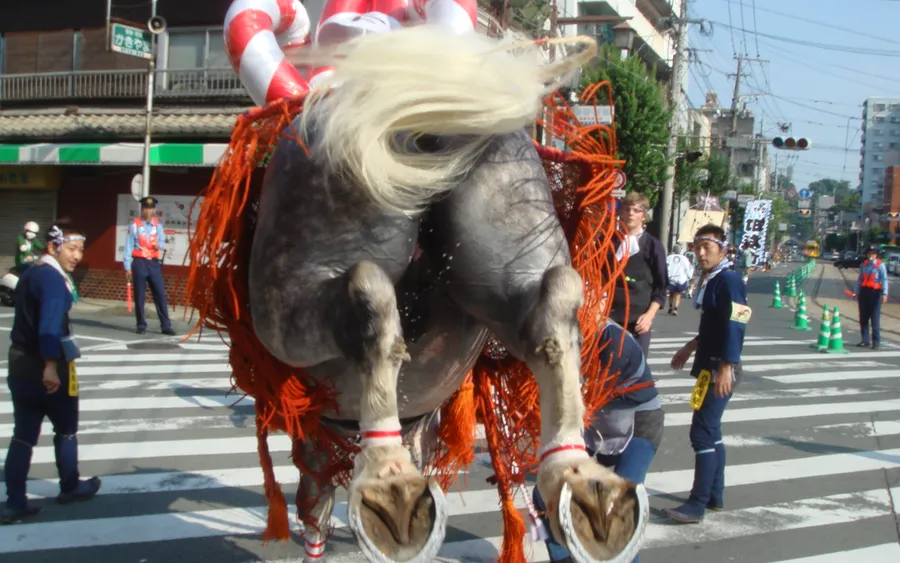
    Held every mid-September and tracing its origins back to a Buddhist ritual first recorded in 935, the Fujisaki Hachimangu Grand Fall Festival — known locally as Boshita, after the chant its parade participants shout — is Kumamoto's largest annual event, drawing well over a hundred thousand spectators over its multi-day run. The festival's centerpiece, the Shinko-shiki procession, moves portable shrines through the city streets followed by more than 60 groups in samurai-style dress and a lively entourage of around 70 decorated horses, all cheered on to a driving rhythm of drums and trumpets that gives the whole event its nickname. It survived the Meiji-era separation of Buddhism and Shinto to become the massive civic celebration it is today, and it remains as much a citywide street party as a religious observance.

    Mid-September (multi-day); main Shinko-shiki procession typically the weekend closest to Sep 15

Food

Raw horse meat, a Chinese-rooted noodle soup, a mustard-stuffed lotus root, and the milder, garlic-forward ramen that sets Kumamoto apart from its Hakata neighbor.

  1. Horse meat sashimi (basashi)1

    Basashi

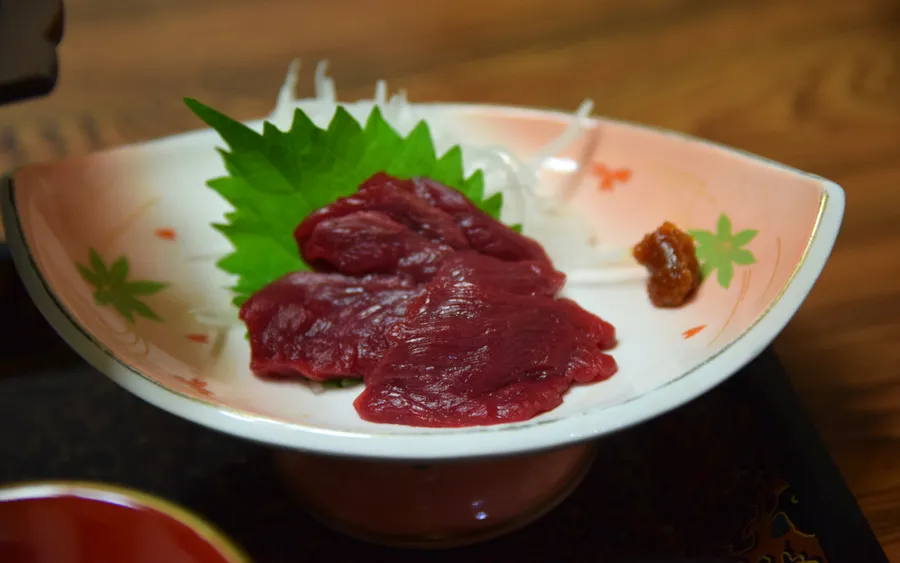
    Basashi, thinly sliced raw horse meat served with grated ginger, garlic, and sliced onion for dipping in sweet soy sauce, is Kumamoto's signature dish and one of its 'three delicacies,' alongside karashi renkon and ikinari dango. Kumamoto Prefecture is Japan's largest producer of horse meat, a tradition tied to the Aso region's history of breeding military horses and to postwar food shortages of the 1950s, when horse became a practical, protein-rich alternative to scarcer meats. Cuts vary from the lean, deep-red akami to fattier, marbled toro, and the meat is prized for being low in fat and calories relative to beef while still rich in iron and other minerals.

  2. Taipien, Kumamoto2

    Taipien

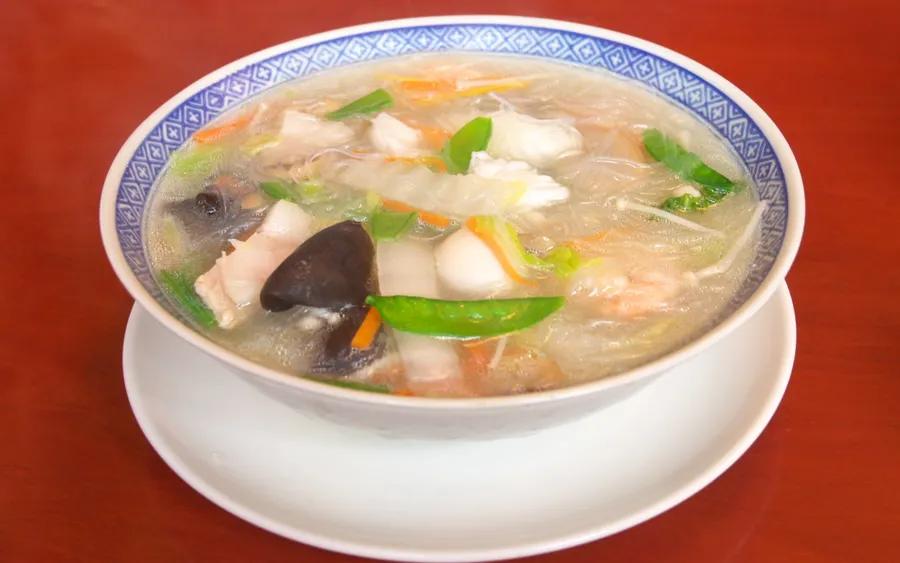
    Taipien is a noodle soup built on thin, translucent bean-starch vermicelli rather than wheat noodles, brought to Kumamoto from China's Fujian province during the Meiji era and adapted with local ingredients into a dish now considered purely Kumamoto's own. Kairakuen, a Chinese restaurant credited as its birthplace, still serves a version today, and the modern dish typically loads a pork or chicken broth with egg, shrimp, sliced pork, and a generous pile of vegetables, making it feel lighter and more like a meal in a bowl than a simple noodle soup. It's often recommended to visitors as a change of pace from the city's heavier specialties, close to a comfort food for locals rather than a novelty.

  3. Karashi renkon, Kumamoto3

    Karashi Renkon

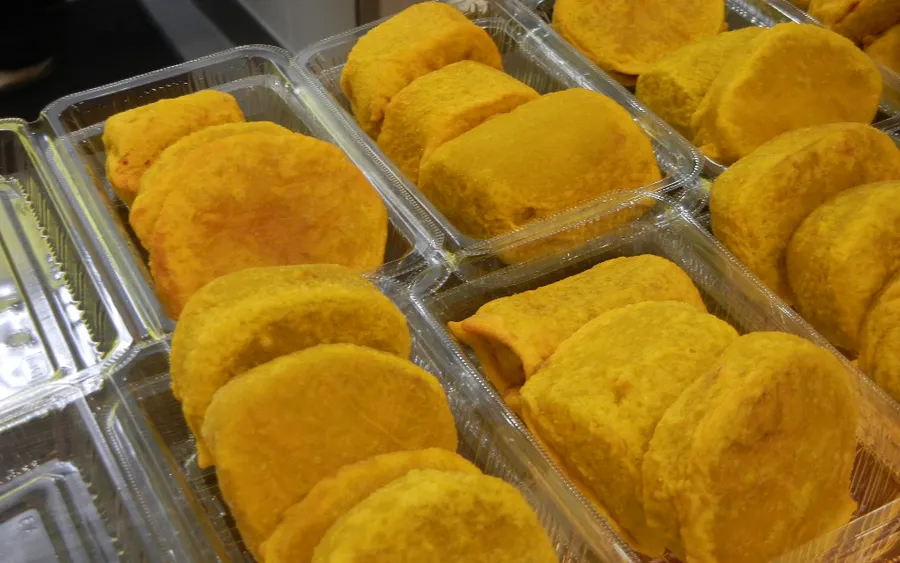
    Karashi renkon packs the holes of fresh lotus root with a mustard-spiked miso paste, then coats the whole piece in a turmeric-yellow batter and deep-fries it before slicing into rounds that reveal the paste spiraling through the root's natural chambers. It's said to date to the early Edo period, developed for the sickly Hosokawa lord Tadatoshi as a nutritious dish using lotus root grown in the moats around Kumamoto Castle, with the bright yellow color later adopted as an auspicious, gold-like hue for the ruling clan. The result is a distinctive mix of textures and a sharp mustard kick that cuts through the richness of the batter, traditionally served in thin slices as a side dish or snack alongside drinks.

  4. Kumamoto ramen4

    Kumamoto Ramen

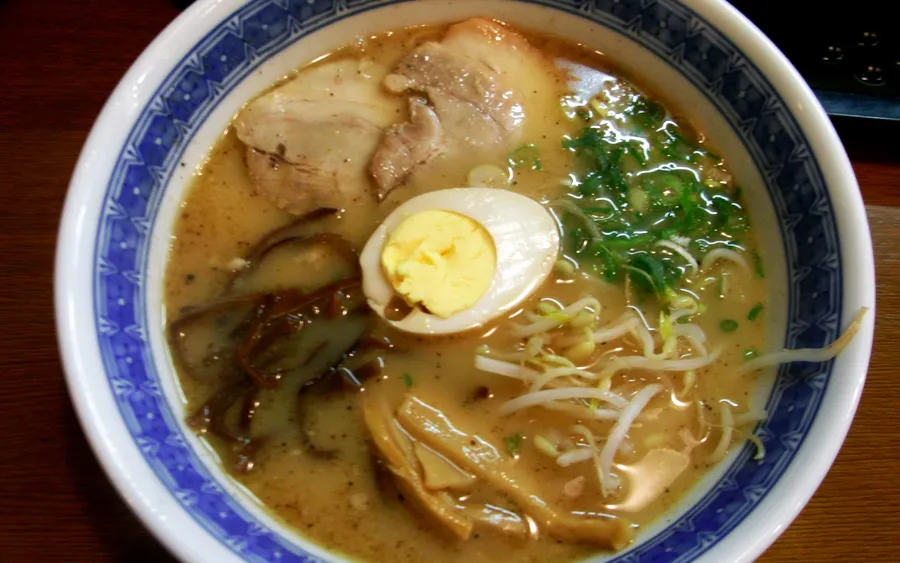
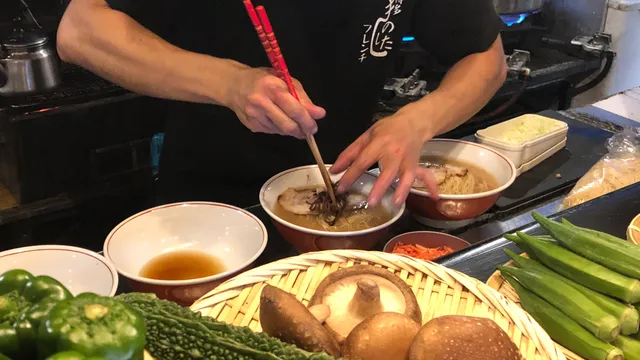
    Kumamoto ramen developed out of the tonkotsu style that spread from nearby Kurume and Hakata, but softened it with a pork-and-chicken bone broth blend that's milder and less punishingly rich than its Fukuoka cousin. Its signature touch is mayu, a black garlic oil developed at the Kumamoto shop Keika by a Taiwanese chef, made by grinding garlic fine and burning part of it before combining it with the rest of the oil into a smoky, almost charred-tasting paste ladled over the finished bowl. Medium-thick noodles and a scattering of fried garlic chips round out a bowl that's noticeably more garlic-forward than Hakata's version, a distinction locals take some pride in.

Keep reading

More guides you might like

Nearby

Related destinations

Continue

Related services

Easy Travel in Japan