Skip to content
Easy Travel in Japan
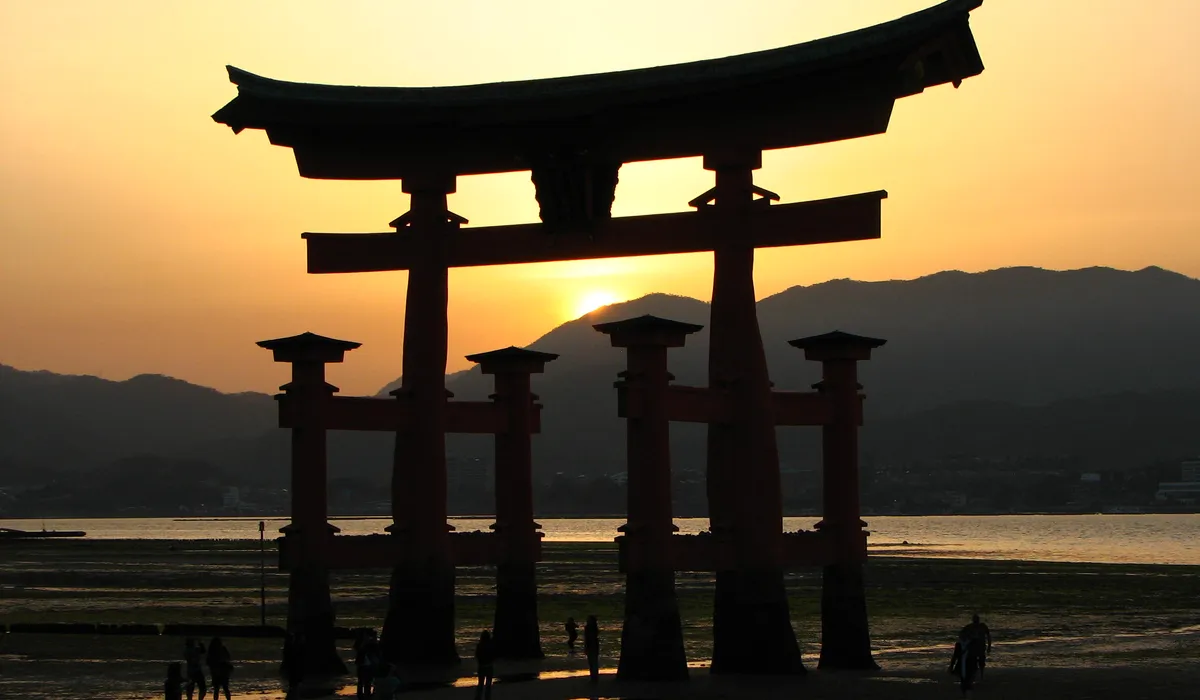
Itsukushima torii gate at sunset, Miyajima

The Ultimate Miyajima Travel Guide

Miyajima, officially Itsukushima, is a small island in Hiroshima Bay that punches far above its size: a vermilion torii gate that appears to float on the water, a shrine built out over the sea on stilts, and a forested, 535-meter mountain sacred to Shingon Buddhism, all reachable on a ferry ride of about ten minutes from the mainland. It’s counted among Japan’s traditional Three Views, its shrine is a UNESCO World Heritage Site, and it’s almost always visited as a day trip from Hiroshima rather than a destination in its own right — though plenty of visitors who plan a few rushed hours end up wishing they’d budgeted a full day. Here’s a closer look at the shrine, the mountain, and the food that make Miyajima worth more than a quick stop at the torii gate.

Itsukushima Shrine

The floating torii gate and the World Heritage shrine built out over the water — the reason most visitors make the crossing to Miyajima in the first place.

  1. Itsukushima Shrine floating torii, Miyajima1

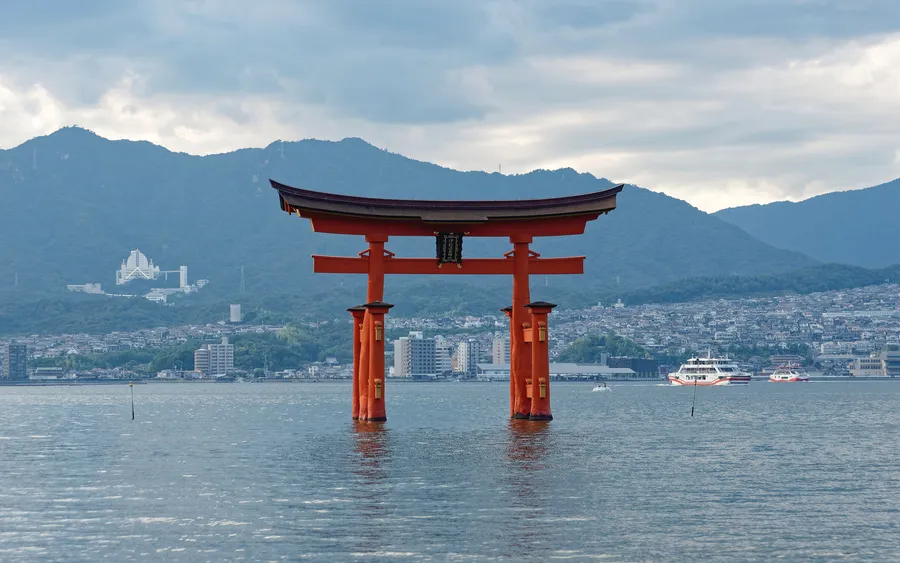
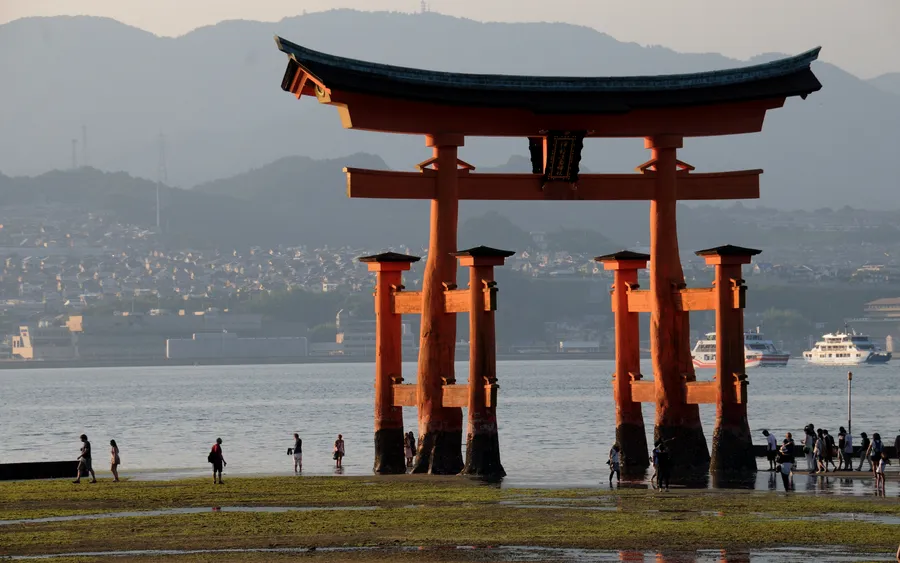
    The Floating Torii Gate at High Tide

    Itsukushima Shrine's vermilion torii gate is the single image most people associate with Miyajima, and for good reason: at high tide it appears to float on the water, unanchored to the seabed and held in place by nothing but its own weight, roughly 16.6 meters of camphor and cedar rising out of Hiroshima Bay. The current gate dates to 1875, the eighth to stand on this spot since the shrine's founding, and a major restoration completed in December 2022 reinforced its pillars against decades of seawater and termite damage. Time a visit for high tide and the gate seems to hover in the bay with the shrine's red pavilions behind it — one of Japan's traditional Three Views, alongside Amanohashidate and Matsushima, and every bit as striking in person as in photos.
    6:30 AM – 6:00 PM (Mar–Oct 14), 6:30 AM – 5:30 PM (Oct 15–Nov), 6:30 AM – 5:00 PM (Dec–Feb)1-1 Miyajima-cho, Hatsukaichi, Hiroshima 739-0588
  2. Visitors walking out to the Itsukushima torii gate at low tide, Miyajima2

    Walk Out to the Torii at Low Tide

    Twice a day, the water around the torii gate recedes far enough to walk out across the exposed sand and stand at its base — a completely different experience from the floating view, and just as popular with visitors who time their trip around the tide tables. Up close, the gate's scale becomes obvious, and so does the trick behind it: its two main pillars aren't buried in the seabed at all, just weighted down by several tonnes of stones packed into the crossbeam above. Local tradition holds that tucking a coin into a crack in the pillar's base brings good luck, and by the time you've walked back to dry land the tide will already be turning again — Miyajima's tides shift by around 50 minutes each day, so check a tide chart before building a day around either view.

  3. Interior of Senjokaku, Toyokuni Shrine, Miyajima3

    Senjokaku & the Five-Story Pagoda

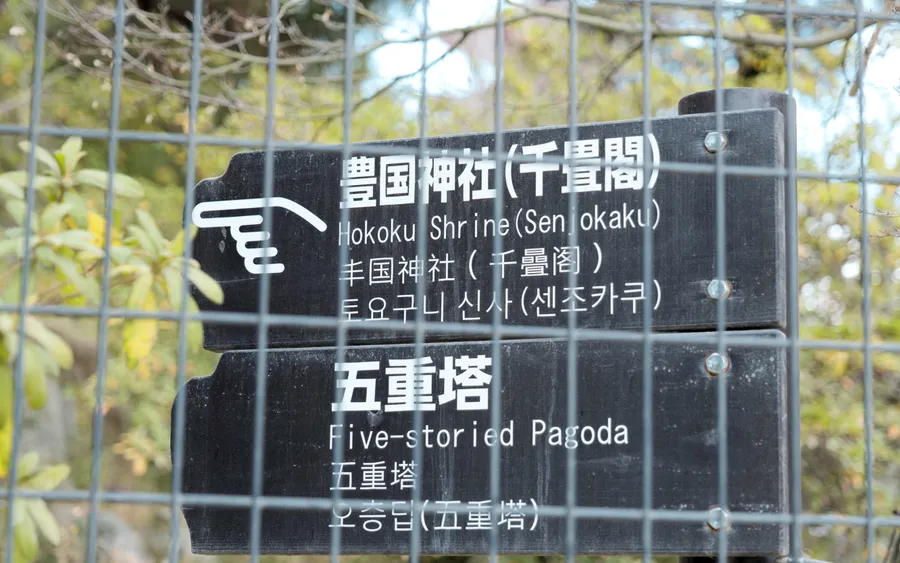
    A short walk from the main shrine, Senjokaku is the largest building on the island by far — a cavernous hall commissioned in 1587 by the warlord Toyotomi Hideyoshi so that monks could chant sutras for fallen soldiers. Hideyoshi died in 1598 before it was finished, and with the Toyotomi line then losing power to Tokugawa Ieyasu, the hall was simply left as it was: no ceiling boards, exposed rafters, and an open, barn-like interior spacious enough to justify its name, which translates to 'hall of a thousand mats.' It now functions as Toyokuni Shrine, dedicated to Hideyoshi's spirit since 1872. Next door, the vividly painted five-story pagoda predates Senjokaku by 180 years, built in 1407 in a style that blends Japanese and Chinese design; it's currently wrapped for a renovation project scheduled to finish in December 2026, but Senjokaku's open hall remains fully open to walk through in the meantime.

    8:30 AM – 4:30 PM; ¥100 adult admission (¥50 for children)1-1 Miyajima-cho, Hatsukaichi, Hiroshima 739-0588

Attractions

A temple of hand-knitted Jizo statues, a mountain sacred to Shingon Buddhism, a maple-filled valley, and the shopping street that ties it all together.

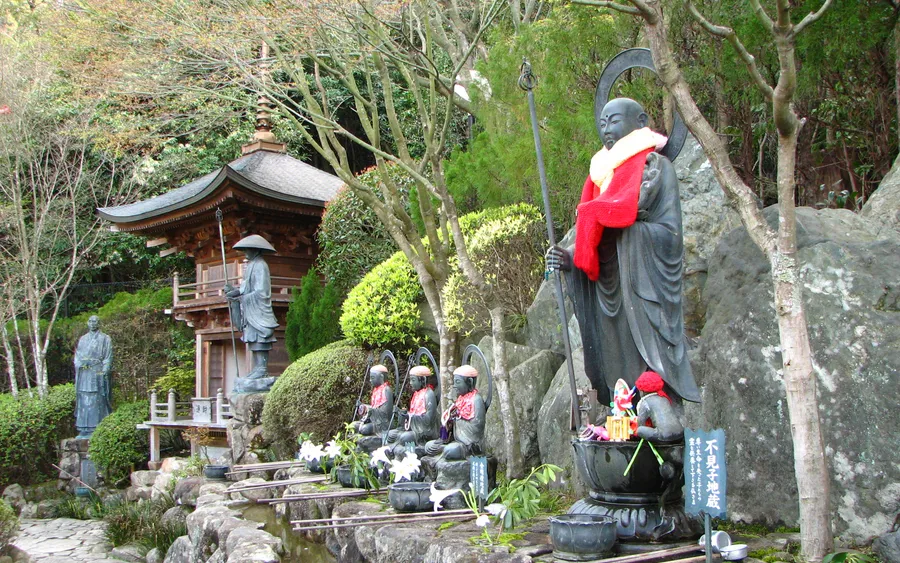
  1. Daisho-in temple, Miyajima1

    Daishoin Temple

    At the base of Mount Misen, a short walk from the shrine, Daishoin is one of Miyajima's most important Buddhist temples and one of its most photographed — its paths are lined with hundreds of small Jizo statues, many dressed in hand-knitted caps and bibs left by visitors, each carved with its own slightly different expression. Inside, a corridor of spinning prayer wheels lets visitors rack up the same merit as reading the sutras inscribed on them without breaking stride, and the temple's halls hold a sizeable collection of Buddhist statuary worth lingering over. Admission is free, and it's an easy, atmospheric stop to build in before or after the ropeway ride up the mountain.

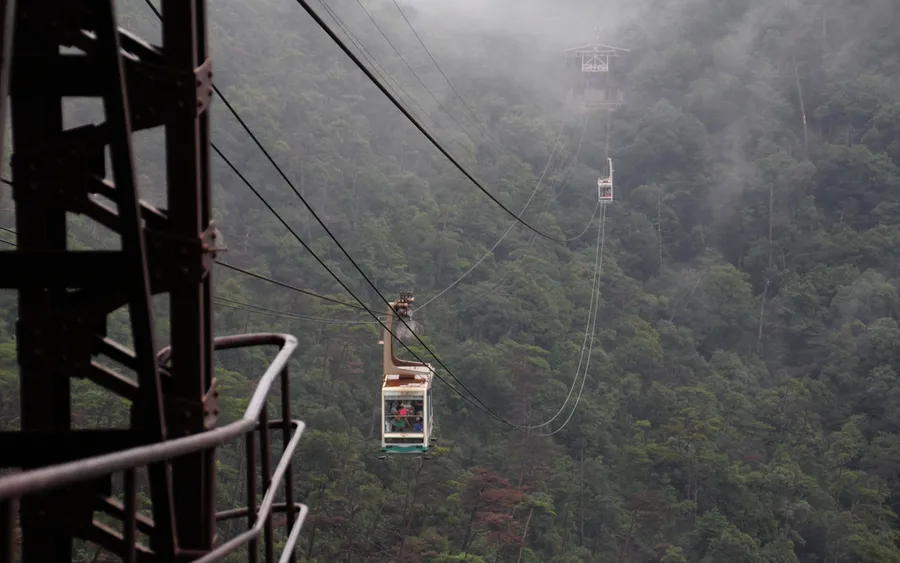
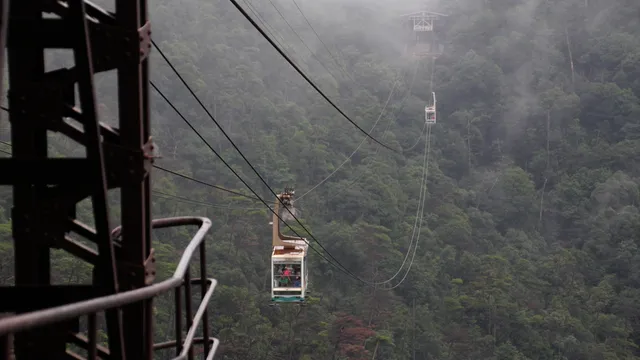
  2. Miyajima Ropeway ascending Mount Misen2

    Mount Misen by Ropeway

    The island's highest point at 535 meters, Mount Misen has been considered sacred in Shingon Buddhism since the monk Kobo Daishi is said to have practiced austerities here in 806, and its forest is one of the few stretches of primeval woodland left in the region. The Miyajima Ropeway climbs in two stages from Momijidani Park to the Shishiiwa Observatory near the summit, about 14 minutes total, with panoramic views over the Seto Inland Sea's scattered islands on a clear day. From the upper station it's roughly another 30-minute walk to the true summit, past Kobo Daishi's Eternal Flame — said to have burned continuously since he lit it — for anyone with the time and energy to push on.

    Ropeway: 9:00 AM – 4:00 PM up, last descent 4:30 PM; hours shift seasonally
  3. Momijidani Park, Miyajima3

    Momijidani Park

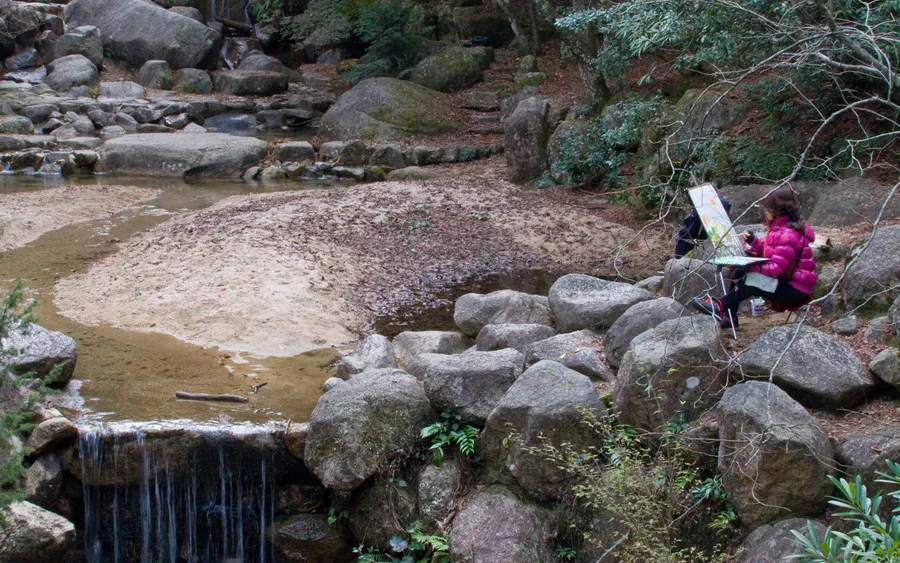
    Fed by a stream running down from Mount Misen, Momijidani — literally 'maple valley' — is one of the best-known autumn foliage spots in western Japan, its hundreds of maple trees turning the park a deep red and gold from mid-November into early December. It's just as pleasant outside the leaf-peeping season: arched bridges cross the stream between stands of maple and pine, wild deer wander through without much concern for visitors, and the park sits right at the base station of the Mount Misen ropeway, making it a natural stop on the way up or down the mountain. Come spring, the same trees put out fresh green growth that's a quieter, less crowded draw than the autumn colors.

  4. Omotesando shopping arcade, Miyajima4

    Omotesando Shopping Street

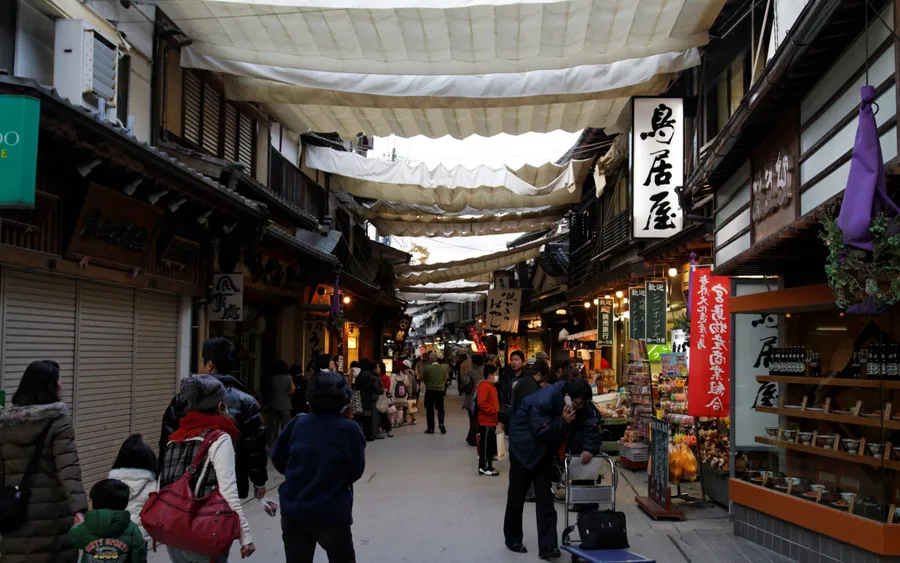
    The main approach from the ferry pier to Itsukushima Shrine, Omotesando is a roughly 350-meter arcade lined with around 60 shops and stalls, selling everything from Miyajima's carved wooden crafts to skewers of grilled oysters and fried anago eaten on the walk. The island is credited with inventing the shakushi, the wooden rice scoop now found in kitchens across Japan — legend holds it was designed in the late 18th century by a monk named Seishin after he dreamed of the goddess Benzaiten playing a biwa shaped like one. Omotesando's shops still sell them in every size, alongside a giant novelty shakushi mounted along the street as one of the island's more offbeat photo stops.

Culture & Traditions

Free-roaming deer, a nine-century-old boat festival, and the sacred status — and the engineering — behind a shrine built to survive the tide.

  1. Sika deer, Miyajima1

    Miyajima's Wild Deer

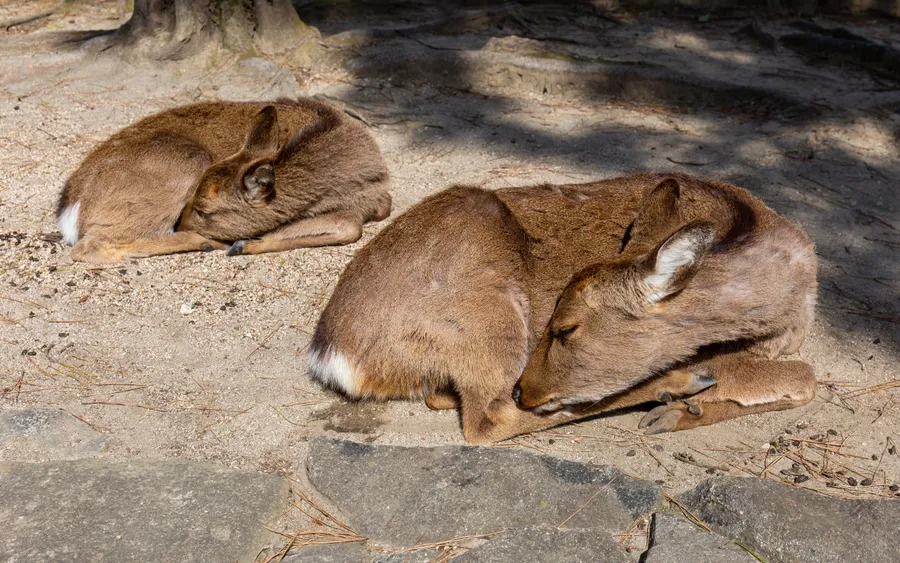
    Like Nara, Miyajima has its own population of free-roaming sika deer, wandering through the shrine approach, the ferry pier, and the streets of town as if they've always owned them — which, as messengers of the shrine's gods in local Shinto tradition, in a sense they have. Unlike Nara's deer, Miyajima's are managed with a lighter touch: there's no official cracker-vendor tradition here, and visitors are actively discouraged from feeding them, partly to keep the deer from associating people with food and partly out of respect for the shrine's sacred grounds. They're still an easy, charming constant throughout a visit — expect to share the pier, the shopping street, and the shrine approach with at least a few.

  2. Kangensai boat festival, Itsukushima Shrine, Miyajima2

    Kangensai Boat Festival

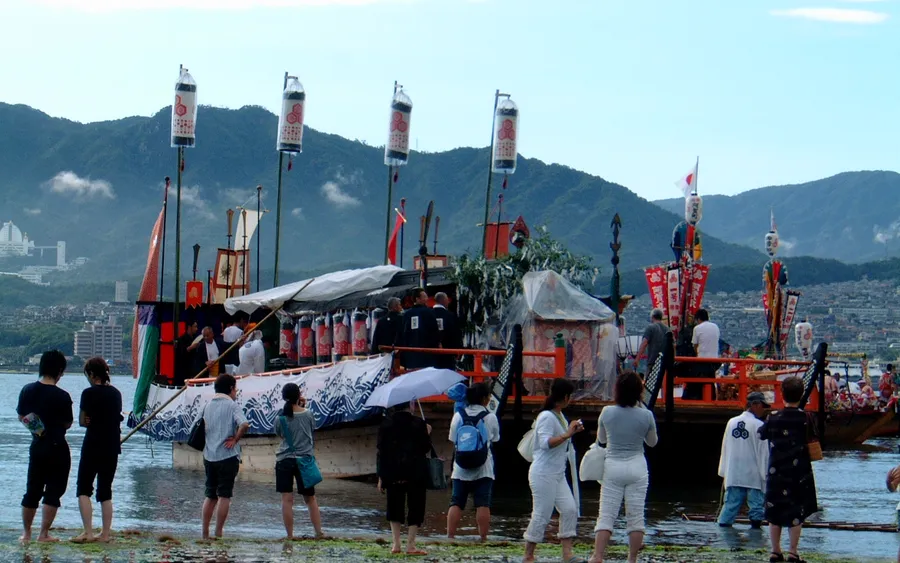
    Held each summer on the 17th day of the sixth lunar month — usually landing sometime in June or July on the modern calendar — Kangensai is ranked among Japan's three great boat festivals, alongside Osaka's Tenjin Matsuri and Matsue's Horan-enya. Its roots trace back to 1146, when the warlord Taira no Kiyomori, then governor of the province, brought the refined Heian-court tradition of floating boats and playing gagaku music to the shrine he so revered. A portable shrine carrying the gods of Itsukushima is loaded onto a ceremonial boat towed by three smaller vessels, which circle the torii gate and the shrine's satellite shrines around the bay as musicians play kangen — court music built from strings, drums, and flutes — in a ceremony that runs from a 4 p.m. ritual at the shrine until well past midnight.

  3. Covered corridor of Itsukushima Shrine, Miyajima3

    A Shrine Engineered to Survive the Tide

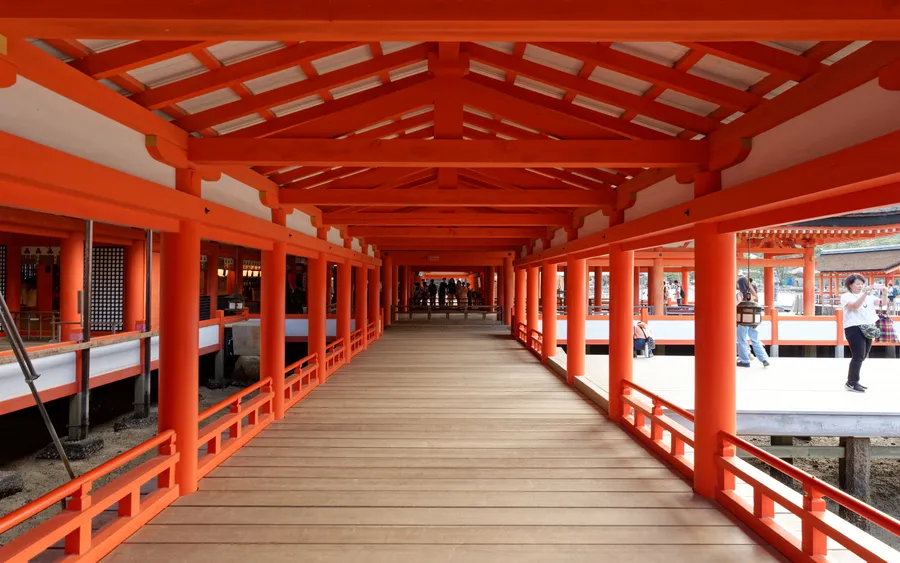
    Itsukushima Shrine's red covered corridors, connecting its halls, stage, and pavilions, run for roughly 275 meters over the water and are themselves a National Treasure — but look down and you'll notice the floorboards aren't flush against each other. Small, deliberate gaps between the planks let seawater pressure escape upward during high tide and typhoon surges rather than pushing against the structure sideways, a piece of 12th-century engineering that's helped the shrine survive on pilings in the bay for more than 800 years. The design reflects how seriously Miyajima's sacred status was once taken: the island itself was considered a kami, so sacred that commoners historically weren't permitted to set foot on it, which is why the torii gate was built out in the water in the first place, so pilgrims arriving by boat could pass through it without ever touching the island's soil. That reverence extended to daily life, too — for centuries, births and deaths were traditionally kept off the island, and Miyajima still has no cemetery of its own.

Food

Grilled oysters, the maple-leaf cake invented on the island, and a conger eel rice dish that started as a train-station bento.

  1. Grilled oysters, Miyajima1

    Grilled Oysters

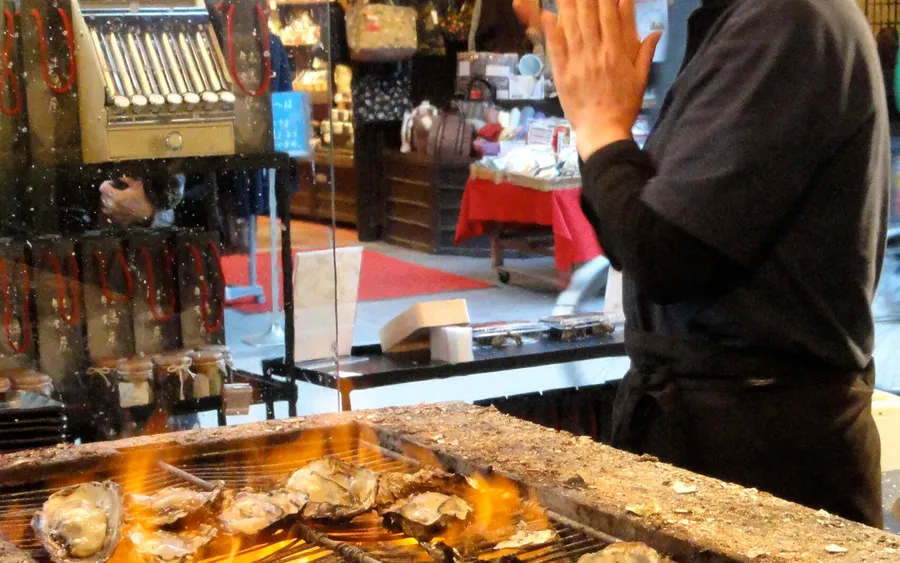
    Hiroshima Prefecture produces around 60% of Japan's oysters, farmed on ropes suspended in the calm, nutrient-rich waters of the Seto Inland Sea around Miyajima and the coast nearby. On the island itself, oyster stalls line Omotesando and the streets near the pier, grilling them to order in their shells over charcoal and serving them with little more than a squeeze of lemon or a dab of ponzu. They're in season roughly from autumn through winter, when the flesh is at its plumpest, but most shops serve them year-round — a smoky, briny snack that's easy to eat standing up on the walk between sights.

  2. Momiji manju, Yamadaya2

    Momiji Manju

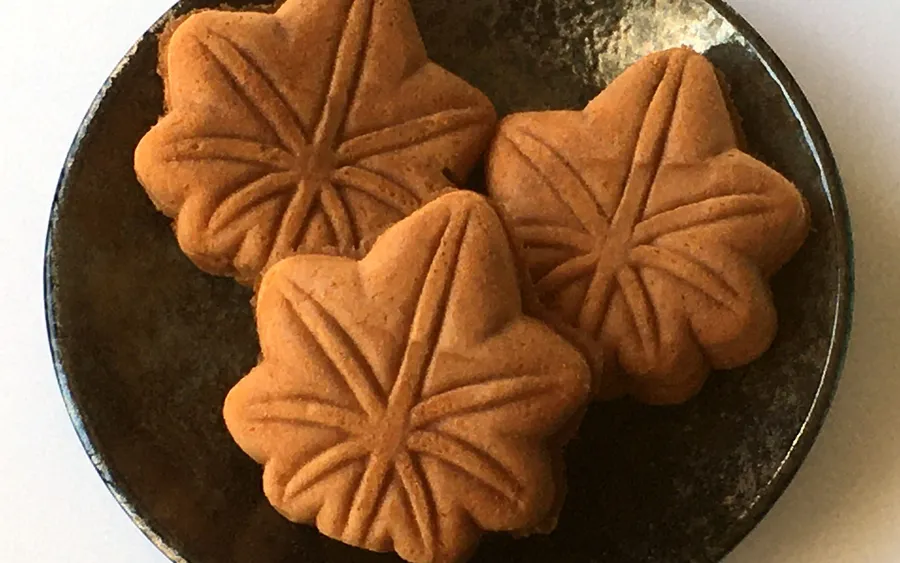
    Momiji manju is a small, maple-leaf-shaped cake usually filled with sweet red bean paste, invented on Miyajima in 1906 by the confectioner Takatsu Tsunesuke at the request of a local inn hoping for a distinctive tea sweet. It caught on well beyond the island and is now sold across greater Hiroshima, but Miyajima's own shops — several with glass-fronted kitchens along Omotesando — are still where most visitors try it first, often fresh off the press and still warm. Alongside the classic red bean, look for versions filled with custard, chocolate, or matcha, and keep an eye out for age-manju, the same cake deep-fried, sold at a handful of stalls as a heavier, dessert-like variation.

  3. Anago meshi (conger eel rice)3

    Anago Meshi

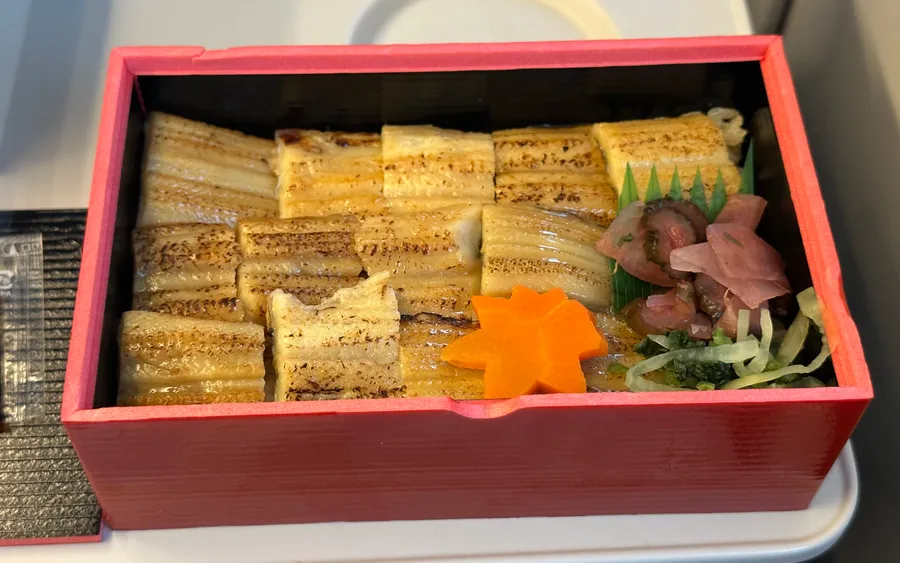
    Anago meshi — grilled conger eel over rice cooked in a dashi made from the eel's own bones — was invented in 1901 by Ueno Tanikichi, who first sold it as an ekiben, a boxed lunch for train travelers, at Miyajimaguchi Station just four years after the railway line opened. The eel is boned, dipped in a soy-mirin-sake sauce, and grilled before being laid over rice that's absorbed the same dashi, giving every grain a deep, savory flavor. Ueno's original restaurant still operates a two-minute walk from the Miyajima ferry pier, more than a century after it opened, and its bento box makes an easy meal to carry onto the ferry.

Keep reading

More guides you might like

Nearby

Related destinations

Continue

Related services

Easy Travel in Japan