Skip to content
Easy Travel in Japan
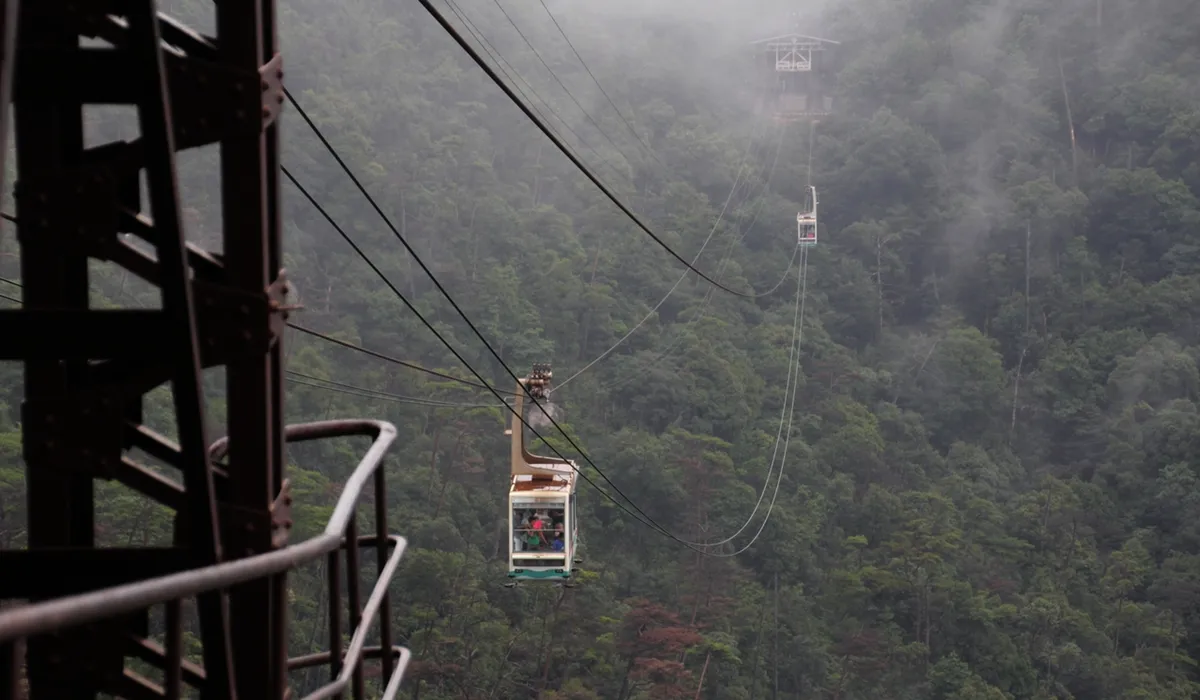
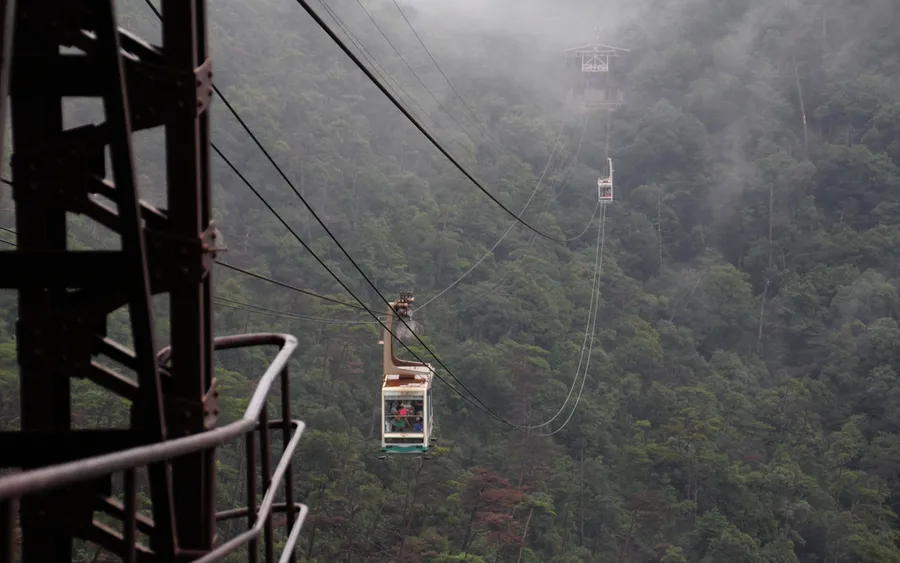
Miyajima Ropeway ascending Mount Misen

The Perfect 1-Day Miyajima Itinerary

Miyajima rewards an early start and a full day more than almost anywhere else in the Chugoku region — this itinerary opens with the ferry crossing and the shrine at high tide, works through Senjokaku, Daishoin, and a ropeway ride up Mount Misen by midday, then spends the afternoon on food and shopping along Omotesando before circling back to the shrine for a second look if the tide has turned. It’s built as a standalone day trip from Hiroshima, but every stop works just as well as the anchor for an overnight stay on the island, for anyone who’d rather see the torii gate lit up after the day-trippers have gone home.

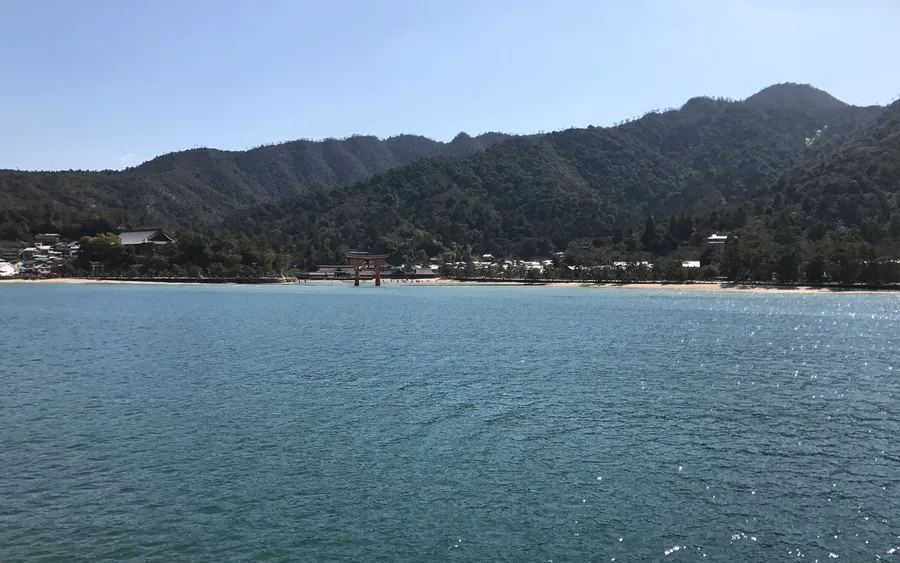
  1. Itsukushima torii seen from the JR Miyajima Ferry1

    8:00 AM — Ferry to Miyajima

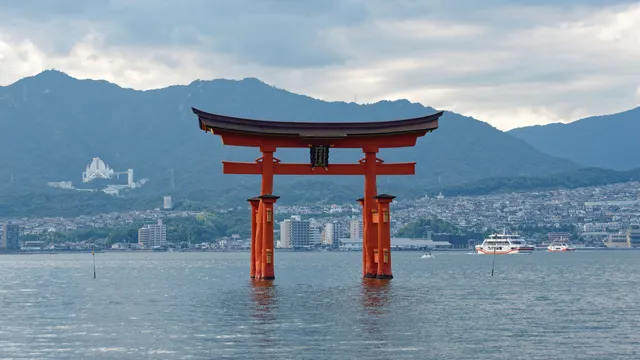
    From Hiroshima, the tram or a JR train reaches Miyajimaguchi in around 25 to 45 minutes depending on which you take, followed by a roughly 10-minute ferry crossing to the island, with departures every 15 minutes or so from early morning. Two ferry operators make the run — JR West and Miyajima Matsudai Kisen — and between 9:10 a.m. and 4:10 p.m., the JR ferry follows the Great Torii Route, swinging close enough to Itsukushima Shrine's floating gate for a first look before you've even landed. An early departure gets you on the island well ahead of the afternoon tour groups, which matters more here than almost anywhere else in the region.
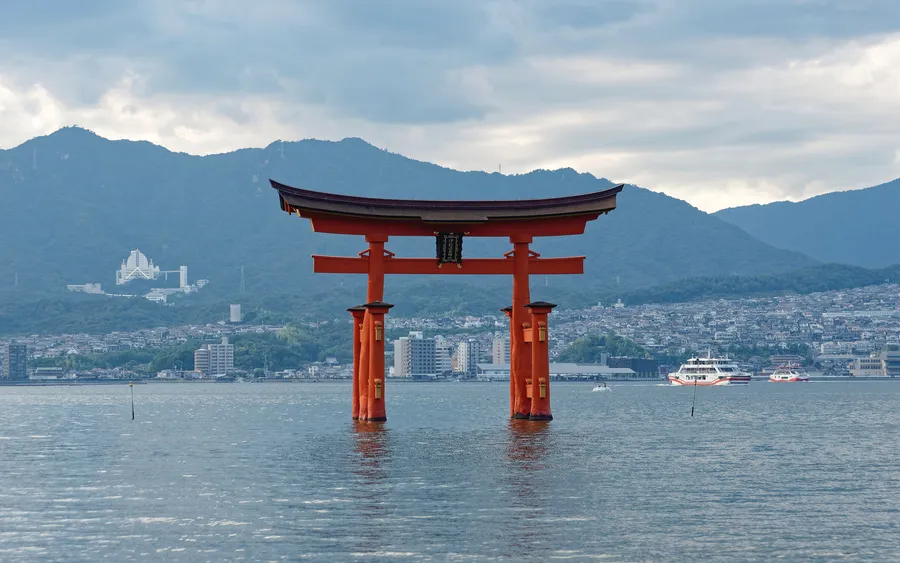
  2. Itsukushima Shrine floating torii, Miyajima2

    8:30 AM — Itsukushima Shrine at High Tide

    A ten-minute walk from the ferry pier, Itsukushima Shrine and its floating torii gate are usually at their best in the early morning, before the crowds build and, tide permitting, while the water is still high enough for the classic floating view. Miyajima's tides shift by around 50 minutes each day, so check a tide table the night before and build your morning around it rather than the clock alone; the shrine itself, built out over the water on stilts since 1168, rewards a slow, unhurried walk along its covered corridors regardless of which way the tide happens to be running.

    6:30 AM – 6:00 PM (Mar–Oct 14), 6:30 AM – 5:30 PM (Oct 15–Nov), 6:30 AM – 5:00 PM (Dec–Feb)1-1 Miyajima-cho, Hatsukaichi, Hiroshima 739-0588
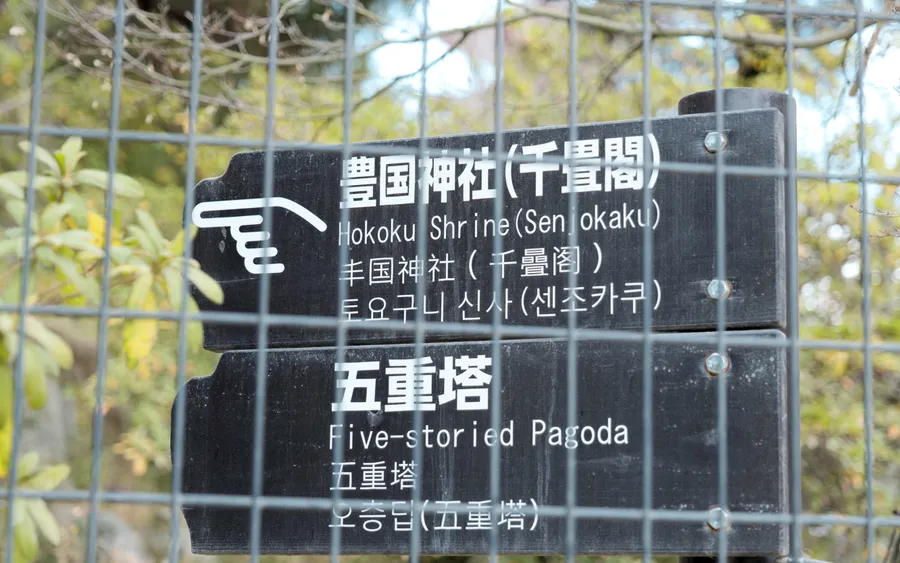
  3. Interior of Senjokaku, Toyokuni Shrine, Miyajima3

    9:15 AM — Senjokaku & the Five-Story Pagoda

    A short walk from the shrine, Senjokaku is the largest building on the island, a vast unfinished hall commissioned in 1587 by Toyotomi Hideyoshi and left without ceiling boards after his death in 1598 — its open, barn-like interior is what gives the hall its name, 'pavilion of a thousand mats.' The vividly painted five-story pagoda next door predates it by 180 years and is currently wrapped for a renovation due to finish in December 2026, but Senjokaku's breezy, open-air hall is worth the short detour on its own, especially for the views back toward the shrine and torii gate from its raised floor.

    8:30 AM – 4:30 PM; ¥100 adult admission1-1 Miyajima-cho, Hatsukaichi, Hiroshima 739-0588
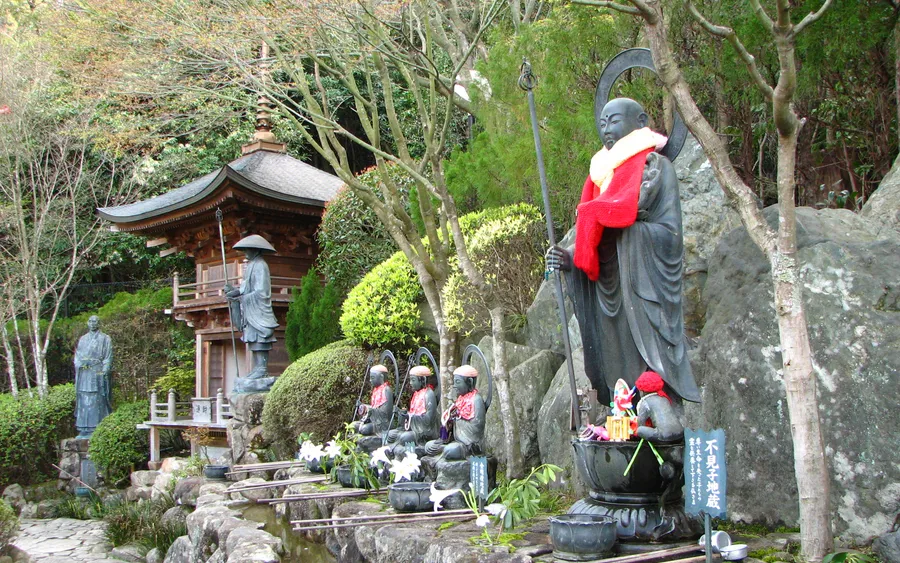
  4. Daisho-in temple, Miyajima4

    10:00 AM — Daishoin Temple

    From Senjokaku, it's about a 15-minute walk along the base of Mount Misen to Daishoin, one of the island's most important Buddhist temples and one of its most photogenic — its paths are lined with hundreds of small Jizo statues, many dressed in hand-knitted caps left by visitors, and a corridor of spinning prayer wheels lets you rack up merit equivalent to reading the sutras inscribed on them without breaking stride. Admission is free, and it makes a natural staging point before the ropeway up the mountain, whose base station is a short walk further on.

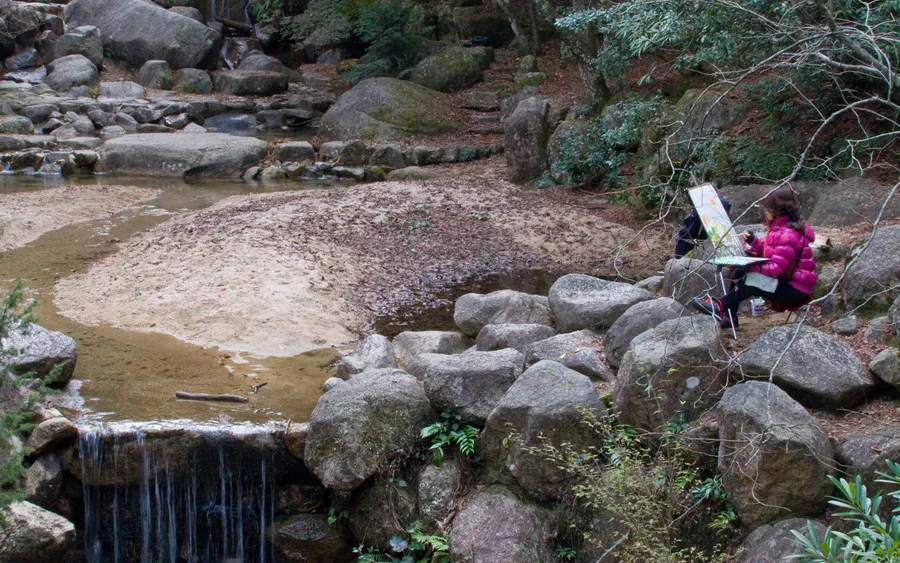
  5. Momijidani Park, Miyajima5

    10:45 AM — Momijidani Park & the Ropeway Up

    Beyond Daishoin, Momijidani — 'maple valley' — is a stream-fed park crossed by arched bridges, and while its hundreds of maples are best known for turning brilliant red and gold from mid-November into early December, it's a pleasant walk in any season, deer included. The park sits right at the base station of the Miyajima Ropeway, which climbs in two stages to the Shishiiwa Observatory near Mount Misen's summit in about 14 minutes total — buy your ticket here and budget a little extra time in high season, when queues can build even with the ropeway's steady departures.

    Ropeway: 9:00 AM – 4:00 PM up, last descent 4:30 PM; hours shift seasonally
  6. Miyajima Ropeway ascending Mount Misen6

    11:30 AM — Mount Misen Summit

    From the Shishiiwa Observatory, it's roughly another 30-minute walk to Mount Misen's true summit at 535 meters, a trail that passes Kobo Daishi's Eternal Flame, said to have burned continuously since the Shingon Buddhist monk lit it while practicing austerities on the mountain in 806. The summit itself opens onto panoramic views over the Seto Inland Sea's scattered islands, and on a clear day it's worth the extra climb rather than turning back at the observatory — this is the highest, quietest point of the day, and a good spot to slow down before heading back for lunch.

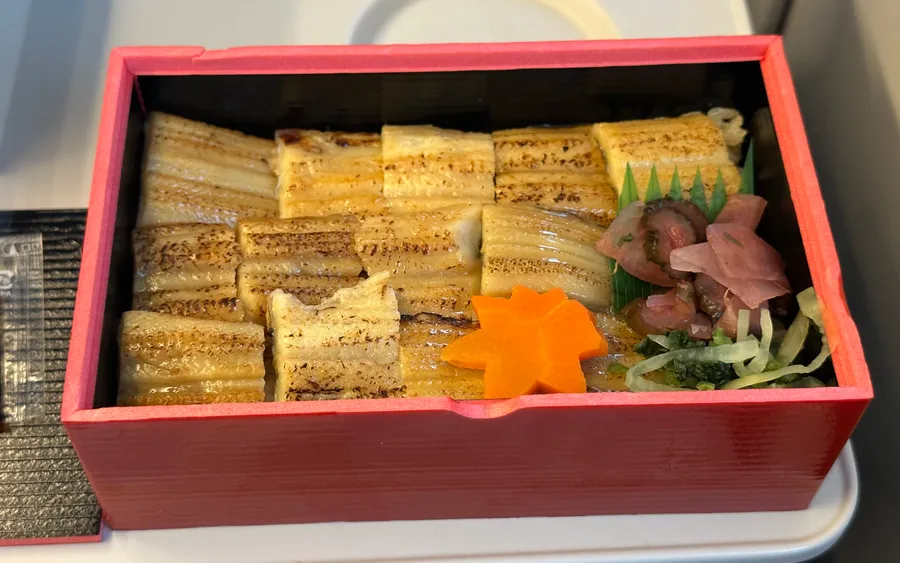
  7. Anago meshi (conger eel rice)7

    1:00 PM — Anago Meshi Lunch

    Back down near the ferry pier, break for anago meshi — grilled conger eel over rice cooked in a dashi made from the eel's own bones — a dish invented on the island in 1901 by Ueno Tanikichi, who first sold it as a train-station bento at Miyajimaguchi. Ueno's original restaurant still operates a two-minute walk from the pier, over a century later, and its bento box travels well if you'd rather eat on a bench with a shrine view than sit down for a full meal.

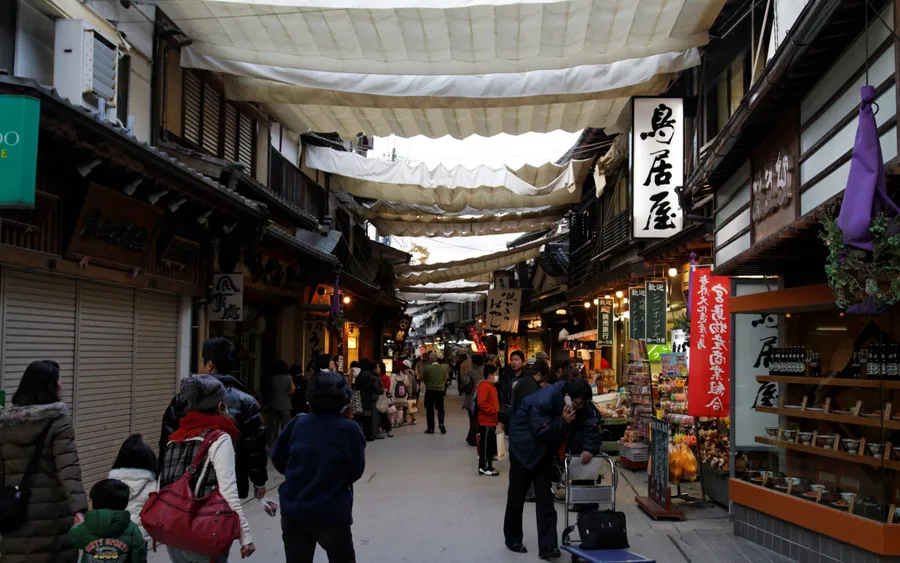
  8. Omotesando shopping arcade, Miyajima8

    2:00 PM — Omotesando Shopping & Momiji Manju

    Wind through Omotesando, the roughly 350-meter arcade connecting the pier to the shrine, past shops selling Miyajima's carved wooden shakushi rice scoops — supposedly designed here in the late 18th century by a monk inspired by a vision of the goddess Benzaiten — and a giant novelty version mounted along the street as one of the island's more offbeat photo stops. Stop at one of the dozen-plus shops selling fresh momiji manju, the maple-leaf cake invented on Miyajima in 1906, ideally one with a glass-fronted kitchen so you can watch the presses at work before eating one still warm.

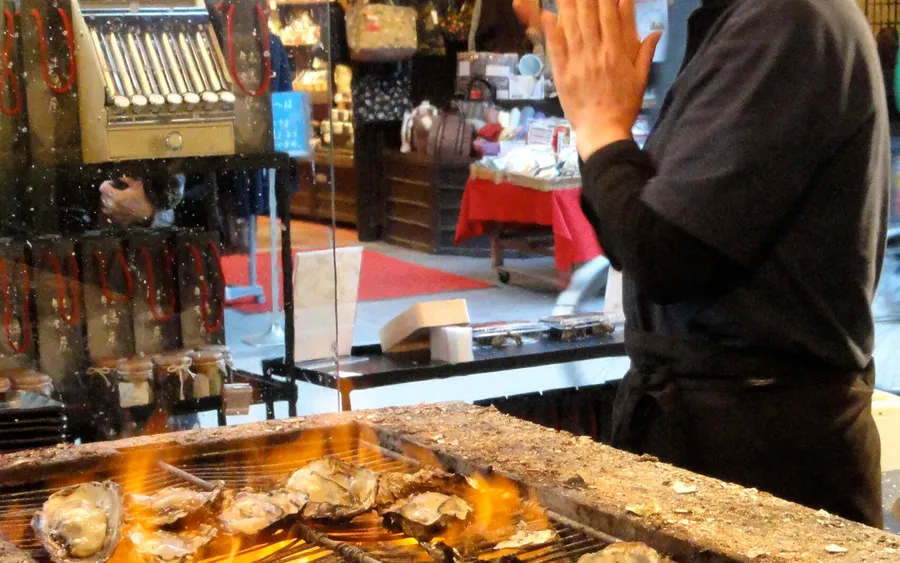
  9. Grilled oysters, Miyajima9

    3:30 PM — Grilled Oysters & a Second Look at the Torii

    Close out the day with grilled oysters from one of the stalls along Omotesando or near the pier — Hiroshima Prefecture produces around 60% of Japan's oysters, and a smoky, charcoal-grilled one eaten standing up is one of the easiest, most satisfying detours on the island. If the tide has turned since morning, swing back past the shrine for the view you didn't get the first time around — the floating gate and the low-tide walk out to its base are different enough experiences that catching both in one day, if the timing lines up, is worth the extra loop before the ferry back to Miyajimaguchi and on to Hiroshima for the night.

Keep reading

More guides you might like

Nearby

Related destinations

Continue

Related services

Easy Travel in Japan