Skip to content
Easy Travel in Japan
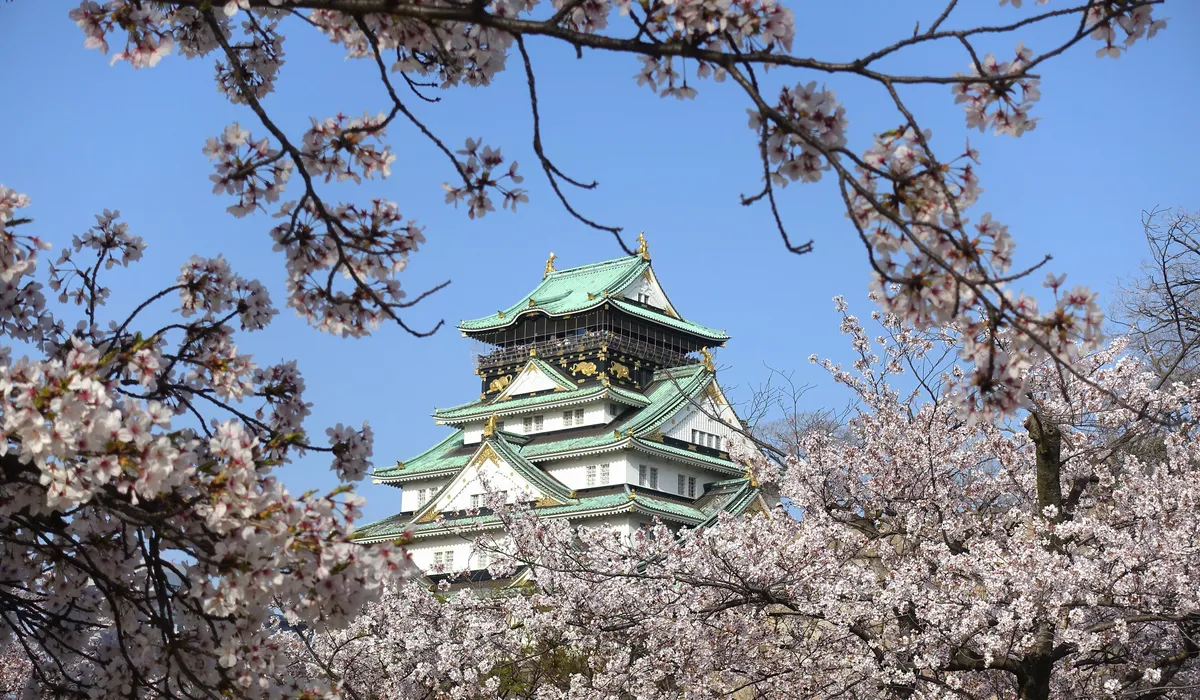
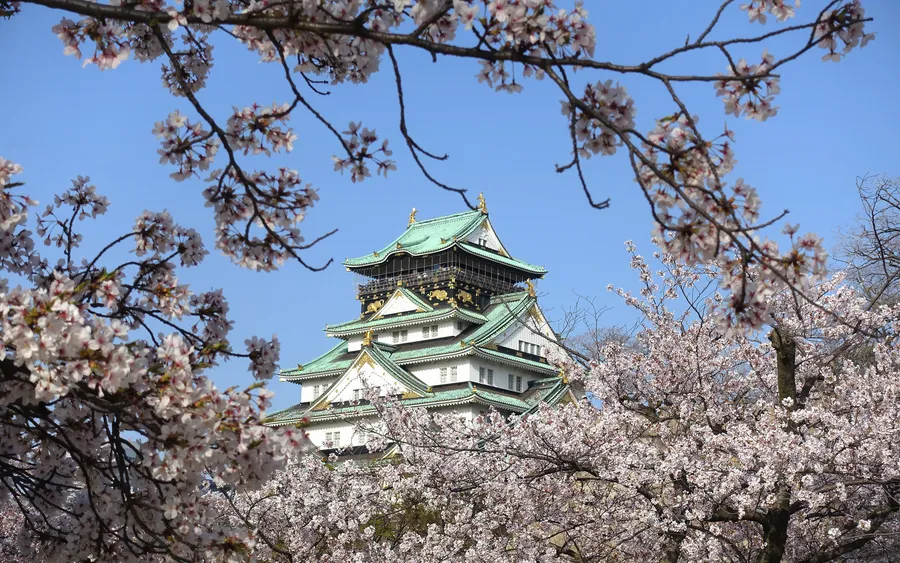
Osaka Castle surrounded by cherry blossoms

The Ultimate Osaka Travel Guide

Osaka is Japan’s food capital — a livelier, funnier city than its more famous neighbors, built around eating well and not taking itself too seriously. Here’s a closer look at the landmarks, flavors, neighborhoods, and experiences that make it worth exploring, whether you have a weekend or a full week.

Attractions

The landmarks that make Osaka instantly recognizable.

  1. Osaka Castle surrounded by cherry blossoms1

    Osaka Castle

    One of Osaka's most recognizable landmarks, first built in 1583 by the warlord Toyotomi Hideyoshi and rebuilt in its current form in 1931 after centuries of fire and war. Inside, the tower doubles as a small history museum, and climbing to the top rewards you with one of the best views over the city. The 106-hectare park around it is an easy, unhurried place to spend an afternoon, especially in spring when thousands of cherry trees come into bloom and the whole grounds fill with picnicking locals.

    9:00 AM – 5:00 PM (last entry 4:30 PM)1-1 Osakajo, Chuo Ward, Osaka
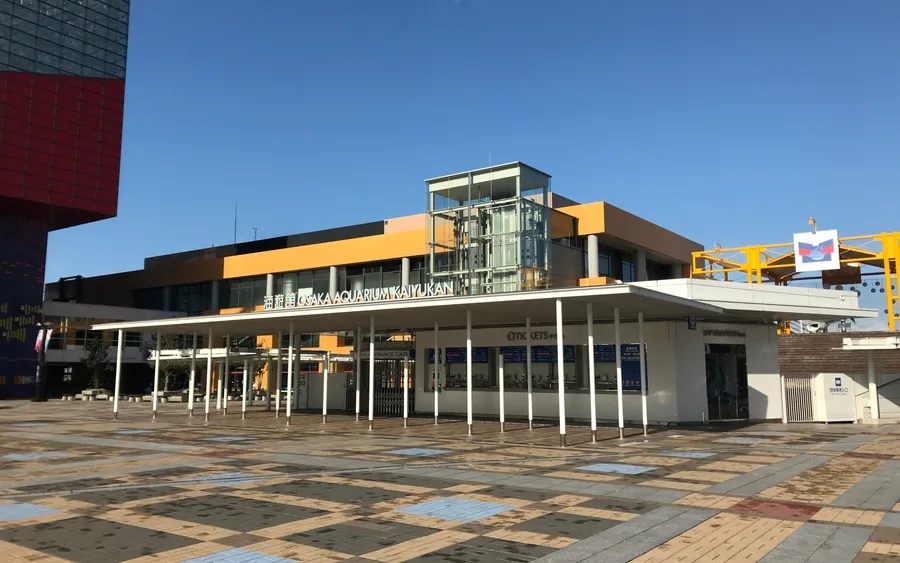
  2. Entrance building of Osaka Aquarium Kaiyukan2

    Osaka Aquarium Kaiyukan

    A favorite with families, Kaiyukan opened in 1990 as the largest public aquarium in the world at the time, and it still impresses. The whole building is built around one enormous central tank, home to gentle whale sharks drifting past floor-to-ceiling glass, and a spiral walkway takes you gradually downward past smaller tanks recreating different corners of the Pacific Rim along the way. It's an easy, unhurried few hours by the bay, and a nice change of pace if you've been temple-hopping all week.

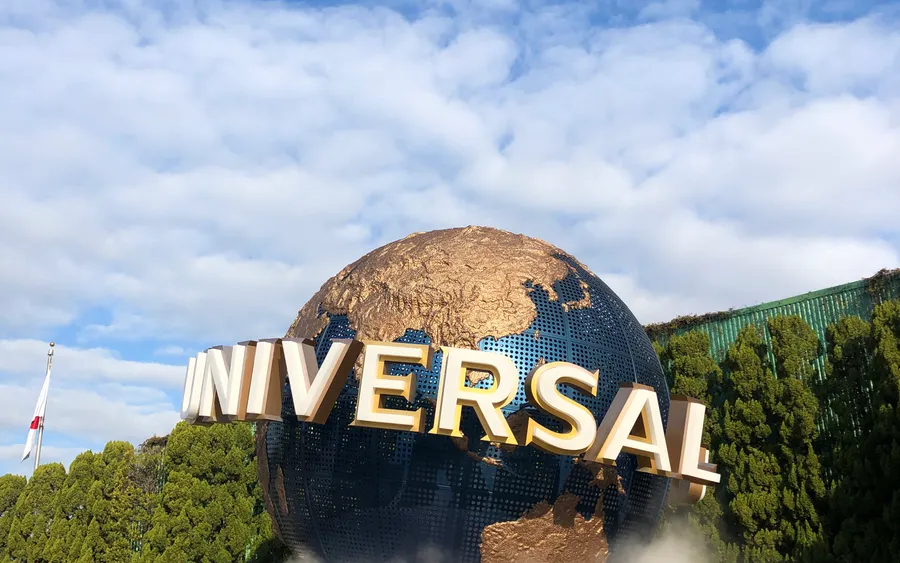
  3. The globe entrance sign at Universal Studios Japan3

    Universal Studios Japan

    Japan's most-visited theme park, USJ opened in 2001 as one of only six Universal parks in the world, and it's built almost entirely around franchises most travelers already know — the Wizarding World of Harry Potter and Super Nintendo World are the two most talked-about lands right now. It's a short train ride from central Osaka via Universal City Station, so it's easy to fold into a day trip rather than a whole separate stop on your itinerary. Good for families, but honestly also a fun day out for adults who grew up on the movies and games it's built around.

Food

Osaka calls itself kuidaore — eat until you drop — and here's where that reputation comes from.

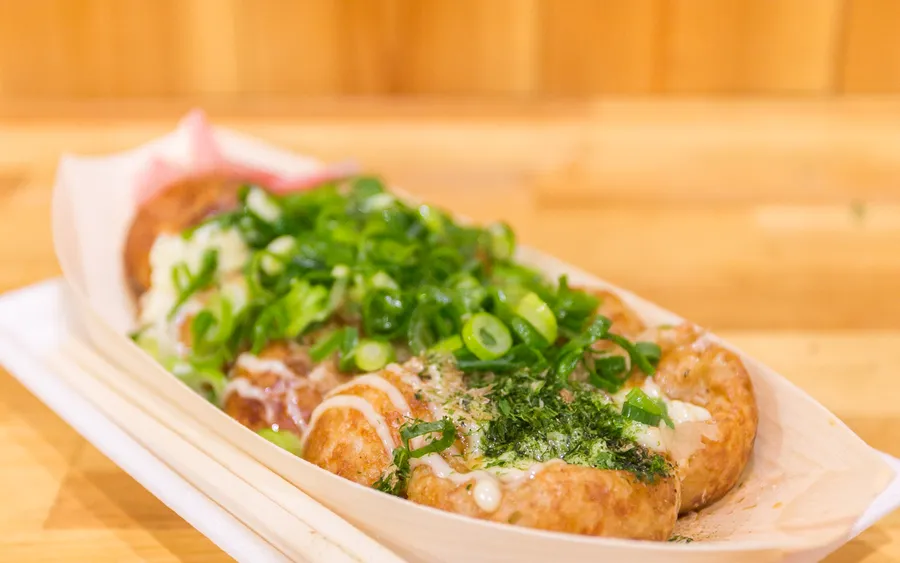
  1. A serving of fresh takoyaki topped with bonito flakes1

    Takoyaki

    Ball-shaped, batter-fried, and stuffed with a piece of octopus, takoyaki was invented right here in Osaka in 1935 by a street vendor named Tomekichi Endo, and it's been the city's signature snack ever since. You'll find griddles sizzling away outside train stations and down side streets, the balls brushed with a sweet-savory sauce, mayo, dried bonito flakes that flutter in the steam, and a dusting of green seaweed. They're served in little paper boats, meant to be eaten standing up, and always a little too hot straight off the griddle — part of the fun is waiting just long enough not to burn your tongue.

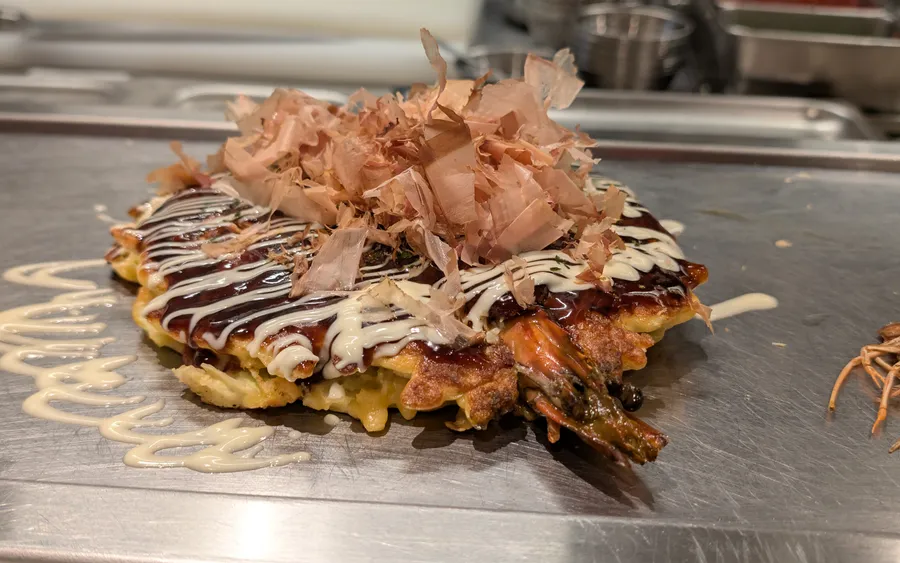
  2. Okonomiyaki cooking on a griddle2

    Okonomiyaki

    Sometimes described as a savory pancake, okonomiyaki is really its own thing — the name literally means 'grilled as you like it,' and the dish traces back to a cheap prewar street food called issen yoshoku before it grew into the cabbage-heavy, batter-and-topping version served today. At a lot of restaurants you'll cook it yourself at a built-in teppan grill right at your table, flipping it once it's set and finishing it with sauce, mayo, and bonito flakes that curl in the rising heat. Osakans take real pride in this one, and will happily tell you it's not the same anywhere else in Japan.

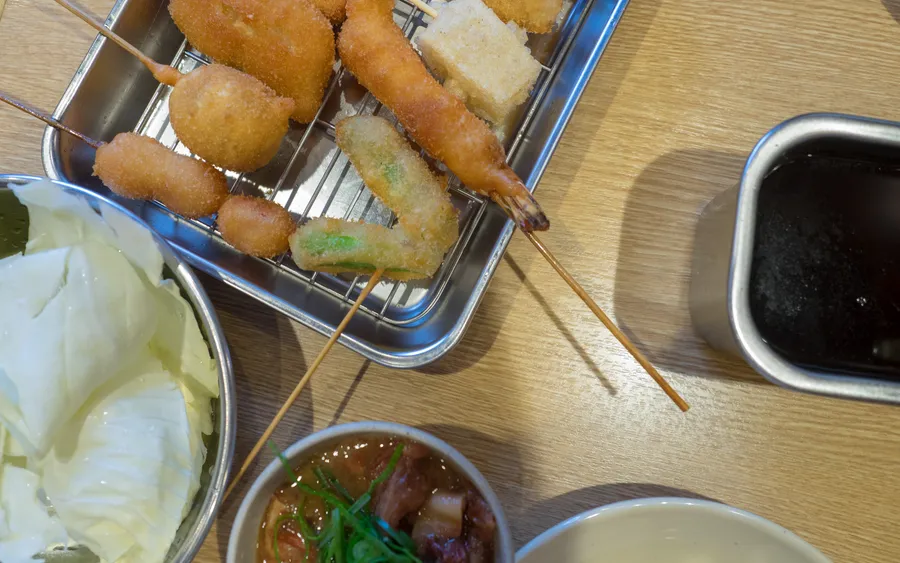
  3. A plate of deep-fried kushikatsu skewers3

    Kushikatsu

    Bite-sized skewers of meat, seafood, and vegetables, breaded and deep-fried one at a time, kushikatsu is said to have started in Shinsekai back in 1929 as a cheap, filling meal for local laborers. These days it's just as popular with visitors, served at standing-room counters where skewers keep coming until you say stop. There's one rule locals will happily remind you of if you forget: dip once into the shared sauce and no going back for seconds — cabbage leaves on the counter are there for scooping up extra instead.

Neighborhoods

Wander these streets and you'll get a feel for the city's energy.

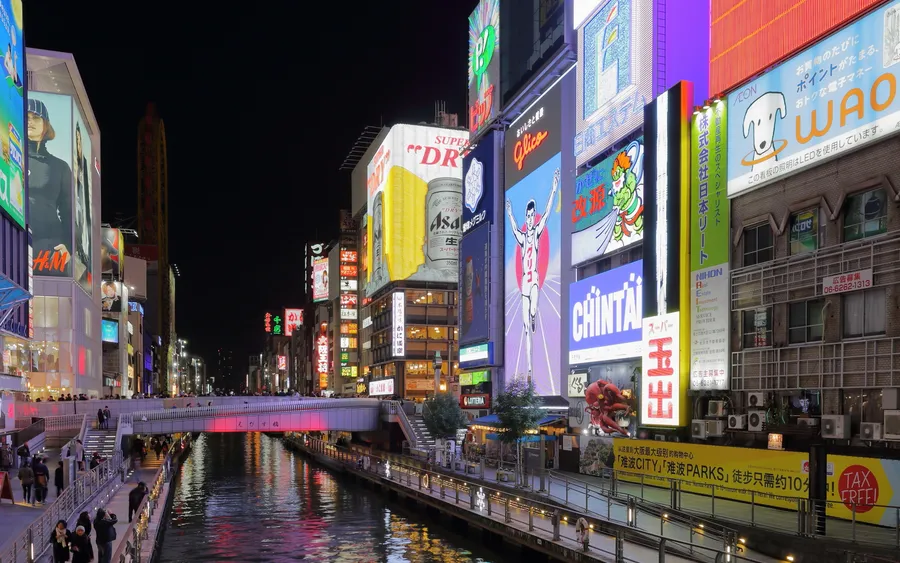
  1. Dotonbori canal lit up with neon signs at night1

    Dotonbori

    Osaka's most photographed street, Dotonbori has been an entertainment district since the 1620s, when the canal that runs through it first drew theaters and restaurants to its banks. Today it's known for its wall-to-wall neon — giant mechanical crabs, dragons, and the glowing Glico 'running man' billboard that's been lighting up the canal since 1935. It's loud and more than a little chaotic most nights of the week, but that's exactly the appeal: this is where Osaka's after-dark energy is most on display, and it's best experienced on foot once the sun goes down.

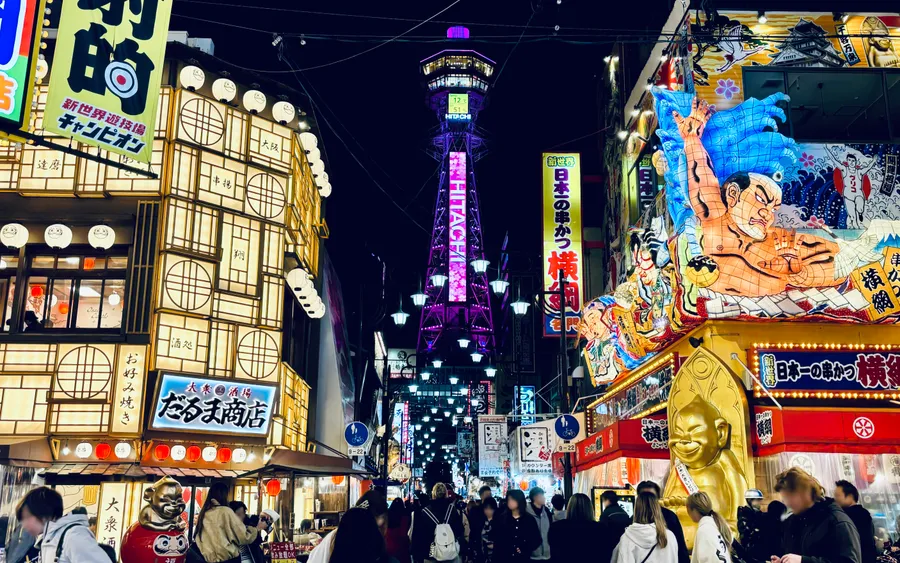
  2. Tsutenkaku Tower lit up above the streets of Shinsekai2

    Shinsekai & Tsutenkaku Tower

    Shinsekai grew up around an amusement park that opened here in 1912 and is long gone now, but the neighborhood has kept that old-world, slightly time-capsule feel — hand-painted signs, retro arcades, and kushikatsu counters that look like they haven't changed in decades. Tsutenkaku Tower, rebuilt in its current form in 1956 after the original burned down, still rises above it all as the district's landmark. Duck into the covered Janjan Yokocho arcade nearby for a look at a side of Osaka that feels a world away from the glossier streets of Shinsaibashi.

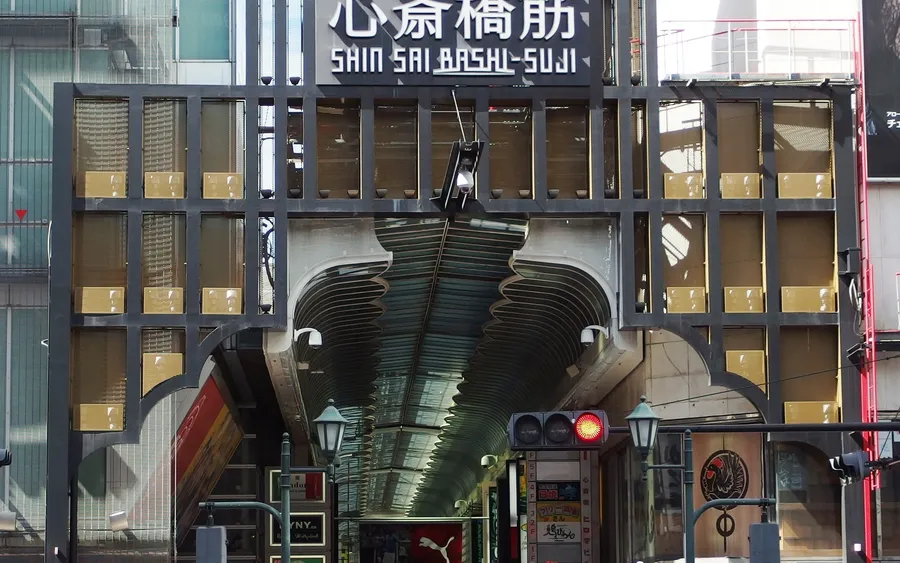
  3. Entrance to the covered Shinsaibashi shopping arcade3

    Namba, Shinsaibashi & Amerikamura

    This is Osaka's main shopping and nightlife stretch, built around the long covered Shinsaibashi arcade, where department stores and small boutiques sit side by side under the same glass roof rain or shine. A few blocks over, Amerikamura — 'American Village' — is the younger, scruffier counterpart: vintage clothing shops, record stores, and street art packed into a few square blocks that come alive after dark. It sits right next to Dotonbori, so it's easy to fold the two together into one long afternoon and evening of wandering with no fixed plan.

Experiences

A few ways to see a quieter, more traditional side of the city.

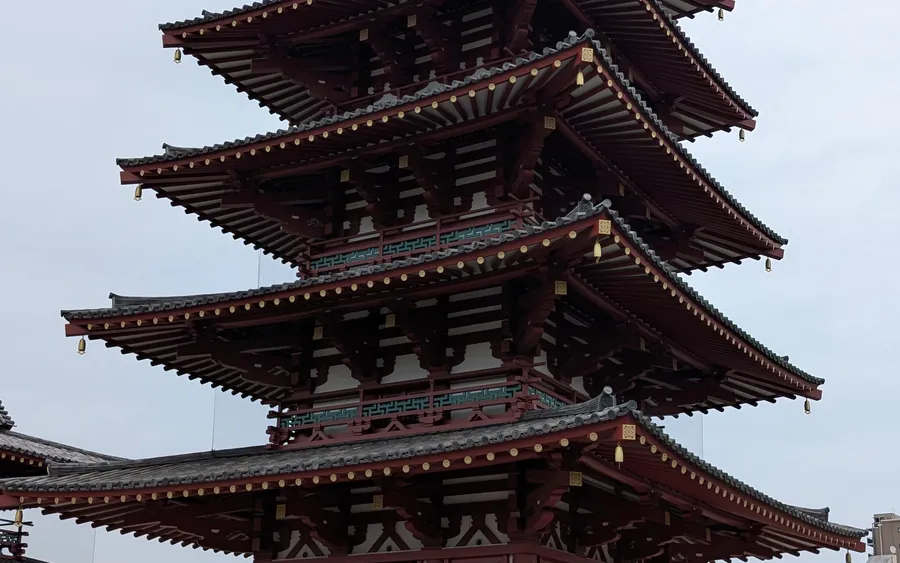
  1. The five-story pagoda at Shitennoji Temple1

    Japan's oldest Buddhist temple

    Founded in 593 by Prince Shotoku, Shitennoji is Japan's oldest officially state-administered Buddhist temple, and even though fire and war have forced it to be rebuilt many times over the centuries, it's always been reconstructed to its original 6th-century layout. The five-story pagoda and surrounding garden make it one of the calmest, most contemplative corners of the city — a good stop if you want a slower morning between the busier sights.

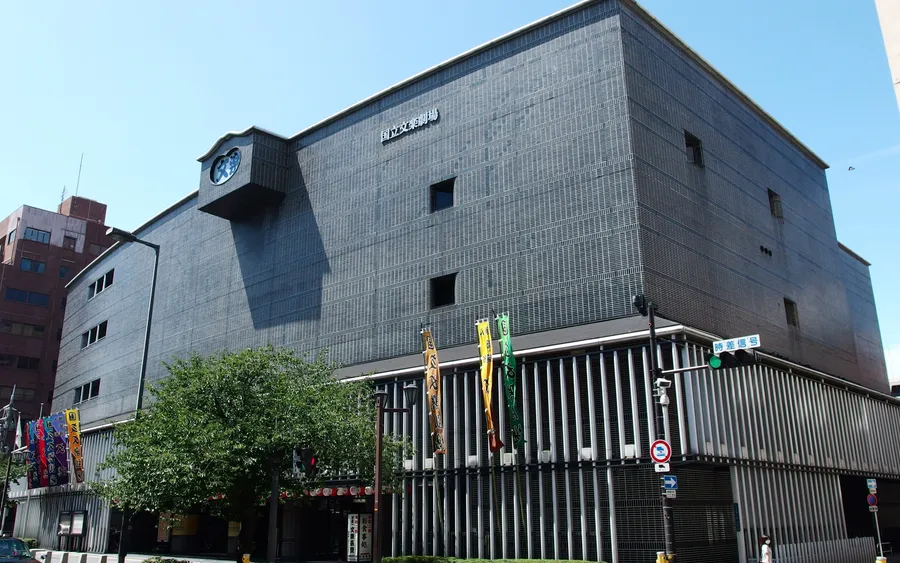
  2. Exterior of the National Bunraku Theatre in Osaka2

    A Bunraku puppet performance

    Osaka is the birthplace of Bunraku, a form of puppet theater that dates back to the early 17th century and took the form we recognize today in the 1680s, through the partnership of playwright Chikamatsu Monzaemon and chanter Takemoto Gidayu. Each puppet is worked by three puppeteers in full view of the audience, moving in perfect sync while a chanter and shamisen player narrate the story from the side of the stage. It sounds like it might take some getting used to, but performances at the National Bunraku Theatre near Namba are genuinely gripping once the story gets going — and it's now recognized by UNESCO as a piece of Intangible Cultural Heritage.

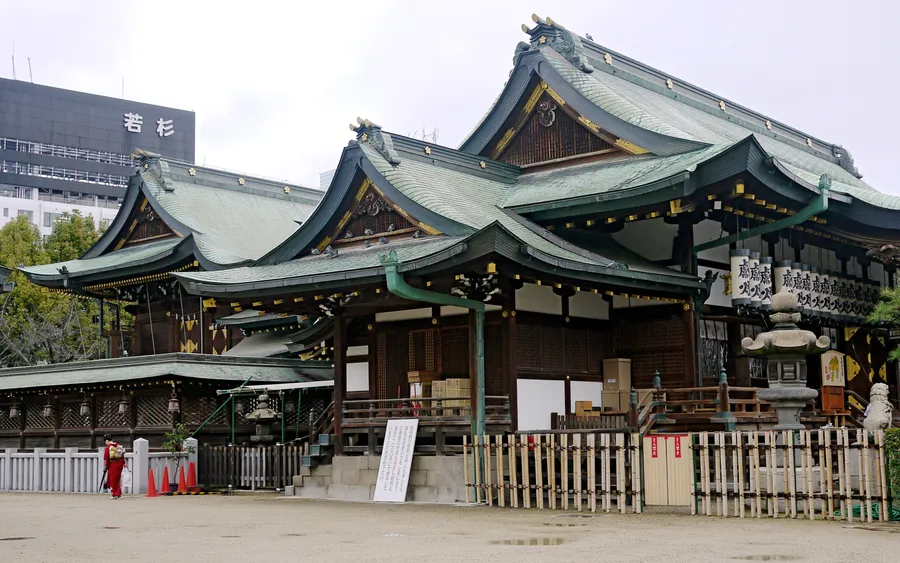
  3. Osaka Tenmangu Shrine3

    The Tenjin Matsuri

    Osaka Tenmangu Shrine traces its history back to 951, and every July 24 and 25 it hosts the Tenjin Matsuri, considered one of the three greatest festivals in all of Japan. The celebration starts with a procession through the streets and then moves onto the water, where around a hundred boats carry portable shrines, musicians, and dancers down the river as the sun sets. It closes with a fireworks display over the water that draws huge crowds to the riverbanks — worth building a whole trip around if your dates line up.

Keep reading

More guides you might like

Nearby

Related destinations

Continue

Related services

Easy Travel in Japan