Skip to content
Easy Travel in Japan
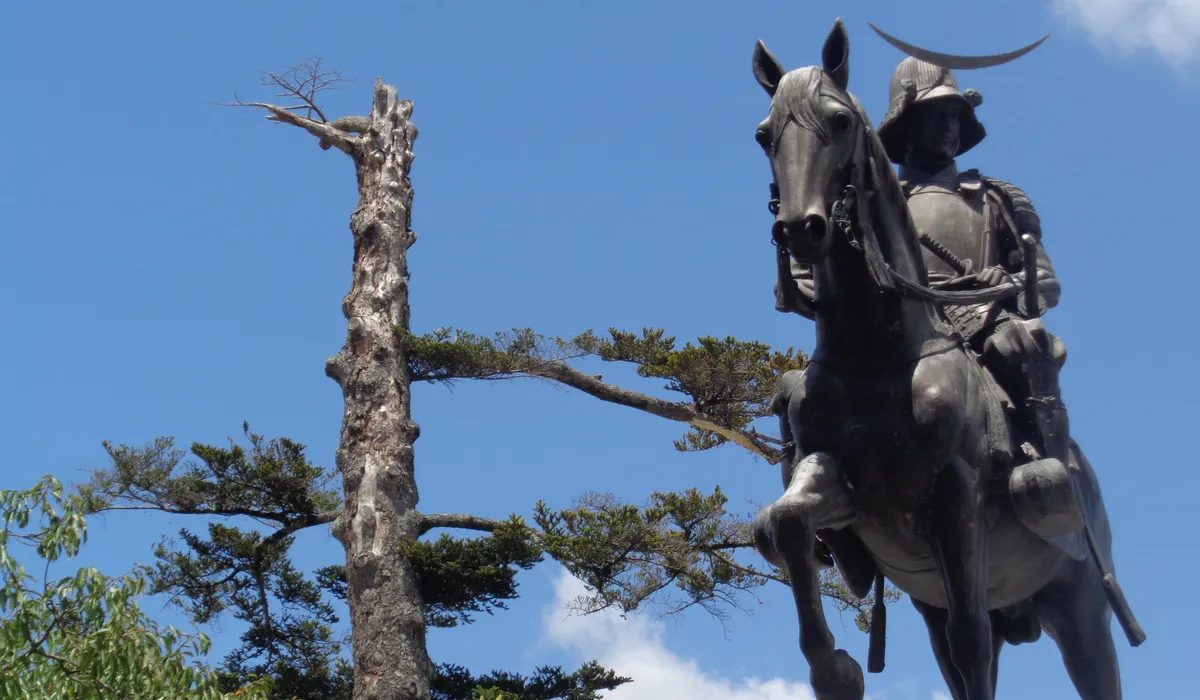
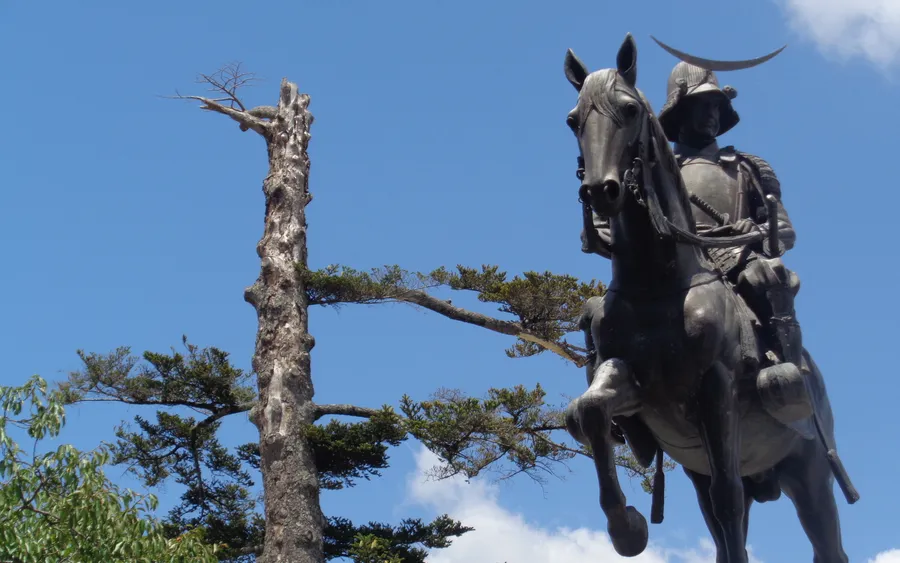
Statue of Date Masamune, Sendai

The Ultimate Sendai Travel Guide

Sendai is Tohoku’s largest city, built around the legacy of Date Masamune, the one-eyed samurai lord who founded it in 1600 — a legacy still visible in the castle ruins, the mausoleum, and the shrines his clan built four centuries ago. Here’s a closer look at the landmarks, flavors, streets, and festivals that make it worth exploring, whether you’re passing through by Shinkansen or using it as a base for the wider Tohoku region.

Attractions

The landmarks that trace Date Masamune's legacy, from his mausoleum to the hilltop where his castle once stood.

  1. Zuihoden mausoleum, Sendai1

    Zuihoden

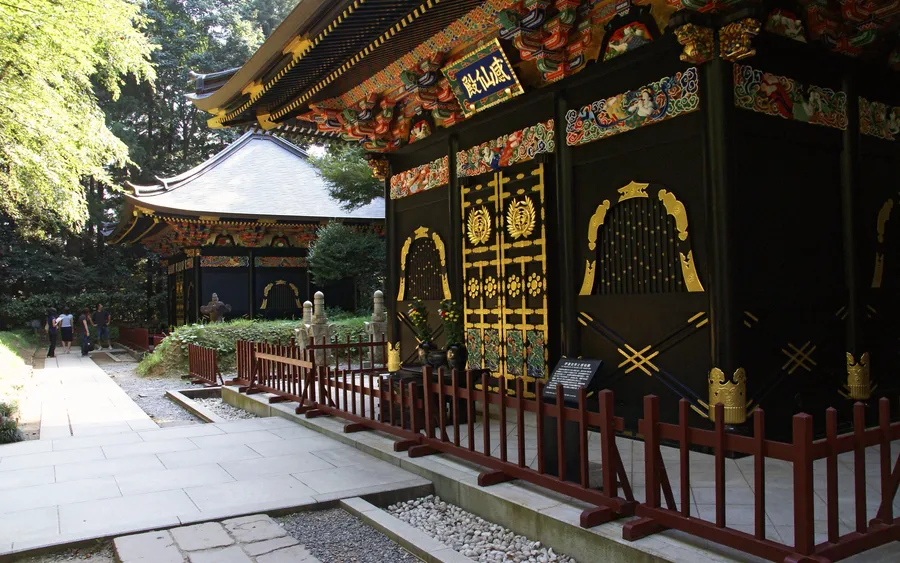
    Zuihoden is the mausoleum of Date Masamune, the samurai lord who founded Sendai in 1600, built in 1637 in lavish Momoyama style — black lacquer, gold leaf, and polychrome carving that was considered excessive even by the standards of the day. The original complex was destroyed in a WWII air raid and rebuilt by 1979, closely following the original design based on surviving records and photographs. The mausoleum sits in a forest of towering cedars, some centuries old, that gives the approach a hushed, reverent feel well before you reach the gate.

    9:00 AM – 4:50 PM (Feb–Nov); 9:00 AM – 4:20 PM (Dec–Jan); closed Dec 3123-2 Otamayashita, Aoba-ku, Sendai
  2. Statue of Date Masamune, Sendai2

    Aoba Castle

    Date Masamune began building his castle on Mount Aoba in 1600, the year he was granted the territory after the Battle of Sekigahara, and though the castle itself never survived into the modern era intact, the hilltop site is still the place most associated with his legacy. Surviving stone walls, a reconstructed side turret, and a bronze statue of Masamune on horseback — illuminated every night — now sit within Aobayama Park, along with sweeping views over the city below. Masamune, popularly nicknamed 'Dokuganryu,' the One-Eyed Dragon, after losing sight in one eye to smallpox as a child, remains Sendai's defining historical figure, and this hilltop is where that legacy is most visible.

    Park: 9:00 AM – 5:00 PM1 Kawauchi, Aoba-ku, Sendai
  3. Osaki Hachimangu Shrine, Sendai3

    Osaki Hachimangu Shrine

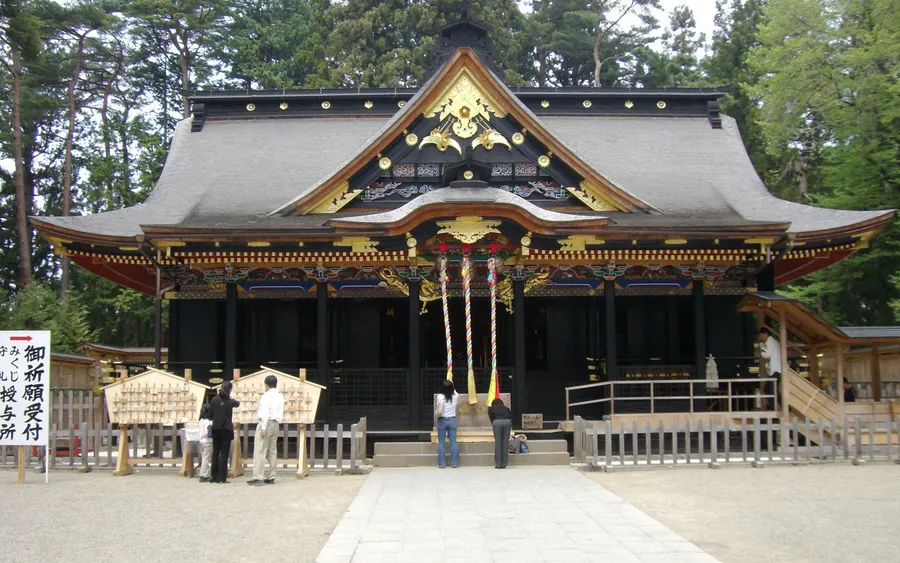
    Built in 1607 as the Date clan's guardian shrine, Osaki Hachimangu is a National Treasure, its black-lacquered, gold-leafed main hall considered one of the finest surviving examples of Momoyama-period shrine architecture in the Tohoku region. The shrine hosts the Dontosai Festival every January 14, when thousands of people walk here through the winter cold, some barefoot, to burn their old New Year's decorations in a purifying bonfire. Even outside festival season, the ornate carving and gilding on the main hall reward a slow, close look rather than a quick photo from a distance.

  4. Sendai Daikannon statue4

    Sendai Daikannon

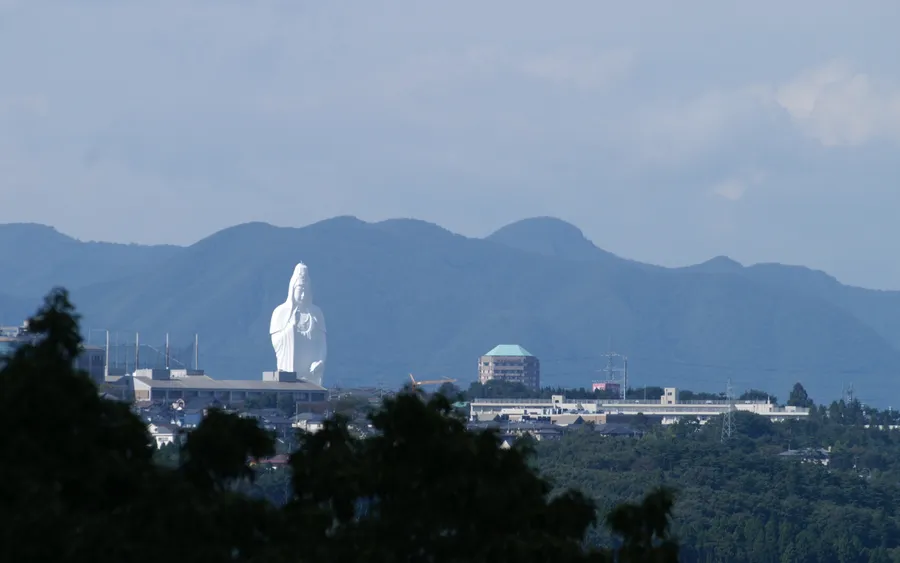
    Visible from much of the city, the Sendai Daikannon is a 100-meter statue of Byakue Kannon, the white-robed bodhisattva of mercy, holding a wish-granting jewel in one hand — completed in 1991, it's the tallest statue of a goddess in Japan and among the tallest statues in the world. An elevator inside the statue's base carries visitors up through several floors housing hundreds of smaller Buddhist figures before reaching an observation level near the top, with views out over Sendai and, on a clear day, toward the mountains beyond. It has a slightly surreal, out-of-scale presence in its residential neighborhood setting, and that contrast is part of what makes the visit memorable.

    10:00 AM – 3:30 PM weekdays; 10:00 AM – 4:00 PM weekends & holidays31-36 Nakayamaminami, Motosawa, Izumi-ku, Sendai

Food

Sendai gave Japan grilled beef tongue, and its other specialties are just as distinctly regional.

  1. Gyutan, Sendai1

    Gyutan

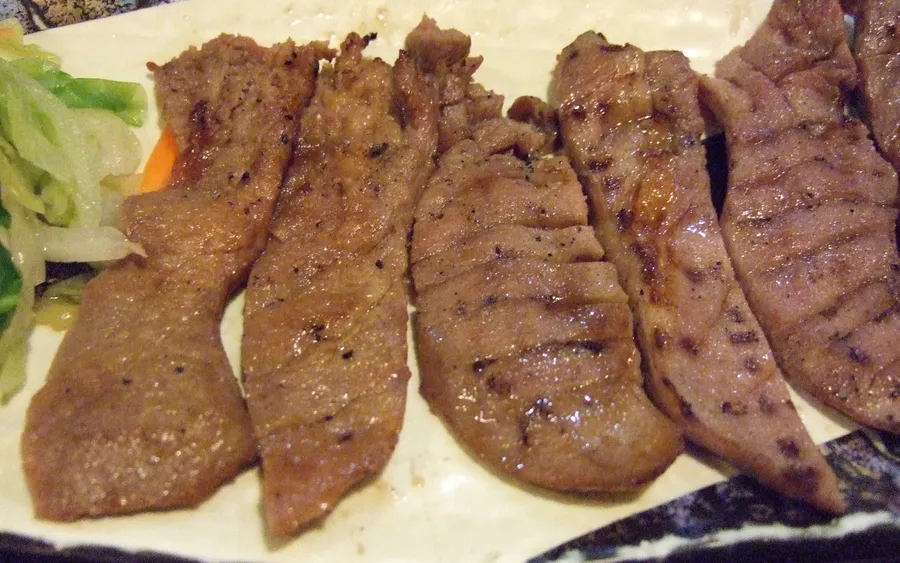
    Gyutan, grilled beef tongue, was invented right here in 1948, when a Sendai restaurant owner named Keishiro Sano started slow-grilling salted, thin-sliced beef tongue over charcoal after being introduced to the ingredient by a French chef — a popular story crediting the dish to discarded American military rations isn't accurate. It's traditionally served as a set with barley rice, oxtail soup, and pickles, and the tongue itself is grilled until the edges char slightly while the inside stays tender, nothing like the tough or gamey texture some visitors expect. The dish is now so central to the city's food identity that Sendai Station has an entire floor, Gyutan-dori, dedicated to it.

  2. Zunda-mochi2

    Zunda Mochi

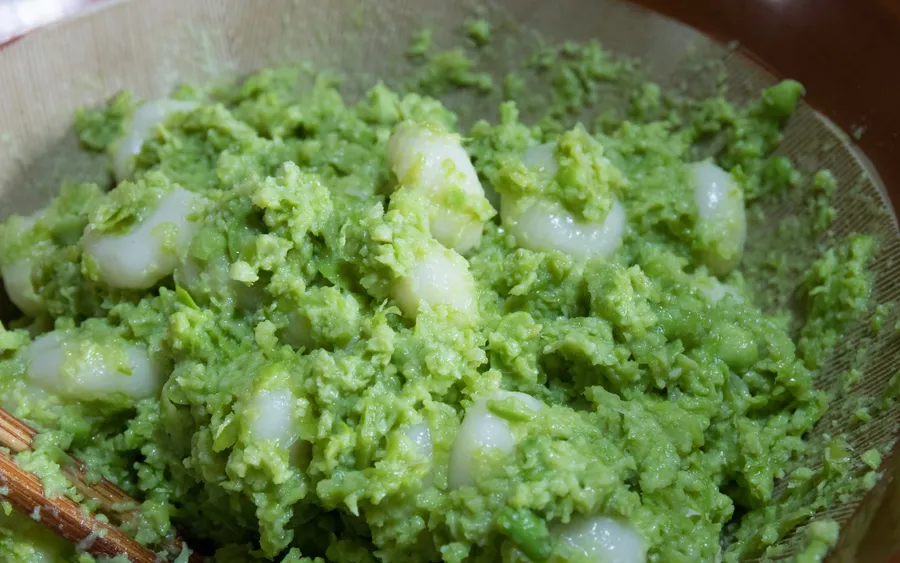
    Zunda mochi is mochi topped with zunda, a bright green paste of sweetened, mashed edamame, and it's one of Sendai's most recognizable specialties even though its exact origin is genuinely uncertain — one popular story credits Date Masamune's soldiers with mashing soybeans with their swords in the field, though historians generally treat this as folklore rather than fact. Whatever its true history, the combination of sweet mochi and the slightly grassy, nutty edamame paste has become a defining local flavor, showing up in everything from traditional wagashi shops to soft-serve ice cream and milkshakes aimed at tourists. It's worth trying the traditional version at least once before the novelty spins.

  3. Sasa-kamaboko fish cakes3

    Sasa Kamaboko

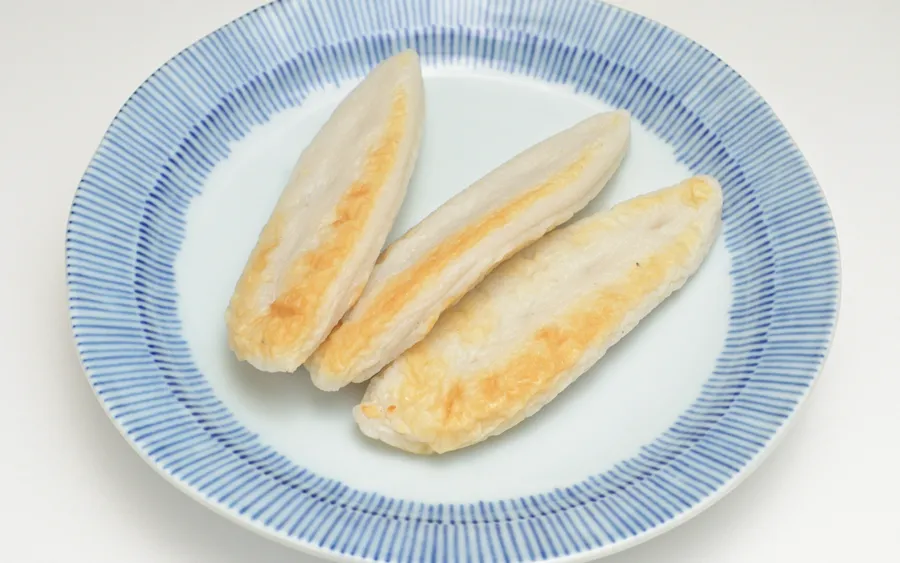
    Sasa kamaboko is a steamed fish cake shaped like a bamboo leaf, invented in Sendai in the early Meiji period as a way to preserve the region's abundant catch of flatfish before refrigeration was common. The leaf shape is thought to echo the Date clan's own crest, tying the snack back to the same samurai lineage responsible for so much of the city's identity. It's often grilled a second time until the edges char slightly, eaten plain or with a dab of wasabi and soy sauce, and it travels well, which is why it's one of the most popular souvenirs to bring home from Sendai.

Neighborhoods

Two very different reasons Sendai earned its nickname, the City of Trees.

  1. Jozenji-dori Avenue, Sendai1

    Jozenji-dori

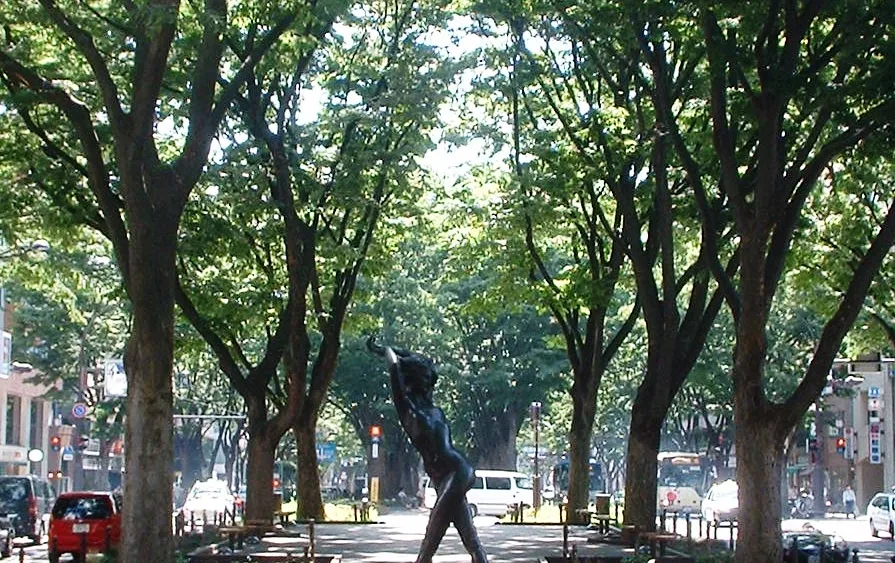
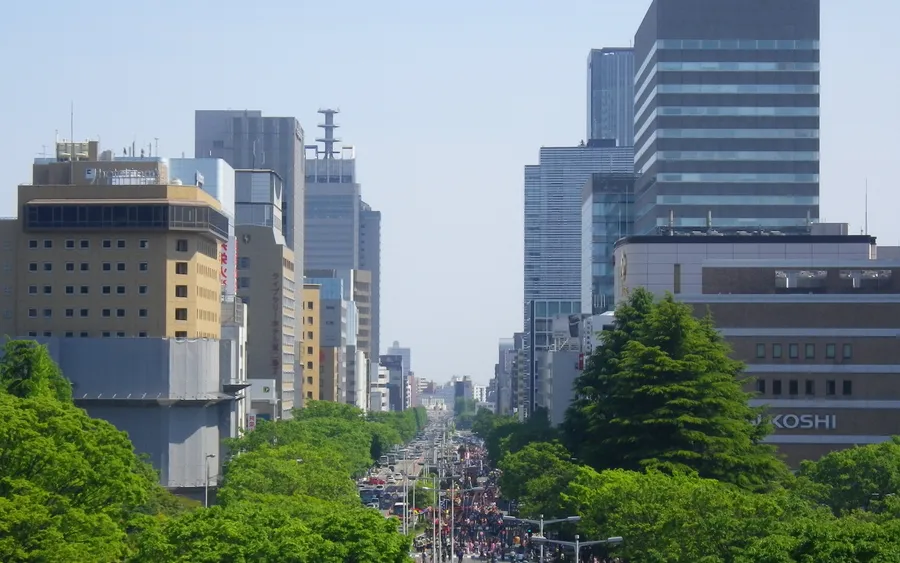
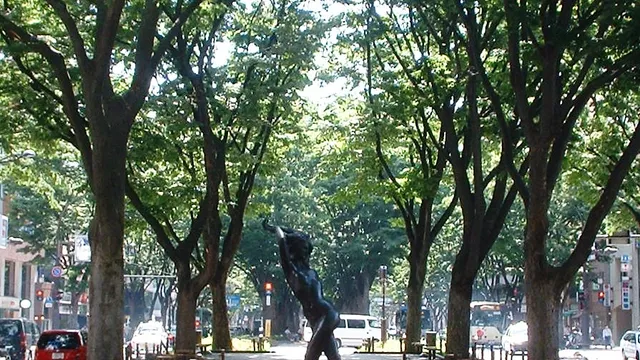
    Jozenji-dori runs east-west through central Sendai, named for a temple that no longer exists but whose era overlaps with Date Masamune's founding of the city in the early 1600s. Four rows of zelkova trees, some over 60 years old, form a canopy over the avenue and its central promenade, and this single street does more than anything else to justify Sendai's old nickname, 'Mori no Miyako' — the City of Trees. It's a genuinely different street to walk depending on the season: bright green in summer, gold in autumn, and strung with hundreds of thousands of lights every December for the Pageant of Starlight.

  2. Saigyo Modoshi no Matsu Park, Matsushima Bay2

    Matsushima Bay

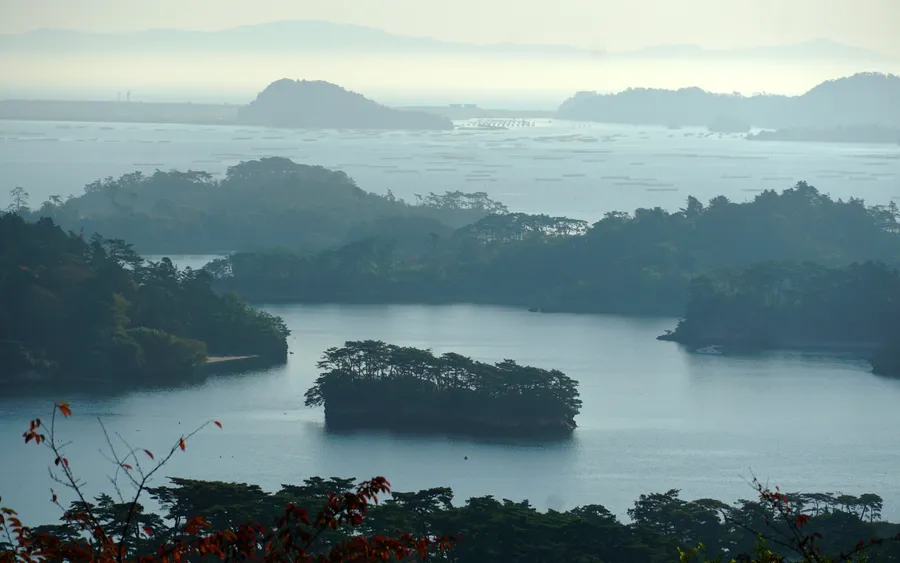
    About 25 minutes northeast of Sendai by train, Matsushima Bay is dotted with roughly 260 small pine-covered islands and is officially recognized as one of Japan's traditional 'Three Views,' alongside Miyajima and Amanohashidate. Sightseeing boats loop out among the islets, some barely large enough for a single twisted pine, past a few larger islands connected to shore by red-lacquered bridges. The 17th-century poet Matsuo Basho is said to have been so overwhelmed by the view that he couldn't write a haiku about it — almost certainly apocryphal, but a story locals still like to tell.

Experiences

The festivals and seasonal events worth building a trip around.

  1. Sendai Tanabata Festival streamers1

    Sendai Tanabata Matsuri

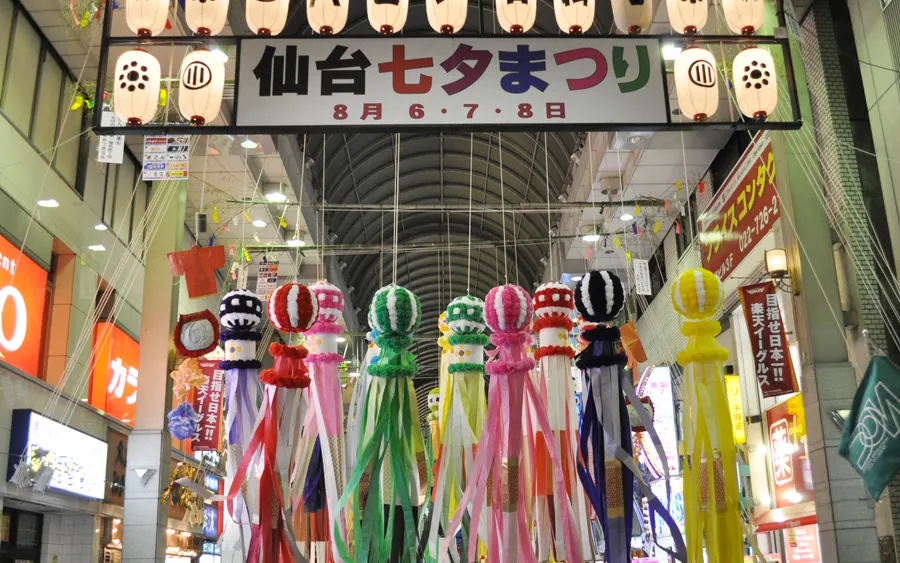
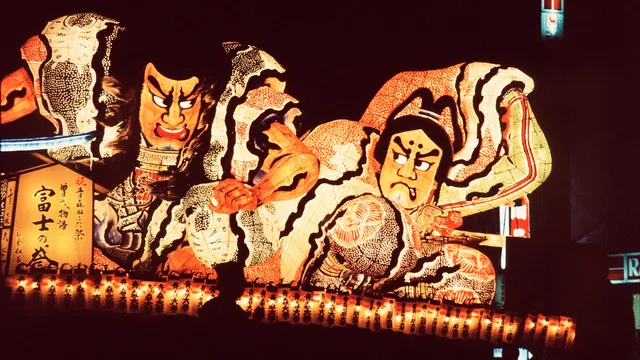
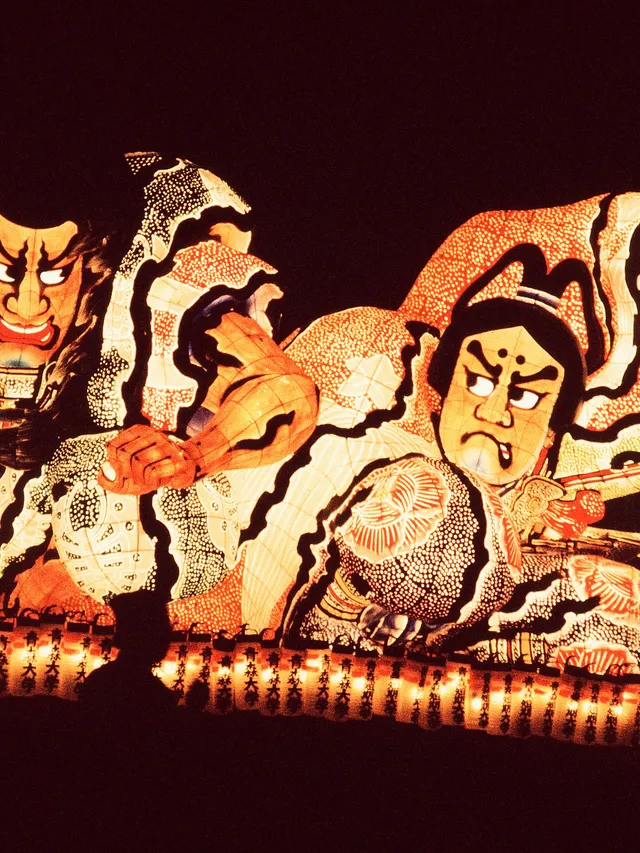
    Held every August 6 to 8, the Sendai Tanabata Matsuri is widely considered the largest Tanabata festival in Japan, filling the city's shopping arcades with thousands of large, handcrafted paper streamers — some running the full height of a building — made from washi paper folded into elaborate net patterns, chains, and origami. It's one of the 'Three Great Festivals of Tohoku,' alongside Akita's Kanto Matsuri and Aomori's Nebuta Matsuri, though it's quieter and more visual than its parade-heavy neighbors: there's no procession, just the arcades themselves transformed into a canopy of color for three days. Food stalls line the streets throughout, making it as much a place to eat as to look up.

  2. Parade, Sendai Aoba Matsuri2

    Aoba Matsuri

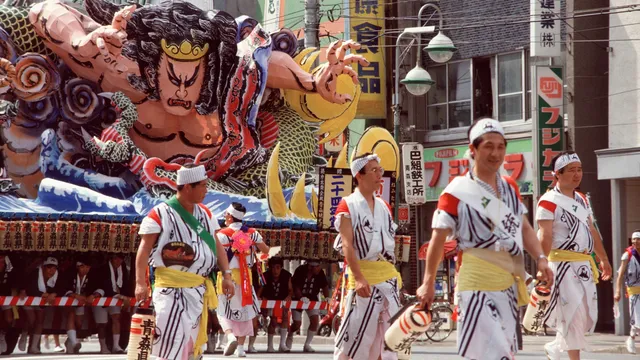
    Held every third weekend of May, near the anniversary of Date Masamune's death, the Aoba Matsuri reenacts his procession from the castle with elaborate hand-pulled floats, mikoshi portable shrines, and hundreds of costumed performers, including dancers in the suzume odori, or 'sparrow dance,' said to have originated when a stonemason spontaneously danced during Masamune's castle-completion celebrations in 1603. It's a livelier, more participatory festival than Tanabata, with the streets of central Sendai closed to traffic and filled instead with drumming, chanting, and the procession itself.

  3. Sendai Pageant of Starlight3

    Pageant of Starlight

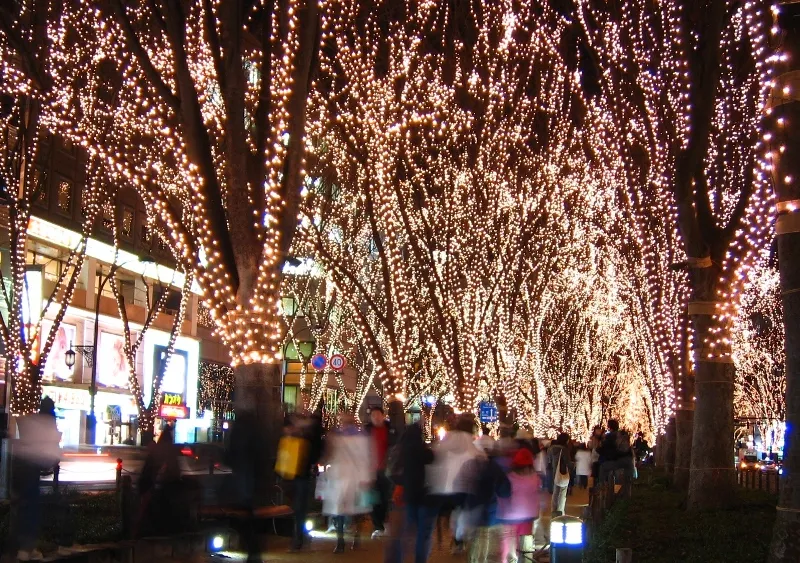
    Every winter from early December through New Year's Eve, roughly half a million lights are strung through the zelkova trees of Jozenji-dori and nearby Aoba-dori, turning the City of Trees into a genuinely dazzling nighttime walk. The event has run since 1986, making it one of the older winter illuminations in Japan, and its appeal is mostly in the simplicity: white lights wrapped through bare branches along a street already known for its scale and symmetry. It pairs naturally with a Zuihoden visit, since the mausoleum runs its own smaller light-up event during the same season.

Keep reading

More guides you might like

Nearby

Related destinations

Continue

Related services

Easy Travel in Japan