Skip to content
Easy Travel in Japan
Gassho-zukuri farmhouses, Ogimachi, Shirakawa-go

The Ultimate Shirakawa-go Travel Guide

Shirakawa-go is a mountain village in the Shogawa River valley of Gifu Prefecture, its steep thatched-roof gassho-zukuri farmhouses inscribed as a UNESCO World Heritage Site in 1995. There’s no train access — only highway bus, roughly 50 minutes from Takayama or a little over an hour from Kanazawa — which is part of why most visitors treat it as a day trip rather than an overnight stop. Here’s a closer look at the farmhouses, viewpoint, food, and local tradition that make the trip worthwhile.

Attractions

The UNESCO-listed farmhouses, viewpoint, and temple museum that define a visit to Ogimachi.

  1. Ogimachi village and rice paddies, Shirakawa-go1

    Ogimachi

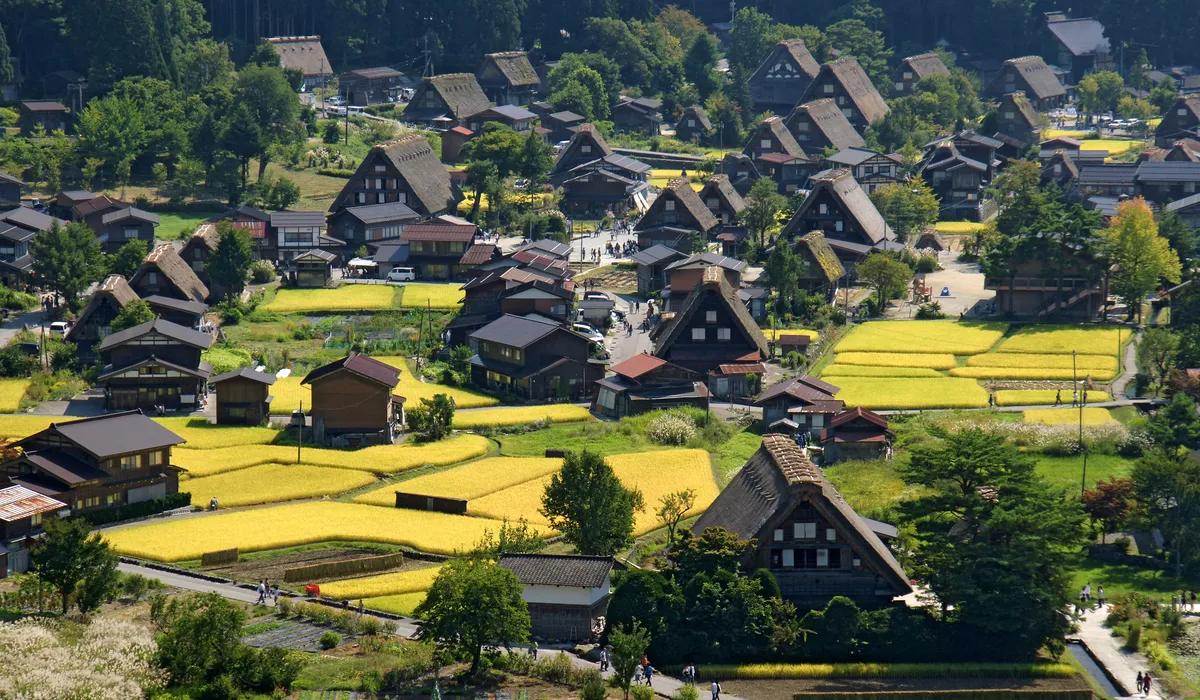
    Ogimachi is Shirakawa-go's main village and the reason the wider area was inscribed as a UNESCO World Heritage Site in 1995, alongside the neighboring Gokayama villages across the border in Toyama. Around 60 gassho-zukuri farmhouses stand here, many still lived in, their steep thatched roofs — pitched close to 60 degrees — engineered generations ago to shed the region's heavy snowfall rather than collapse under it. The name gassho-zukuri, 'constructed like hands in prayer,' describes that roofline directly. Rice paddies surround the settlement, and in late spring, before planting, the flooded fields reflect the rooftops in one of the village's most photographed scenes.
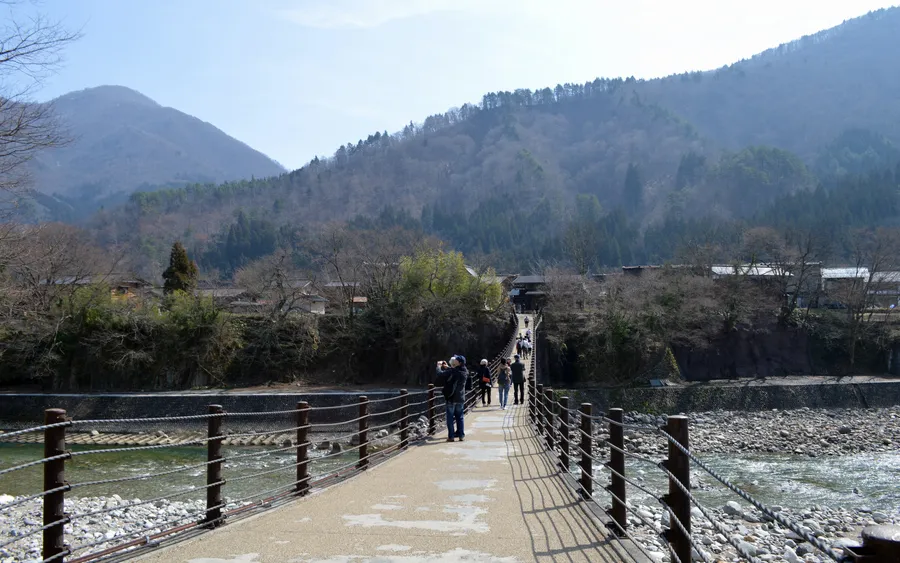
  2. Deai-bashi suspension bridge, Ogimachi, Shirakawa-go2

    Deai-bashi Suspension Bridge

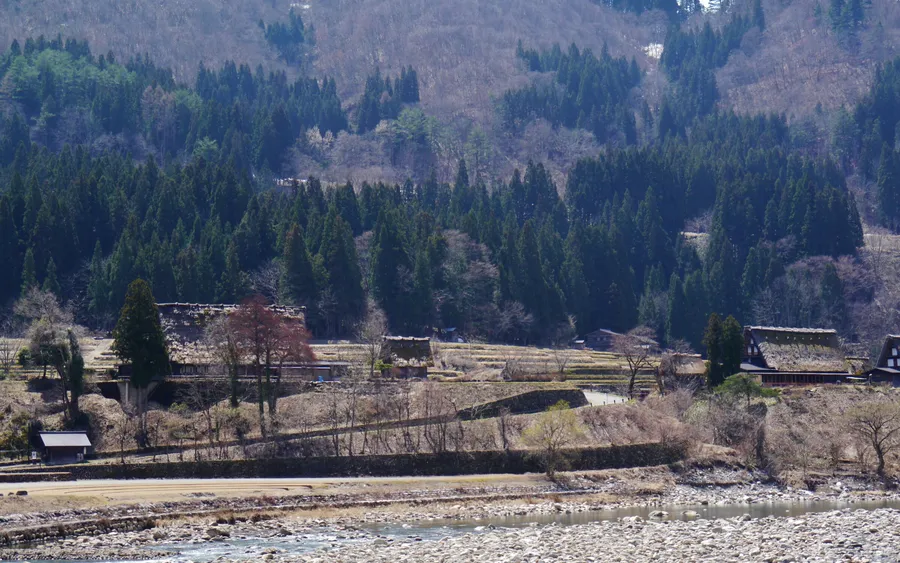
    Deai-bashi, a 107-meter pedestrian suspension bridge over the Shogawa River, is how most visitors actually enter the village, connecting the main parking area and bus terminal to Ogimachi itself. Its understated concrete-and-cable design won a Japan Society of Civil Engineers award in 2003 for blending into the landscape rather than standing apart from it, and it carries a noticeable sway when several people cross at once. Free to cross, it takes only a couple of minutes — long enough for a first proper look at the thatched roofline ahead.

  3. Wada House, Ogimachi, Shirakawa-go3

    Wada House

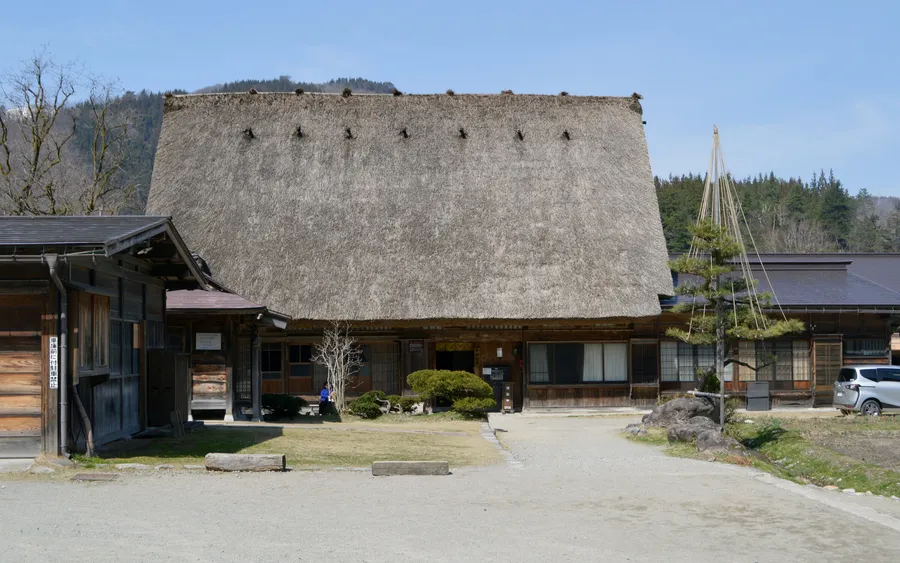
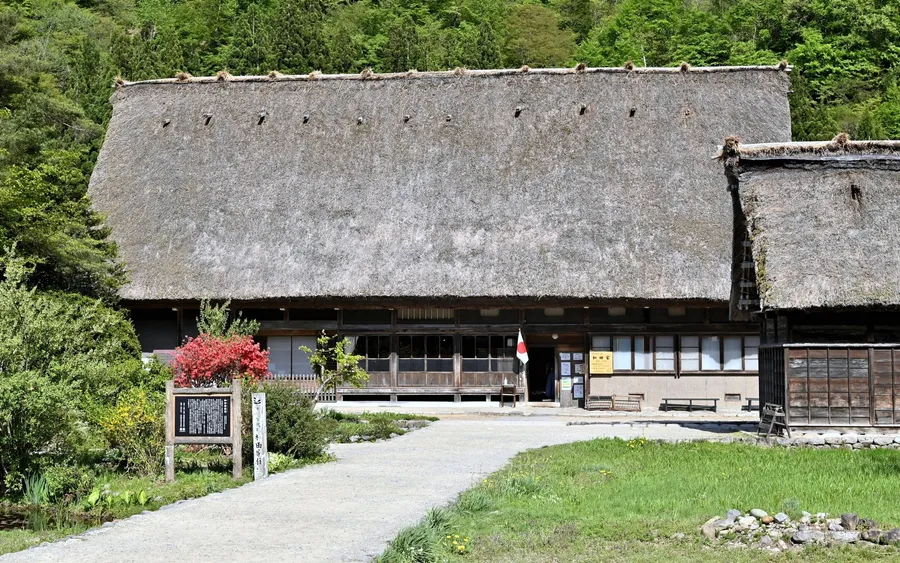
    Wada House is the largest gassho-zukuri farmhouse open to the public in Shirakawa-go, and the only one in the village designated a nationally Important Cultural Property. Its owners still live there, welcoming visitors through the ground-floor living spaces and up through several levels of what was once the household's silk-farming attic. The sunken irori hearth at its center, still set up with an iron kettle over the coals, is as close as most visitors get to seeing how a working gassho household actually functioned.

    9:00 AM – 5:00 PM daily, irregular holidays997 Ogimachi, Shirakawa, Ono District, Gifu 501-5627
  4. Kanda House facade, Ogimachi, Shirakawa-go4

    Kanda House

    Kanda House offers a quieter, smaller-scale version of the same experience as Wada House, with an upper floor that opens onto views across the surrounding rooftops and rice terraces. Its steep roof conceals the same layered attic space historically used for raising silkworms, and its lighter visitor numbers make it an easier stop to linger in without a queue behind you.

    10:00 AM – 4:00 PM, closed Wednesdays796 Ogimachi, Shirakawa, Ono District, Gifu 501-5627
  5. Myozenji Temple Museum, Shirakawa-go5

    Myozenji Temple Museum

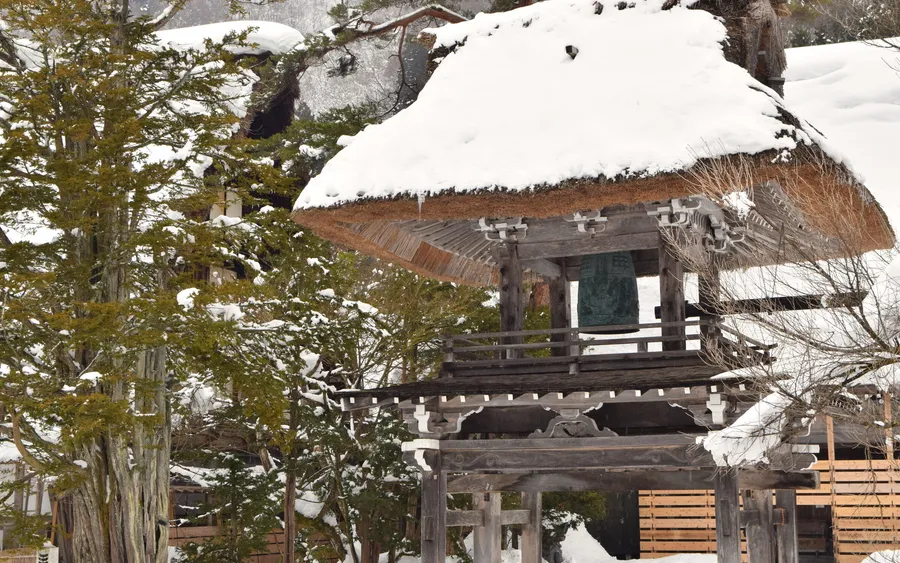
    Myozenji dates to 1748 as a temple of the Jodo Shinshu school, but its real architectural showpiece is the kuri next door — the resident priest's five-story gassho-zukuri house, built in 1817 using only wooden joinery, no nails or screws, from cypress and zelkova timber. Inside, a small museum displays farming and household tools once used by the village's residents, a more contemplative counterpoint to the farmhouse visits nearby.

    8:30 AM – 5:00 PM (Apr–Nov); 9:00 AM – 4:00 PM (Dec–Mar)679 Ogimachi, Shirakawa, Gifu 501-5627
  6. View over Ogimachi from the Shiroyama observation deck, Shirakawa-go6

    Shiroyama Viewpoint

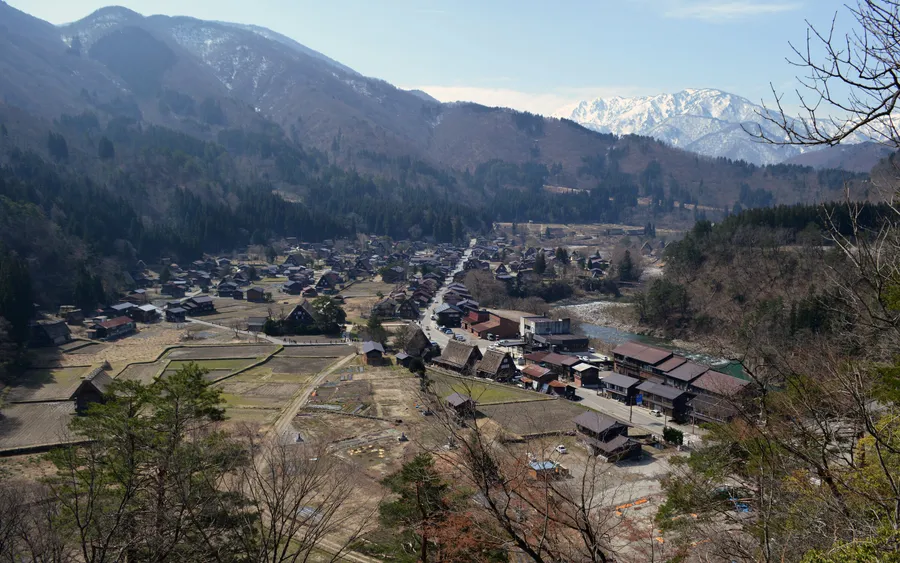
    From the site of a long-vanished castle above the village, the Shiroyama Viewpoint gives the panorama most people picture when they think of Shirakawa-go: rows of gassho roofs set against the Shogawa River valley and the Ryohaku mountains behind. It's reached by a shuttle bus or a 20-to-30-minute walking trail, and the scene changes completely with the seasons — snow-covered in winter, a deep green valley floor in summer.

  7. Entrance gate, Gassho-zukuri Minka-en open-air museum, Shirakawa-go7

    Gassho-zukuri Minka-en

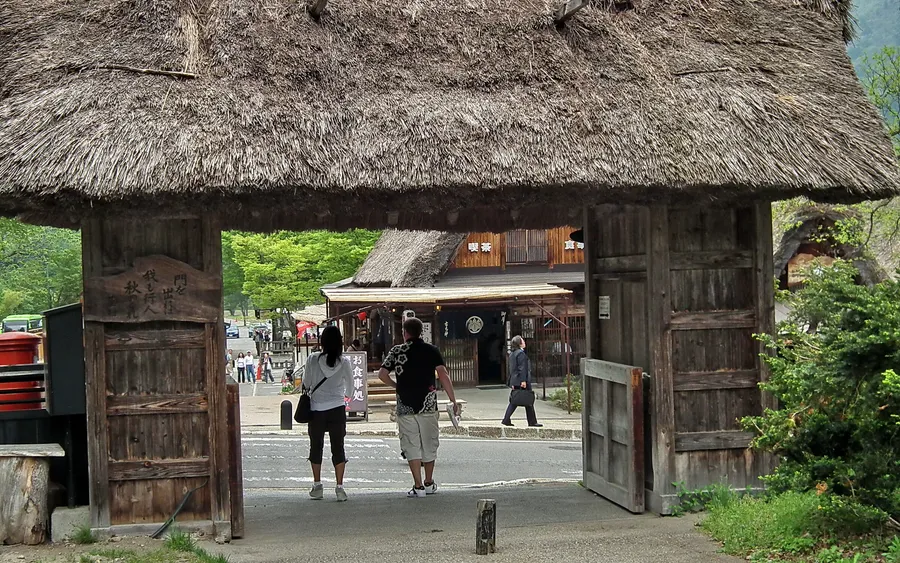
    The open-air Minka-en museum, a short walk or shuttle ride from Ogimachi, relocated more than two dozen gassho-zukuri buildings here from across the wider region, several of them saved from villages that were flooded by dam construction decades ago. Seeing houses from different eras and areas side by side gives a broader sense of gassho architecture than the single village alone, in a setting that's noticeably quieter than Ogimachi's main lanes.

    8:50 AM – 5:00 PM (Mar–Nov); 9:00 AM – 4:00 PM (Dec–Feb)2499 Ogimachi, Shirakawa, Ono District, Gifu

Food

The one dish nearly every visitor ends up eating in the village.

  1. Hida beef with hoba-miso1

    Hoba Miso-yaki

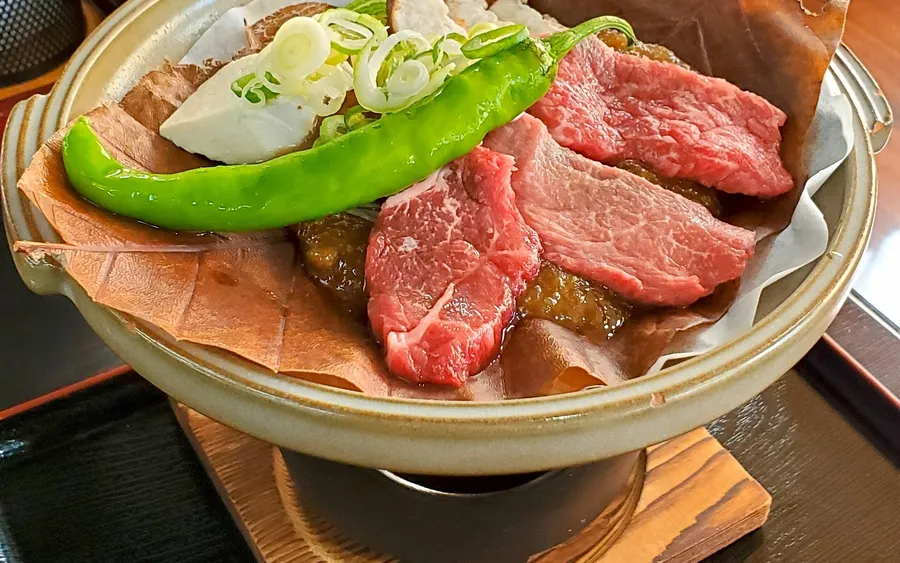
    Hoba miso-yaki — thin slices of Hida beef grilled at the table over a dried magnolia leaf and topped with a dollop of miso that caramelizes as it cooks — is a specialty of the wider Hida region rather than Shirakawa-go alone, but it's the dish nearly every visitor ends up eating here regardless. Restaurants around the village serve it as a set meal with rice and pickles, and the leaf itself lends a faint woodiness that a regular grill can't replicate. It's worth trying the village's own firmer 'stone tofu,' made with roughly double the usual soybean content, if a restaurant nearby happens to have it on the menu.

Culture & Traditions

The shrine, festival, and daily rituals that explain how these houses have survived for centuries.

  1. Shirakawa Hachiman Shrine, Ogimachi, Shirakawa-go1

    Shirakawa Hachiman Shrine & the Doburoku Festival

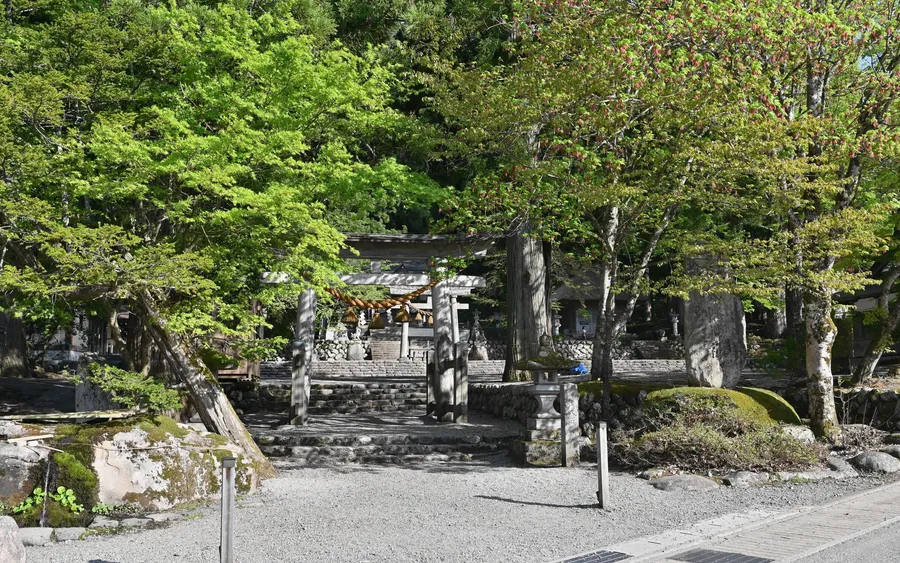
    Shirakawa Hachiman Shrine, the village's guardian shrine, brews doburoku — a milky, unrefined sake — each January in a storehouse on its grounds, then hands it out to visitors during the Doburoku Festival every October 14th and 15th, alongside lion dances and folk performances offered in thanks for the autumn harvest. Outside festival dates, the shrine itself is a calm, wooded corner of the village worth a short detour from the busier lanes.

  2. Irori hearth inside a gassho-zukuri house, Shirakawa-go2

    Living with the Irori

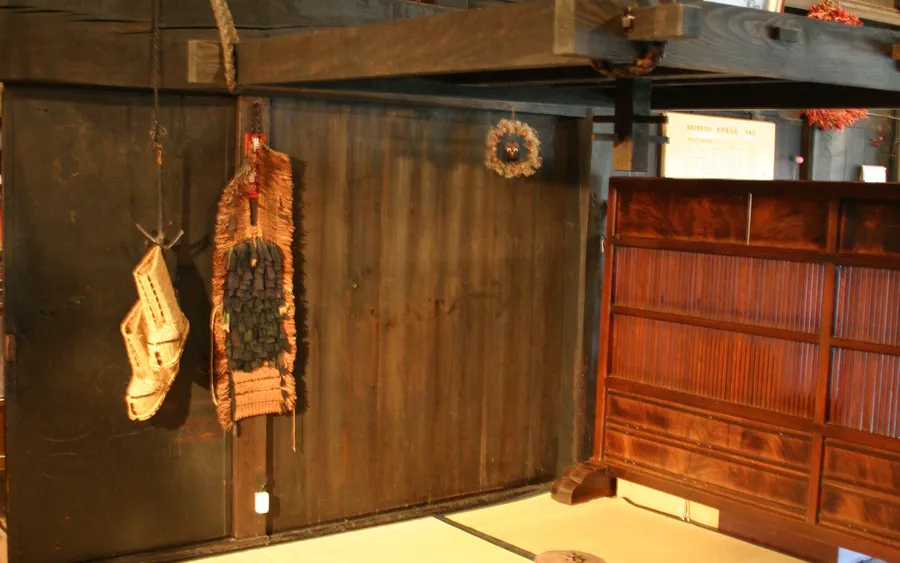
    Nearly every gassho-zukuri house keeps a sunken hearth, or irori, burning at the center of its ground floor — a fixture that provided heat through brutal mountain winters, a place to cook, and, less obviously, a way to help preserve the house itself, since the rising smoke dries out the roof timbers and thatch and helps keep insects at bay. Community life followed a similar logic of mutual necessity: yui, a tradition of cooperative re-thatching, meant neighbors turned out together to re-roof a house that could take a single family weeks to manage alone. Both practices explain, as much as the roof pitch does, how these houses have survived for centuries in one of Japan's harshest snow regions.

Keep reading

More guides you might like

Nearby

Related destinations

Continue

Related services

Easy Travel in Japan