Skip to content
Easy Travel in Japan
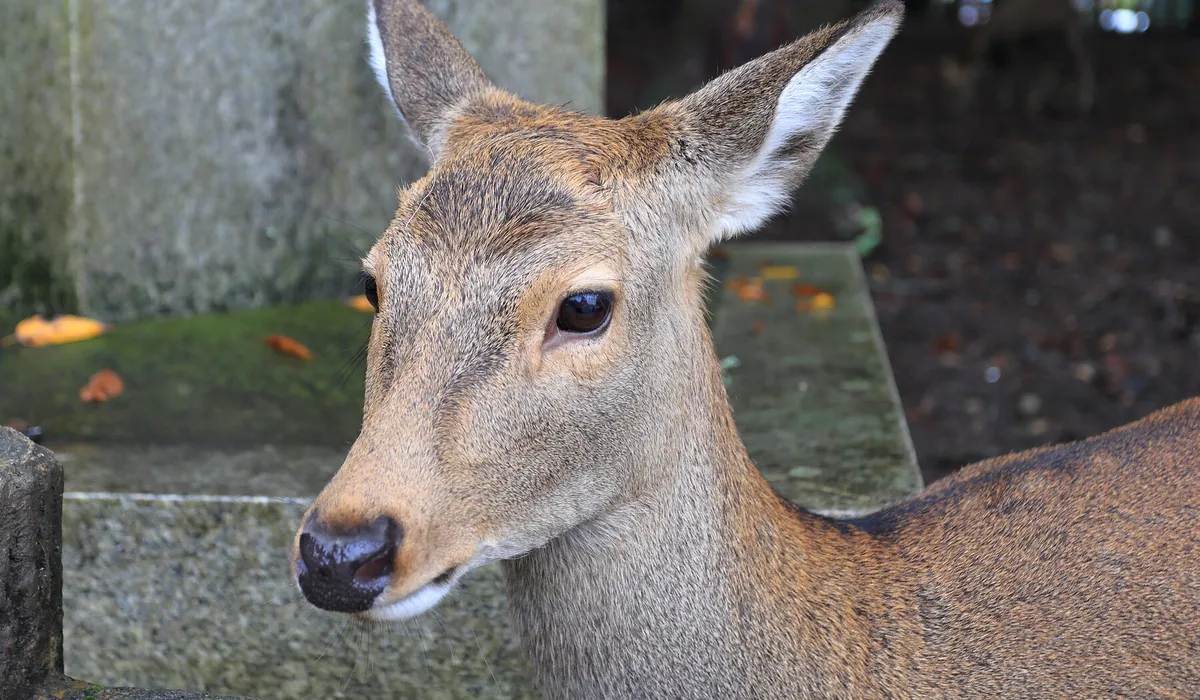
Sika deer, Nara Park

10 Best Things to Do in Nara

Nara packs an unusual amount into what most visitors treat as a rushed afternoon between Kyoto and Osaka: free-roaming sacred deer, a bronze Buddha inside the world’s largest wooden building, a lantern-lined shrine path, and a fire ritual that’s run without interruption for over 1,250 years. Ten things worth building a visit around, from the city’s famous park to the pickles and sushi that only really make sense in this landlocked corner of Kansai.

  1. Sika deer, Nara Park1

    Meet the Sacred Deer of Nara Park

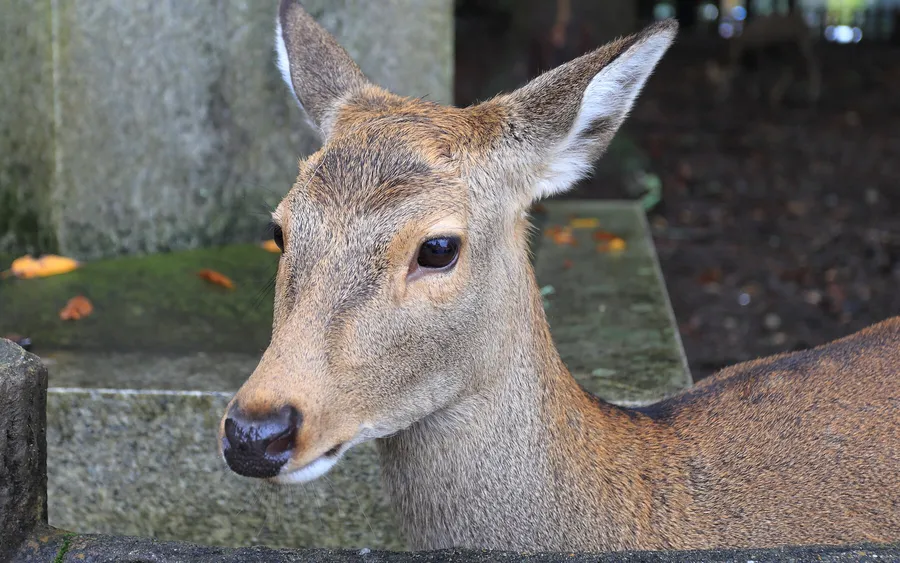
    Roughly 1,200 to 1,500 sika deer roam freely across Nara Park, wandering in and out of the temple complexes as if they own the place — which, in a sense, local tradition says they do. In the Shinto belief tied to Kasuga Taisha, the deer are considered sacred messengers of the gods, and they carry official protected status as Natural Monuments under Japan's Cultural Properties Protection Act. Vendors around the park sell shika senbei, plain rice crackers meant specifically for feeding them, and a deer that's learned the drill will bow its head for a cracker before politely — or not so politely — helping itself.
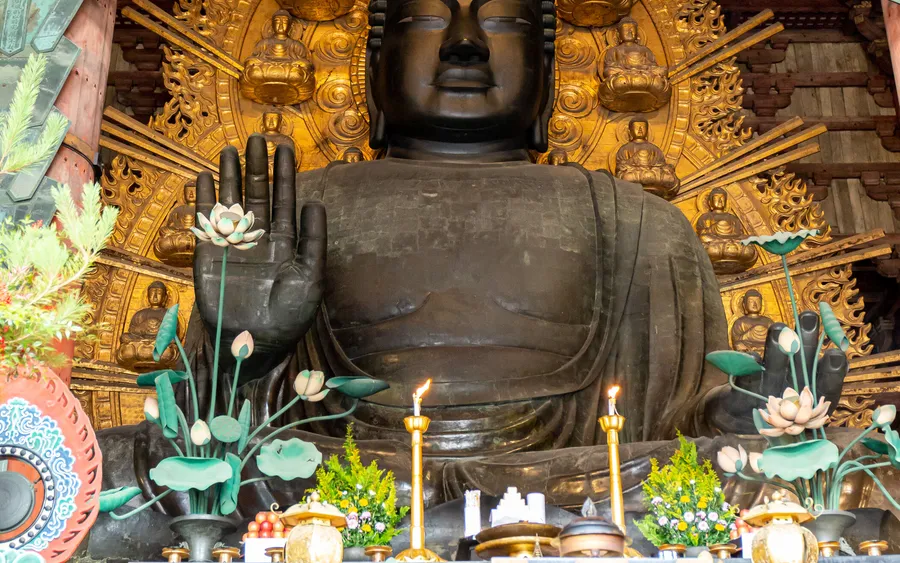
  2. Great Buddha (Vairocana), Todai-ji, Nara2

    See the Great Buddha at Todai-ji

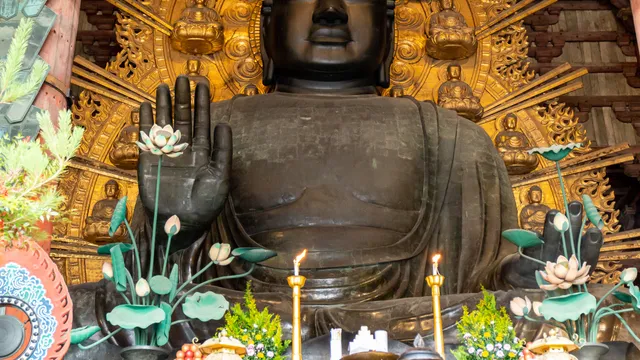
    Todai-ji's main hall, the Daibutsuden, is described by the temple itself as the largest wooden structure in the world, even though the current Edo-period reconstruction is narrower than the original 8th-century building. Inside sits the Great Buddha, a bronze statue of Vairocana Buddha roughly 15 meters tall, cast not long after Nara became the capital in 710. Behind the statue, a wooden pillar has a hole cut through its base said to match the dimensions of the Great Buddha's nostril — popular belief holds that anyone who squeezes through it earns good luck.

    Daibutsuden: 7:30 AM – 5:30 PM (Apr–Oct), 8:00 AM – 5:00 PM (Nov–Mar)406-1 Zoshi-cho, Nara, Nara 630-8211
  3. Stone lanterns, Kasuga Taisha, Nara3

    Walk the Lantern Path at Kasuga Taisha

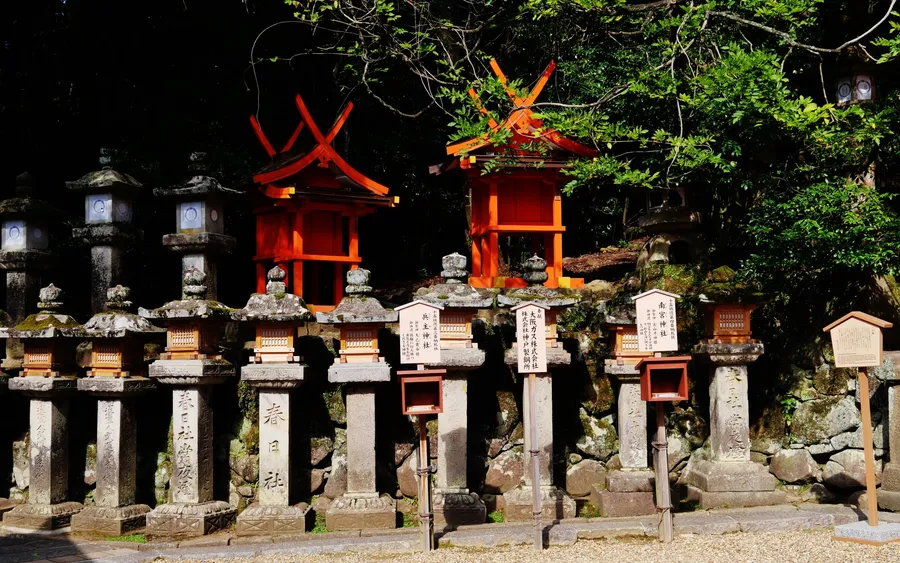
    Founded in 768 by the powerful Fujiwara clan, Kasuga Taisha is best known for its roughly 3,000 lanterns — around 2,000 stone lanterns lining the mossy approach through the forest and another 1,000 bronze lanterns hung from the shrine's vermilion buildings, all donated by worshippers over the centuries. Twice a year, during the Setsubun and Obon lantern festivals, every one of them is lit at once, but even on an ordinary day the walk in is one of Nara's most atmospheric.

    6:30 AM – 5:30 PM (Mar–Oct), 7:00 AM – 5:00 PM (Nov–Feb); Main Hall admission separate160 Kasugano-cho, Nara, Nara 630-8212
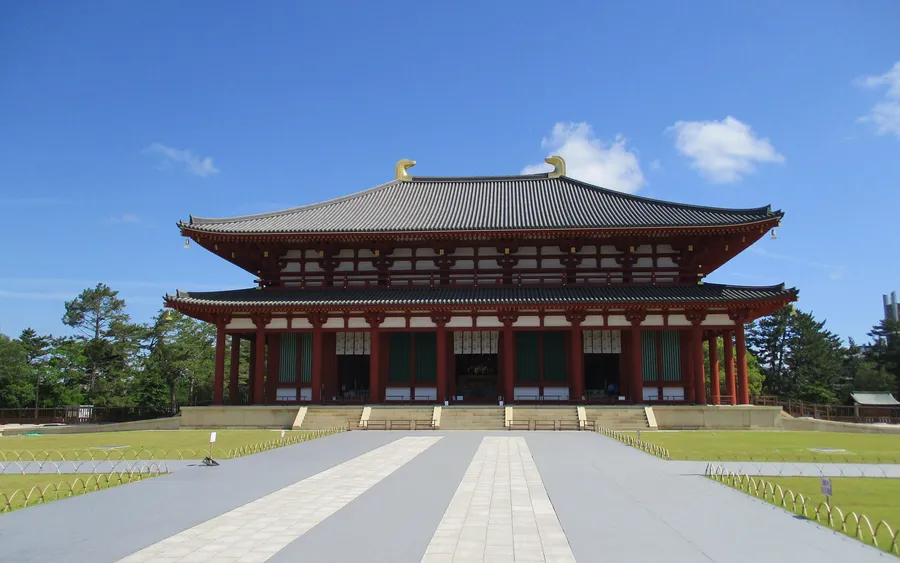
  4. Chukondo (Central Golden Hall), Kofuku-ji, Nara4

    Visit Kofuku-ji's Golden Hall

    Kofuku-ji's five-story pagoda, first built in 730 and rebuilt five times after fire, is Japan's second-tallest wooden pagoda at just over 50 meters — though it's currently wrapped in scaffolding for a repair project running until 2034. The temple's current highlight is the Chukondo, or Central Golden Hall, faithfully rebuilt in 2018 following the original Nara-period design, alongside the National Treasure Museum's collection of Buddhist statuary.

    Halls & museum: 9:00 AM – 5:00 PM, last entry 4:45 PM; grounds open 24 hours48 Noborioji-cho, Nara, Nara 630-8213
  5. Five-story pagoda, Horyu-ji5

    Day-Trip to Horyu-ji

    A short train ride outside the city center, Horyu-ji was founded by Prince Shotoku in 607 and holds what are widely recognized as the oldest surviving wooden buildings in the world, its five-story pagoda and main hall dating back to the late 7th century. It became Japan's first-ever UNESCO World Heritage listing in 1993 — worth the trip out for anyone who wants to see wooden architecture older than almost anything else standing on Earth.

    8:00 AM – 5:00 PM (Feb 22–Nov 3), 8:00 AM – 4:30 PM (Nov 4–Feb 21), last admission 30 min before close1-1 Horyuji Sannai, Ikaruga, Ikoma District, Nara 636-0115
  6. Isuien Garden, Nara6

    Stroll Isuien & Yoshikien Gardens

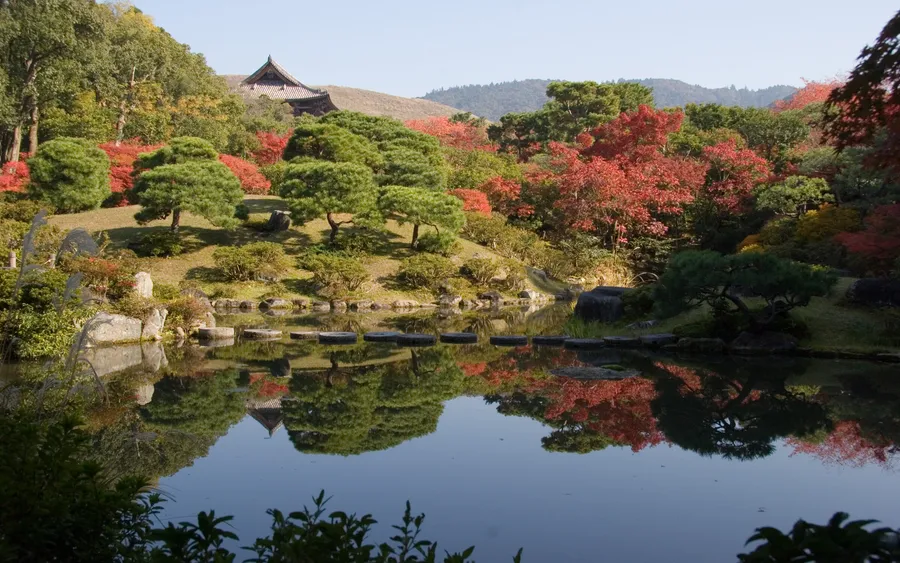
    A short walk from Todai-ji, Isuien and the adjoining Yoshikien use borrowed-scenery techniques that fold views of the surrounding hills and temple rooftops directly into their landscaped grounds, so the gardens read as far larger than their actual footprint. Isuien, Nara's best-known formal garden, charges admission that includes the small Neiraku Museum next door; Yoshikien, right beside it, offers free entry to travelers on a foreign passport.

    Isuien: 9:00 AM – 5:00 PM, closed Tuesdays except Apr, May, Oct & Nov74 Suimon-cho, Nara, Nara 630-8208
  7. Mount Wakakusa, Nara7

    Climb Mount Wakakusa

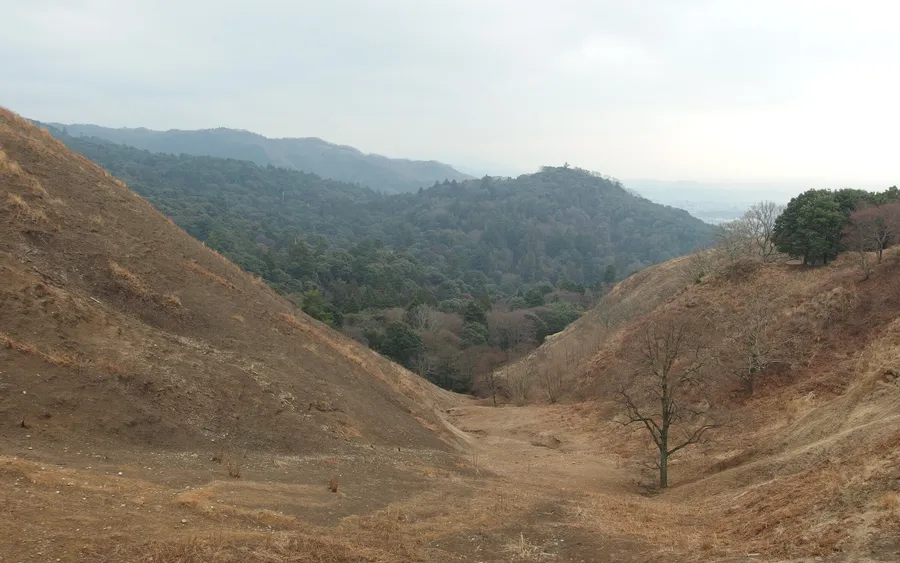
    Behind Todai-ji, the grassy slopes of Mount Wakakusa rise to just 342 meters, an easy climb that opens onto panoramic views over Nara Park, the temple roofs, and the former Heijo Palace site in the distance. Both main trailheads start near Mizutani Shrine, between Todai-ji and Kasuga Taisha, and the mountain is only open to climbers from the third Saturday in March through the second Sunday in December.

    9:00 AM – 5:00 PM, open 3rd Saturday of March – 2nd Sunday of December only; ¥150 adult admission
  8. Omizutori fire ritual, Todai-ji, Nara8

    Watch the Omizutori Fire Ritual

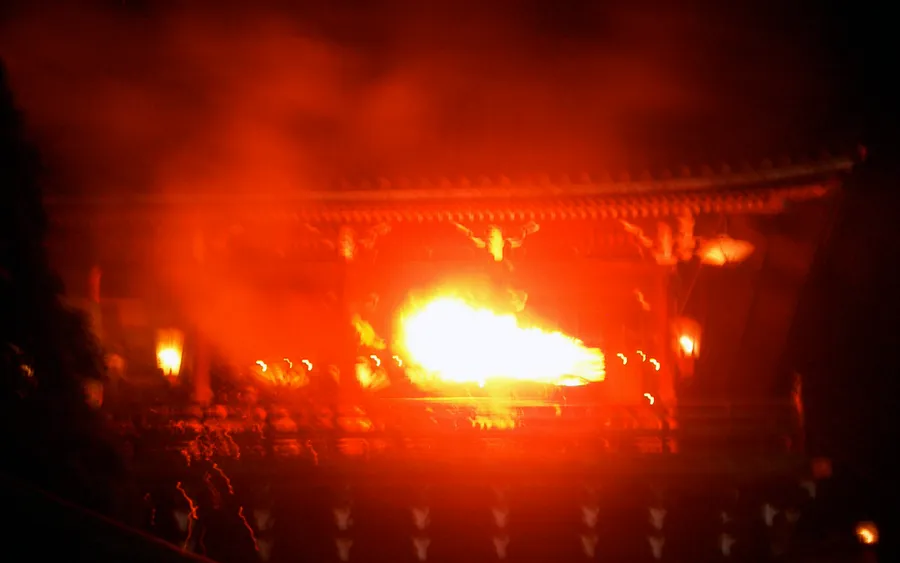
    Held every March 1–14 at Todai-ji's Nigatsu-do hall, Omizutori is one of Japan's oldest continuously performed rituals, a tradition said to stretch back more than 1,250 years without a single year missed. Each evening, monks carry massive flaming pine torches — some over six meters long — along the hall's balcony, showering sparks down onto the crowd below, culminating on the night of March 12–13 with the ritual drawing of sacred water that gives the festival its name.

  9. Kakinoha-zushi (persimmon-leaf sushi)9

    Try Kakinoha-zushi

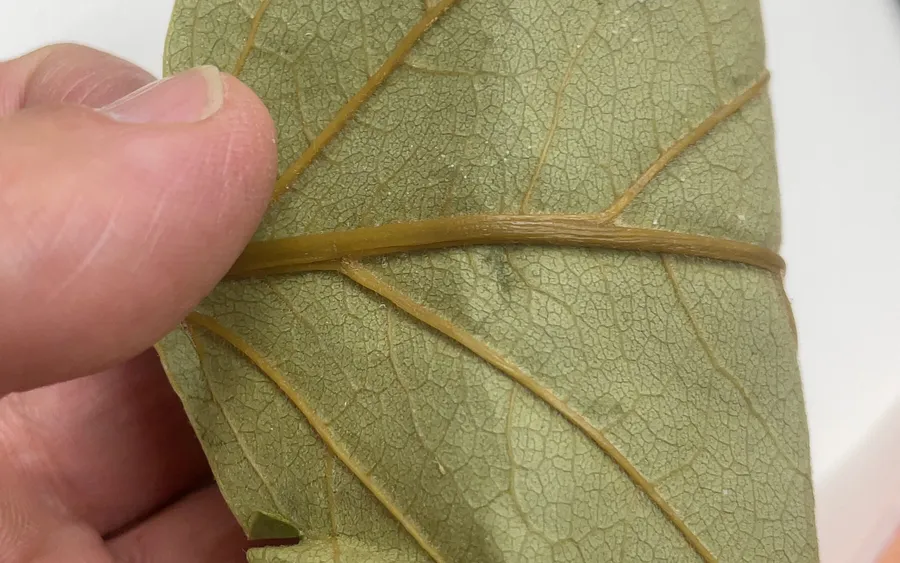
    Kakinoha-zushi developed roughly 300 years ago in landlocked Nara, where fishmongers salt-marinated mackerel or salmon before pressing it over vinegared rice and wrapping each piece tightly in a persimmon leaf — a technique that, before refrigeration, helped preserve the fish on its journey inland from the coast. The leaf isn't eaten; it's peeled away at the table, leaving behind sushi with a faint, distinctive persimmon fragrance.

  10. Nara-zuke pickles10

    Try Nara-zuke

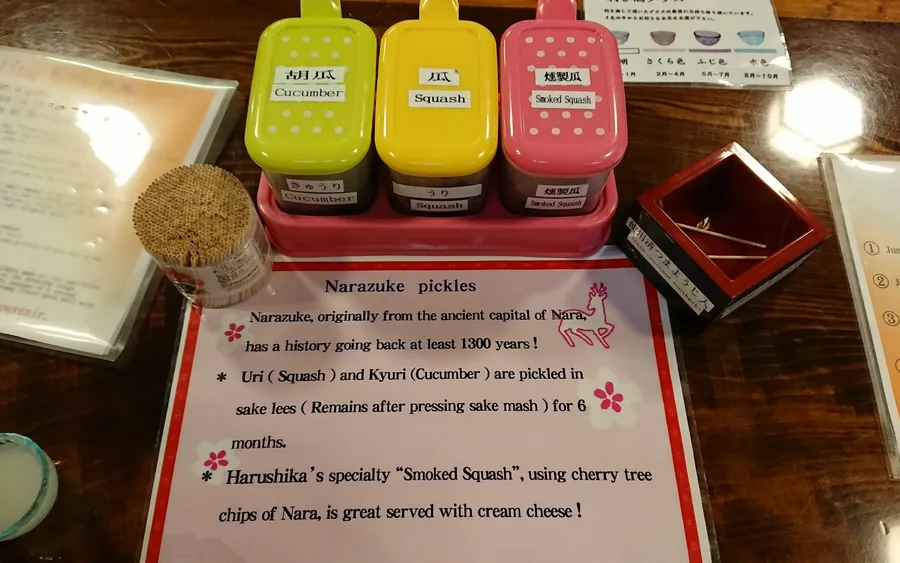
    Nara-zuke are vegetables — typically cucumber, melon, or daikon — pickled for an extended stretch in sake lees, the leftover paste from sake brewing, producing a deep amber color and a dense, umami-rich flavor with a faint alcoholic kick. The technique traces back centuries in this sake-producing region, and shops specializing in nothing but nara-zuke still operate around the city.

Keep reading

More guides you might like

Nearby

Related destinations

Continue

Related services

Easy Travel in Japan