Skip to content
Easy Travel in Japan
Matsumoto Castle ("Crow Castle")

The Ultimate Matsumoto Travel Guide

Matsumoto is Nagano Prefecture’s second-largest city, built around one of Japan’s most striking original castles and positioned as a natural gateway to the Japan Alps. Here’s a closer look at the castle, old merchant streets, and mountain scenery that make it worth the trip, whether you’re here for the city alone or using it as a base for Kamikochi.

Attractions

The 400-year-old castle keep and Meiji-era schoolhouse that anchor a first visit to Matsumoto.

  1. Matsumoto Castle ("Crow Castle")1

    Matsumoto Castle

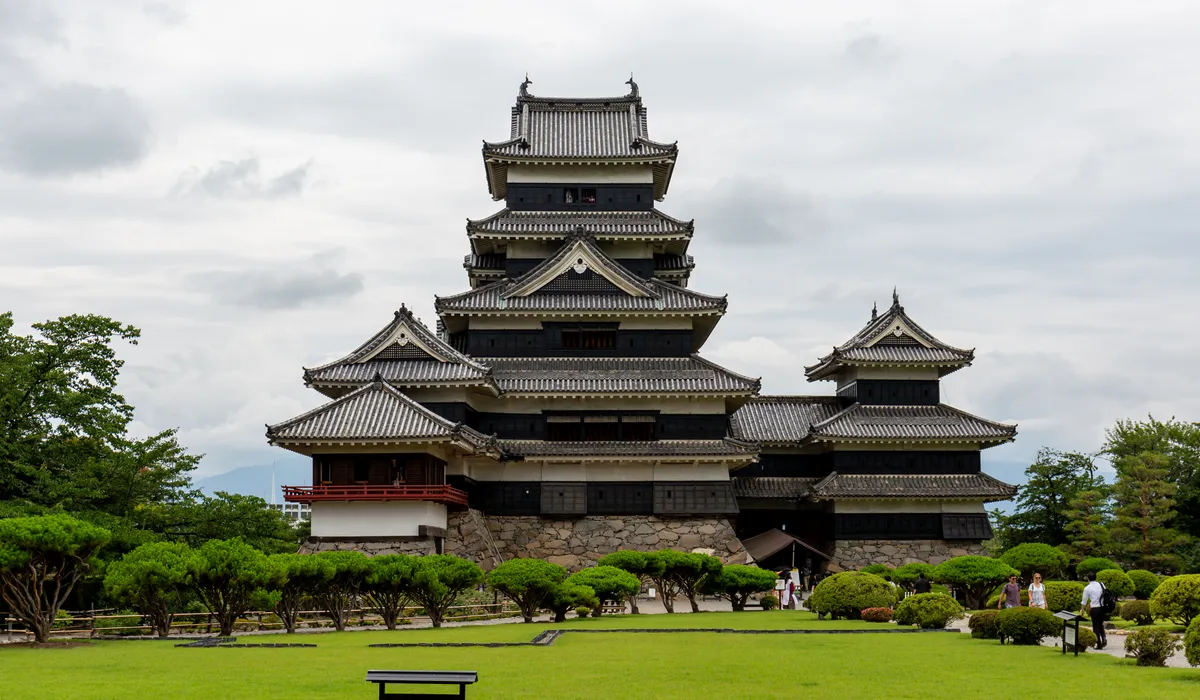
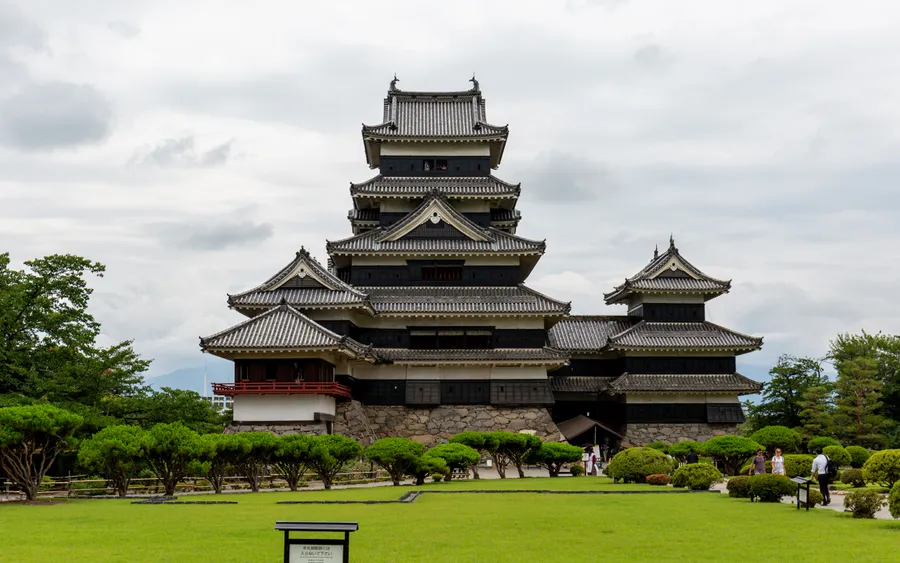
    Matsumoto Castle, nicknamed the 'Crow Castle' for its black lower walls set against white upper plaster, is a National Treasure and one of only twelve castle keeps in Japan that survive in original, non-reconstructed form. Construction began around 1590 under the Ishikawa clan, and the five-tiered, six-story main keep — with one cleverly hidden floor — has stood for roughly 400 years without ever being rebuilt in concrete. Visitors climb the original steep wooden staircases past displays of armor and weaponry to an observation floor looking out toward the Northern Alps. Around 300 cherry trees bloom around the castle and moat each spring, typically in early April, with a night illumination timed to the peak.

    8:30 AM – 5:00 PM, last admission 4:30 PM (extended to 6:00 PM during Golden Week and summer)4-1 Marunouchi, Matsumoto, Nagano
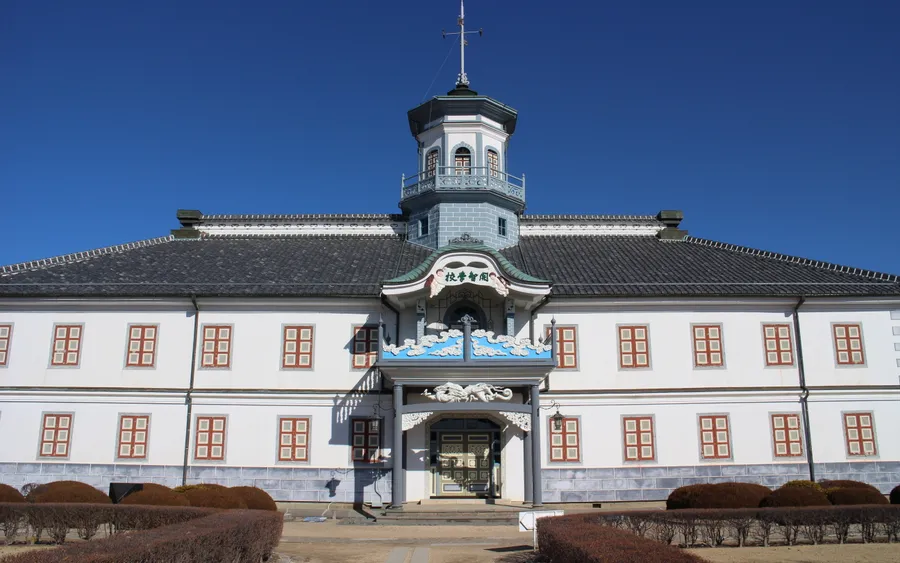
  2. Former Kaichi School, Matsumoto2

    Former Kaichi School

    The Former Kaichi School, completed in 1876, is one of Japan's oldest surviving elementary school buildings and was designated a National Treasure in 2019. Its design mixes Japanese carpentry with imported Western elements — an octagonal clock tower, arched windows, a dragon carving over the entrance — reflecting the Meiji-era rush to adopt Western-style education. It's now a museum on Japan's educational history, with restored classrooms giving a sense of what schooling looked like in the decades after the building opened.

    9:00 AM – 5:00 PM, last entry 4:30 PM (closed some Mondays — check ahead)2-4-12 Kaichi, Matsumoto, Nagano 390-0876

Neighborhoods

Two old merchant streets, a short walk apart and very different in character.

  1. Nakamachi Street, Matsumoto1

    Nakamachi Street

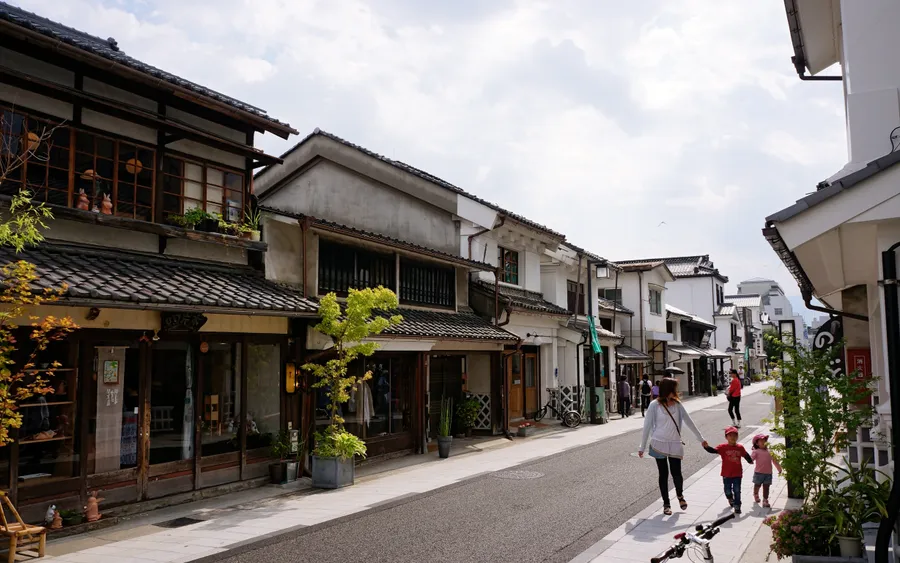
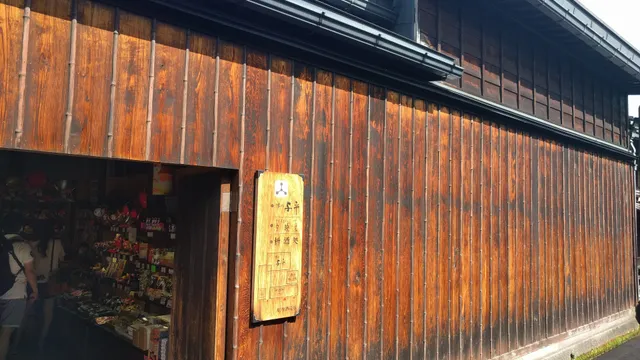
    Nakamachi Street, once home to sake brewers and kimono wholesalers, preserves a row of white-and-black plastered kura storehouses built to be fireproof, since much of the surrounding town has burned down more than once over the centuries. Many now house craft shops, galleries, and cafes rather than merchants' goods, but the street's proportions and materials are original enough that it's easy to picture its Edo-period use. It's a compact, easy walk between the castle and the river.

  2. Gama Samurai frog statue, Nawate Street, Matsumoto2

    Nawate Street

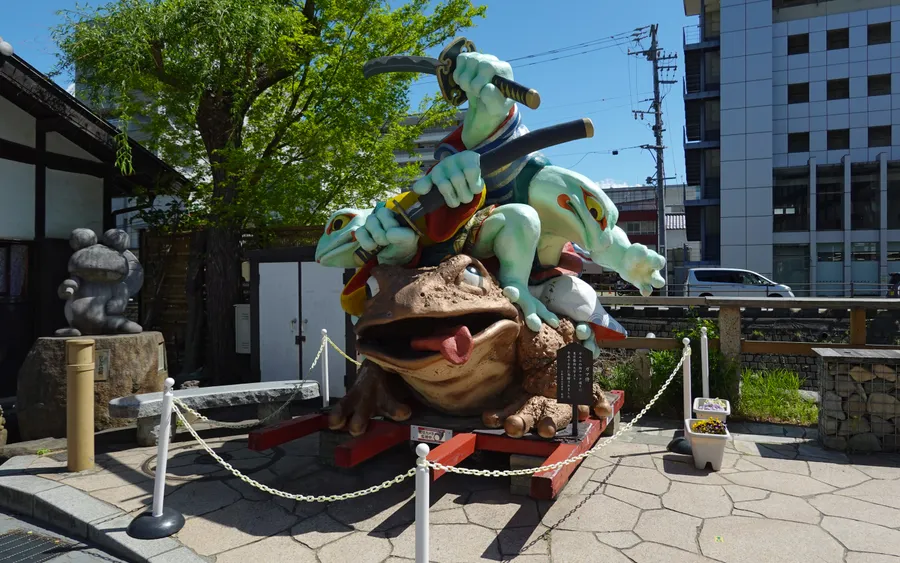
    Nawate Street runs along the Metoba River between a small frog shrine and Matsumoto Station, nicknamed 'Frog Street' for the frogs once common along its banks before urban development largely displaced them. A large, cheerfully absurd frog-samurai statue near one end has become the street's unofficial mascot and photo stop. The street itself is lined with dozens of small, independent shops — antiques, snacks, secondhand books — very different in character from Nakamachi's more polished storefronts.

Nature

Alpine scenery reachable from the city in a couple of hours by bus.

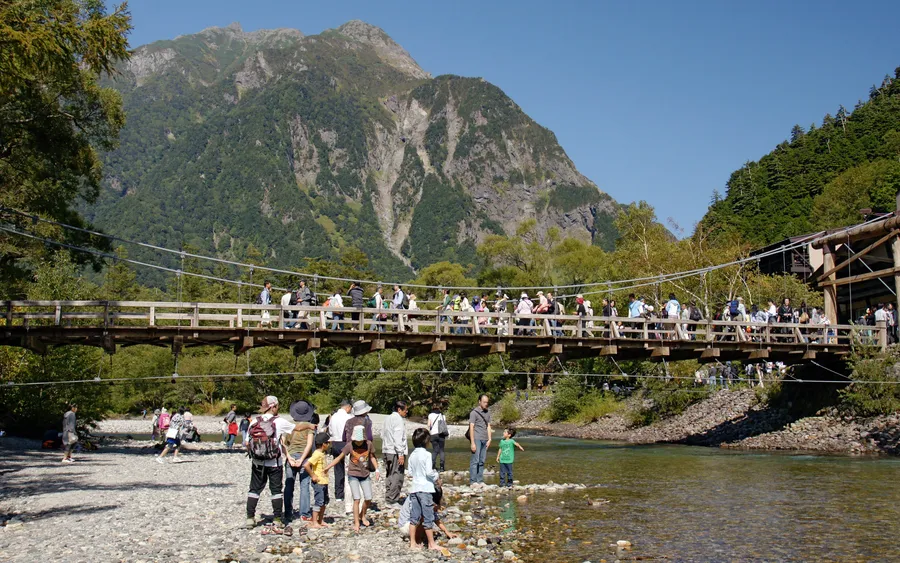
  1. Kappabashi Bridge, Kamikochi1

    Kamikochi

    Kamikochi is a highland valley roughly 1,500 meters up in the Northern Alps, closed to private cars and reachable from Matsumoto by a combination of train, bus, or direct highway bus. Kappabashi, a suspension bridge over the Azusa River, is the valley's best-known viewpoint, framing the jagged peaks of the Hotaka mountain range behind it. The valley's official season runs roughly mid-April to mid-November, after which it closes to regular visitor transport for winter — check dates before planning a visit outside summer.

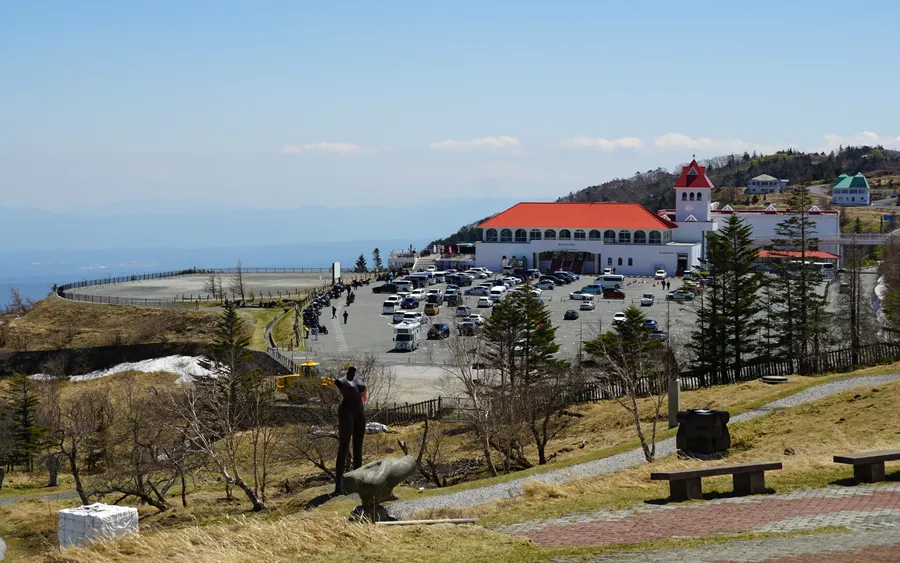
  2. Utsukushi-ga-hara Open-Air Museum, Utsukushigahara Highlands2

    Utsukushigahara Highlands

    The Utsukushigahara Highlands, a roughly 2,000-meter plateau east of Matsumoto, is one of the widest highland plateaus in Japan, grazed by cattle and, on a clear day, offering views that reach all the way to Mount Fuji. The Utsukushi-ga-hara Open-Air Museum sits right on the plateau, pairing large-scale outdoor sculpture with the same sweeping mountain views. It's a genuinely different landscape from the castle town below — open, windswept, and closer to alpine meadow than typical Japanese countryside.

Experiences

Japan's largest wasabi farm, fed by spring water flowing down from the Alps.

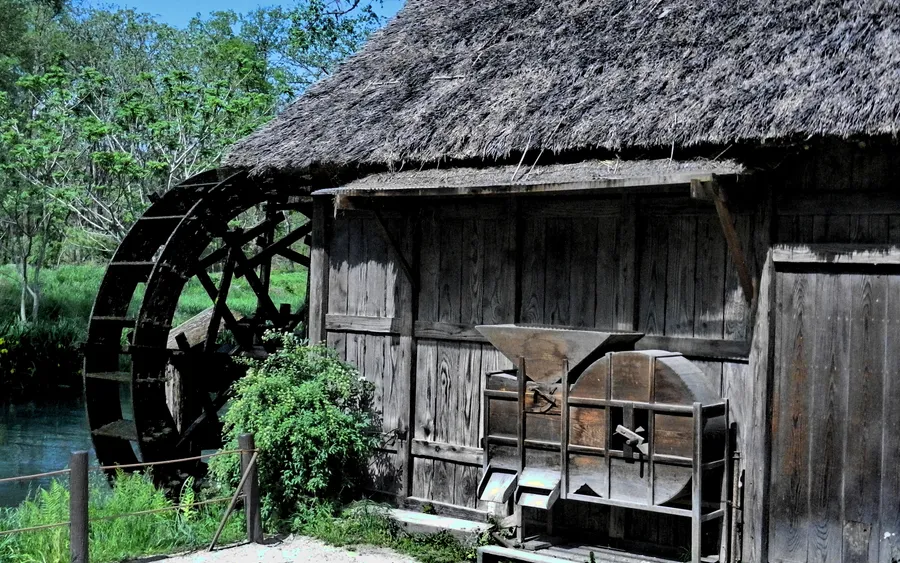
  1. Watermill, Daio Wasabi Farm, Azumino1

    Daio Wasabi Farm

    Daio Wasabi Farm, in the Azumino valley north of Matsumoto, is Japan's largest wasabi farm, its fields fed by mineral-rich spring water flowing down from the Northern Alps. A thatched-roof watermill on the property, made famous by its appearance in Akira Kurosawa's 1990 film 'Dreams,' is one of the most-photographed spots on site. Visitors can walk the fields, try fresh wasabi in various forms — including wasabi soft-serve ice cream — and see how different the real plant looks from the powdered version most people know.

    8:00 AM – 5:00 PM (Mar–Nov); 9:00 AM – 4:00 PM (Dec–Feb); free admission3640 Hotaka, Azumino, Nagano

Food

Two regional specialties worth trying at least once.

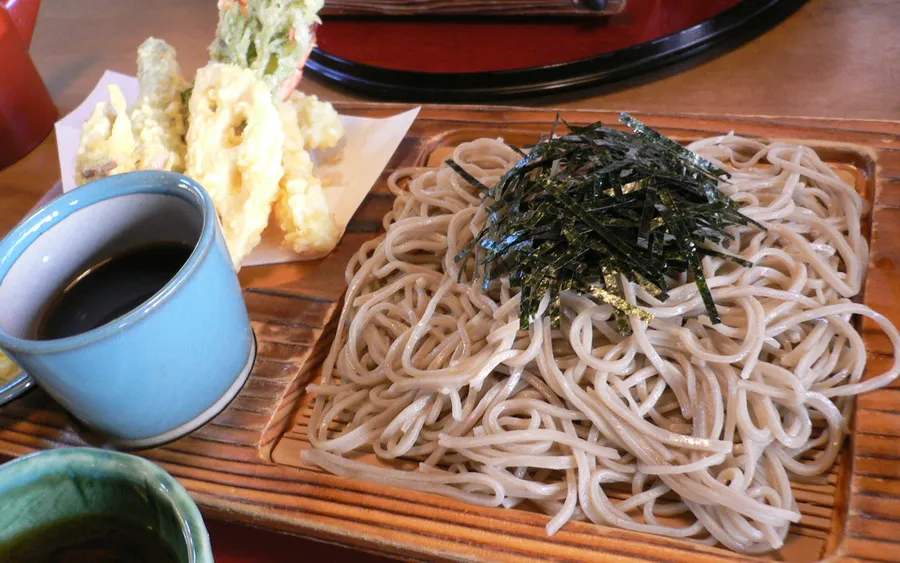
  1. Shinshu soba, Nagano Prefecture1

    Shinshu Soba

    Shinshu soba — buckwheat noodles made with a high proportion of buckwheat flour, often whole-grain — is Nagano Prefecture's signature noodle, and Matsumoto is a good base for trying it properly. The high-altitude climate and clean water of the surrounding mountains are often credited for the quality of the region's buckwheat. Served cold with a dipping sauce or in hot broth, it's a simple, reliably good meal between sightseeing stops.

  2. Basashi (horse meat sashimi)2

    Basashi

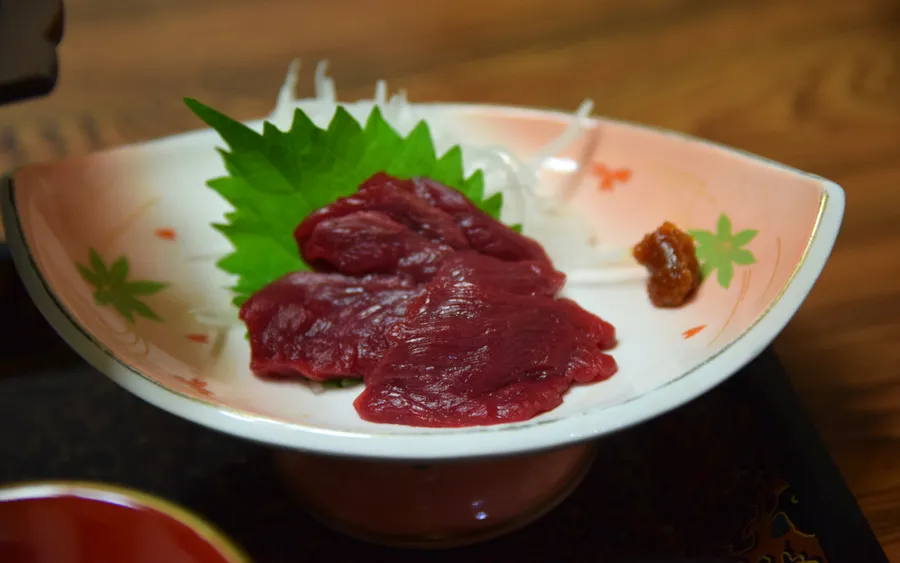
    Basashi, thinly sliced raw horse meat served with garlic, ginger, and miso, is a genuine regional specialty in Matsumoto and across Nagano Prefecture, with some restaurants in the city having served it for over a century. It's leaner and slightly sweeter than beef sashimi, and locals tend to eat it matter-of-factly rather than as a novelty. Worth trying at least once for travelers curious about lesser-known regional Japanese food.

Keep reading

More guides you might like

Nearby

Related destinations

Continue

Related services

Easy Travel in Japan