Skip to content
Easy Travel in Japan
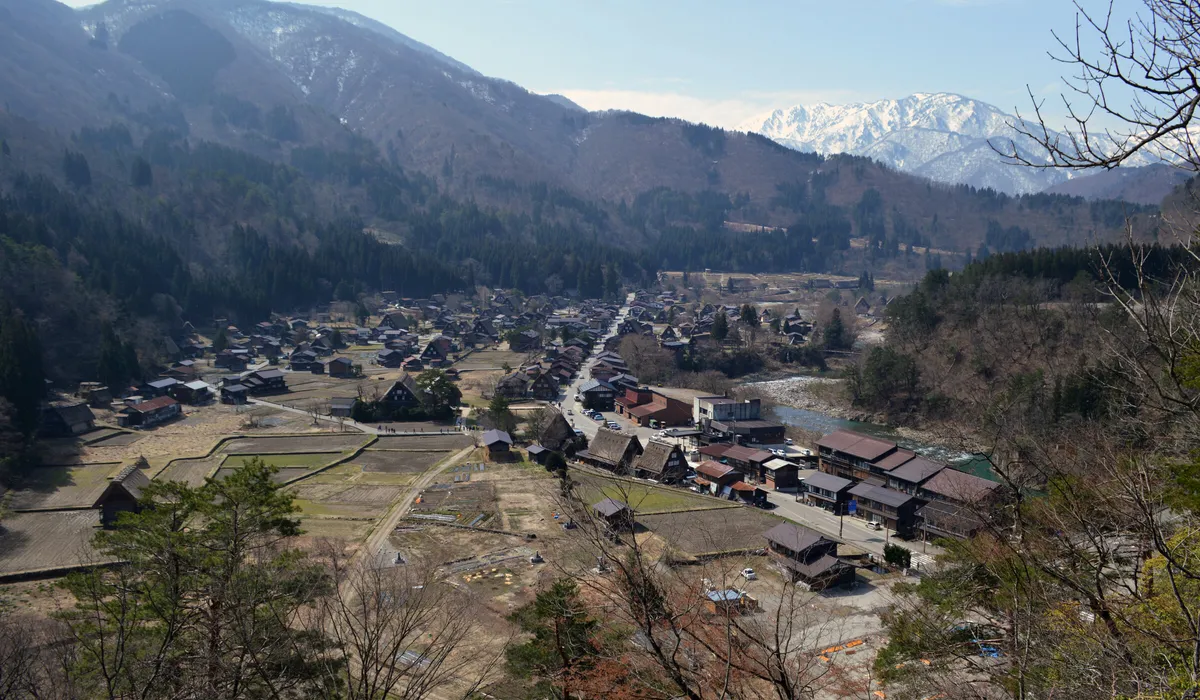
View over Ogimachi from the Shiroyama observation deck, Shirakawa-go

The Perfect 1-Day Shirakawa-go Itinerary

Shirakawa-go is almost always a day trip, not an overnight stop, and the fixed bus schedule from Takayama shapes the whole visit: one bus in, one bus out, with everything else fitted in between. This itinerary front-loads the panoramic viewpoint before the crowds build, then works downhill through the village’s two open farmhouses, a temple museum, lunch, and the open-air museum, leaving a calm shrine visit for the walk back to the bus terminal.

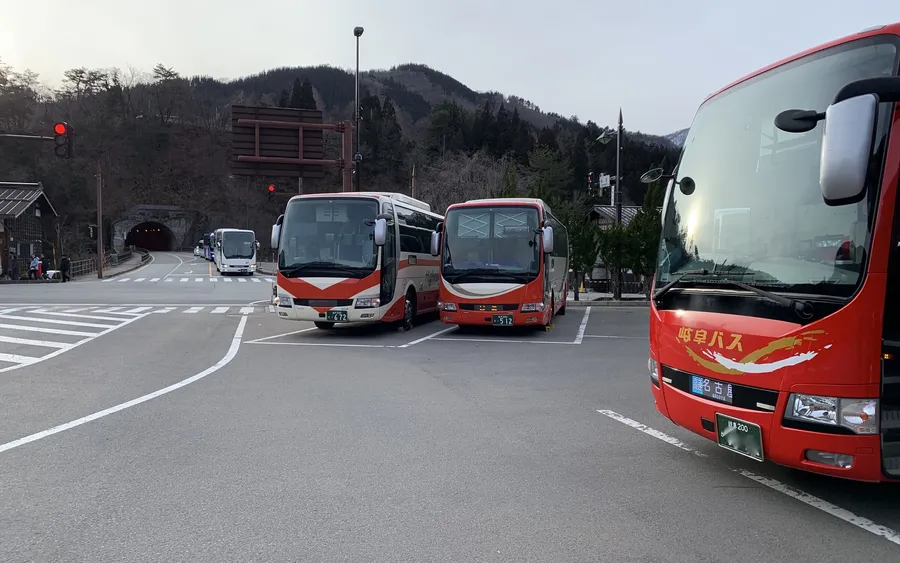
  1. Buses at Shirakawa-go Bus Terminal1

    8:00 AM — Takayama to Shirakawa-go by Highway Bus

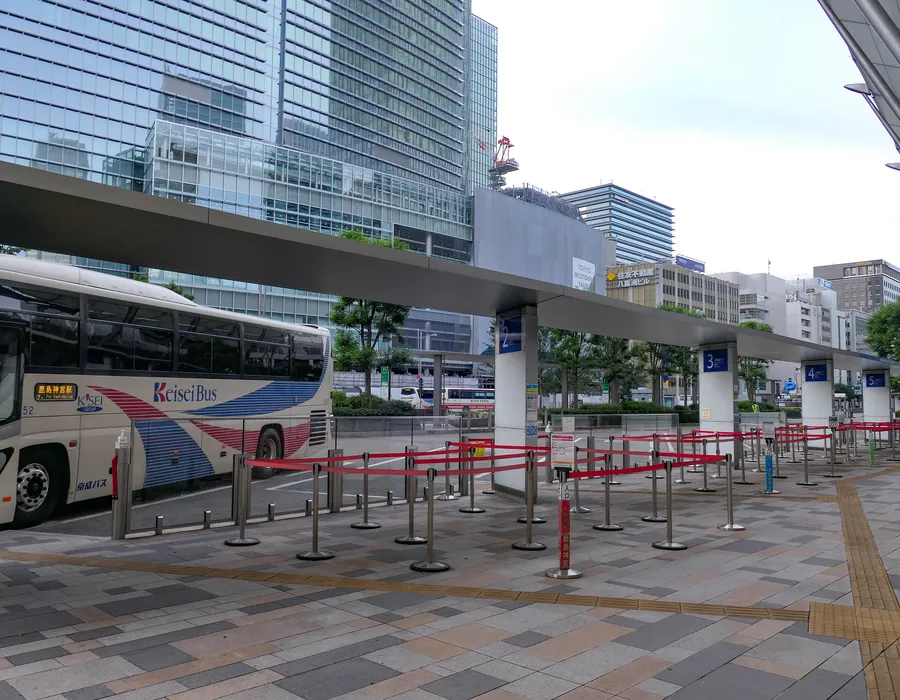
    There's no train to Shirakawa-go — the only way in is by highway bus, and the Nohi Bus route from Takayama is the shortest and most frequent, taking about 50 minutes. Reservations are worth making a day or two ahead in peak season (spring cherry blossoms, autumn foliage, winter snow), since buses can sell out and it's the one fixed constraint your whole day has to work around. An early departure buys you a quieter village before the bigger tour groups arrive mid-morning.
  2. Deai-bashi suspension bridge, Ogimachi, Shirakawa-go2

    9:00 AM — Across Deai-bashi Into the Village

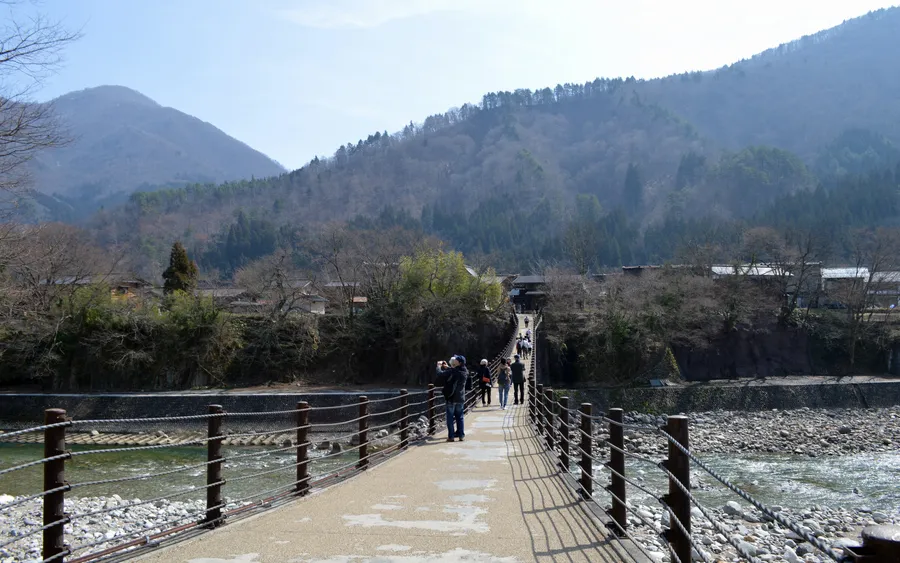
    From the bus terminal, it's a short walk to Deai-bashi, a 107-meter suspension bridge over the Shogawa River that serves as the village's main pedestrian entrance. It sways slightly underfoot when a few people cross together, and the view from the middle — thatched roofs ahead, clear river water below — is a good first look at what you've come for. Crossing takes only a couple of minutes, but it's worth pausing halfway.

  3. View over Ogimachi from the Shiroyama observation deck, Shirakawa-go3

    9:15 AM — Shiroyama Viewpoint

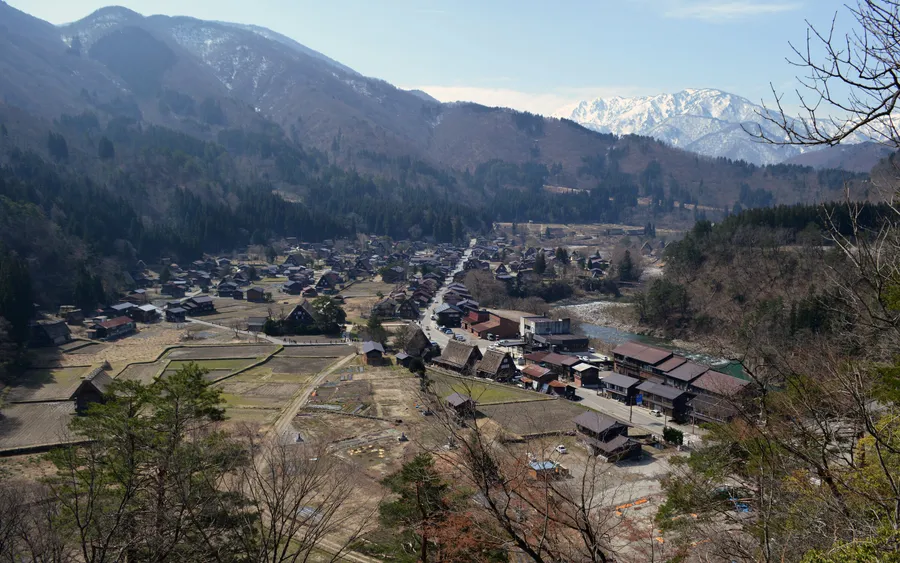
    Head straight for the Shiroyama Viewpoint while the morning light is still good and before the shuttle bus queue builds up — it's about a 20 to 30 minute walk uphill, or a few minutes by the shuttle bus that runs from near the bridge. The payoff is the classic panorama of Ogimachi's thatched roofs laid out along the river valley, framed by the Ryohaku mountains. Doing this first means the rest of the day is spent walking downhill through the village you've just seen from above.

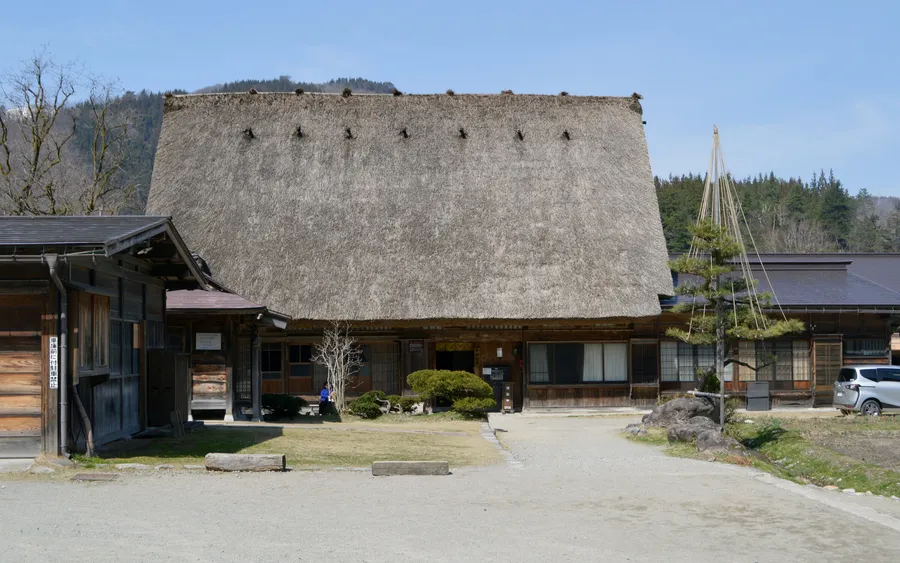
  4. Wada House, Ogimachi, Shirakawa-go4

    10:15 AM — Wada House

    Back down in the village, Wada House is the largest gassho-zukuri farmhouse open to the public and the only one in Shirakawa-go designated an Important Cultural Property. Its multiple floors climb up through the steep roof space once used for silkworm raising, and the ground floor still has its sunken irori hearth set up much as a working household would have kept it. Give it 20 to 30 minutes.

    9:00 AM – 5:00 PM daily, irregular holidays997 Ogimachi, Shirakawa, Ono District, Gifu 501-5627
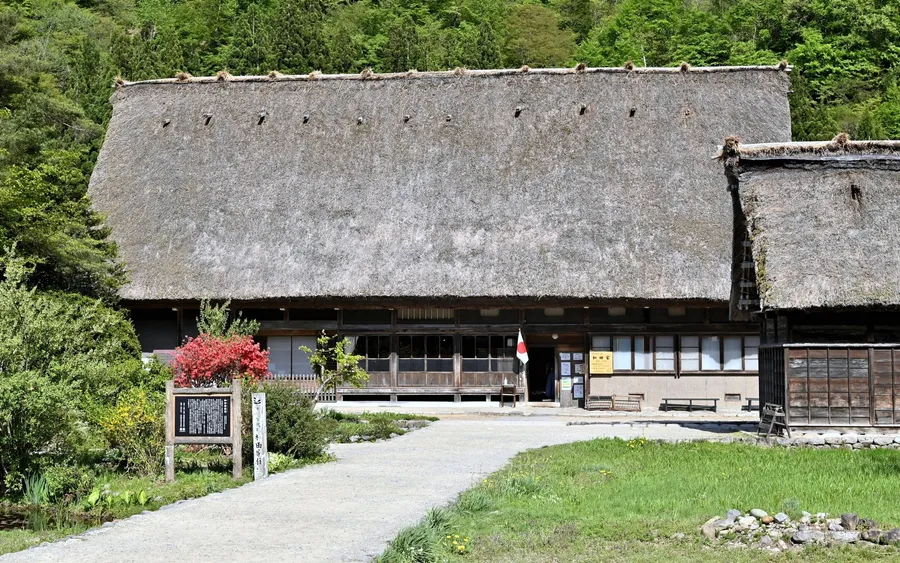
  5. Kanda House facade, Ogimachi, Shirakawa-go5

    11:00 AM — Kanda House

    A short walk from Wada House, Kanda House is a smaller, quieter gassho-zukuri farmhouse with an upper floor that opens onto views over the surrounding rooftops. It draws a noticeably lighter crowd than Wada House, so it's an easy, unhurried stop if you'd rather explore without the queue. Around 20 minutes is enough to see it properly.

    10:00 AM – 4:00 PM, closed Wednesdays796 Ogimachi, Shirakawa, Ono District, Gifu 501-5627
  6. Myozenji Temple Museum, Shirakawa-go6

    11:30 AM — Myozenji Temple Museum

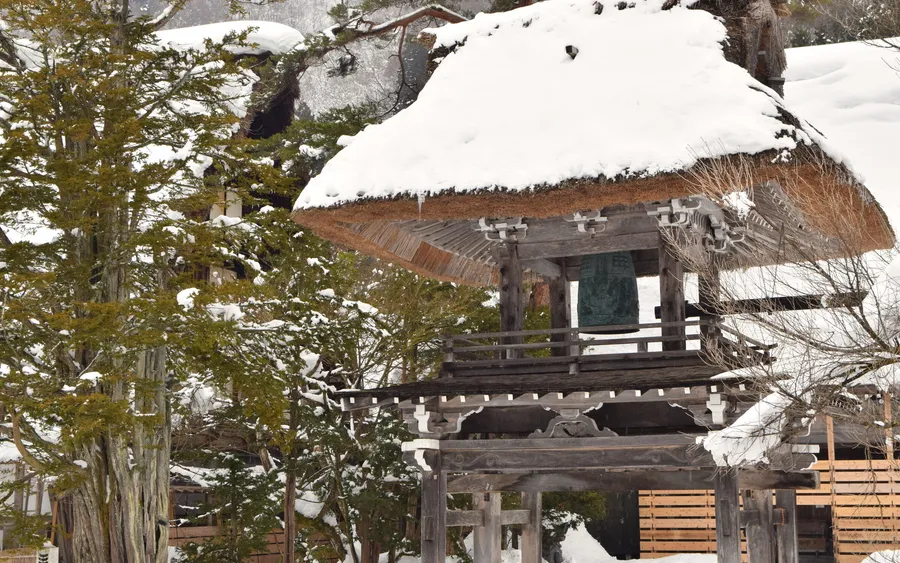
    Myozenji's main hall dates to 1748, but it's the kuri next door — the monks' residence, built in 1817 as a five-story gassho-zukuri structure raised without a single nail or screw — that's the real draw. Inside, the museum displays tools and artifacts from the village's farming and religious life, a quieter, more contemplative stop after two farmhouses in a row.

    8:30 AM – 5:00 PM (Apr–Nov); 9:00 AM – 4:00 PM (Dec–Mar)679 Ogimachi, Shirakawa, Gifu 501-5627
  7. Hida beef with hoba-miso7

    12:15 PM — Hoba Miso-yaki Lunch

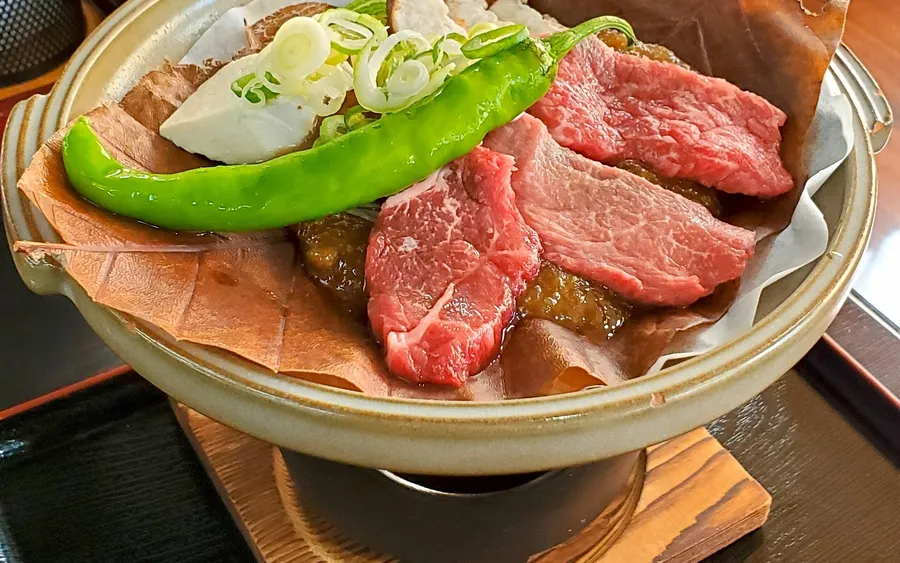
    Have lunch somewhere central serving hoba miso-yaki, thin slices of Hida beef grilled at the table over a dried magnolia leaf and topped with a dollop of miso that caramelizes as it cooks. It's a Hida regional specialty rather than something unique to the village, but nearly every restaurant around Ogimachi serves it as a set meal, and it's the natural, warming choice after a morning on your feet.

  8. Entrance gate, Gassho-zukuri Minka-en open-air museum, Shirakawa-go8

    1:30 PM — Gassho-zukuri Minka-en

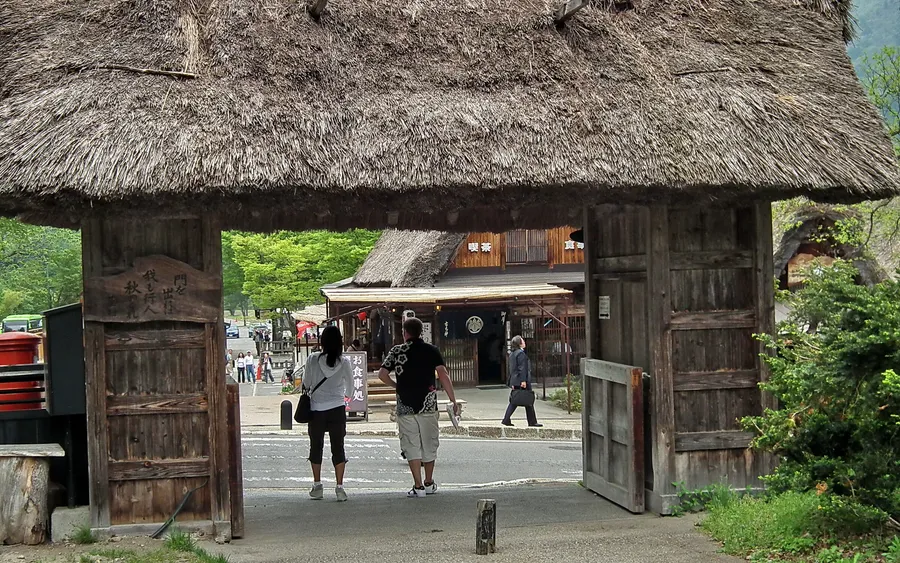
    A short walk or shuttle ride from the main village, the Gassho-zukuri Minka-en gathers more than two dozen gassho-zukuri buildings relocated here from around the region, some rescued from villages flooded by dam construction decades ago. It's a more spread-out, less crowded visit than Ogimachi itself, and worth the roughly hour it takes to walk the grounds properly.

    8:50 AM – 5:00 PM (Mar–Nov); 9:00 AM – 4:00 PM (Dec–Feb)2499 Ogimachi, Shirakawa, Ono District, Gifu
  9. Shirakawa Hachiman Shrine, Ogimachi, Shirakawa-go9

    2:45 PM — Shirakawa Hachiman Shrine

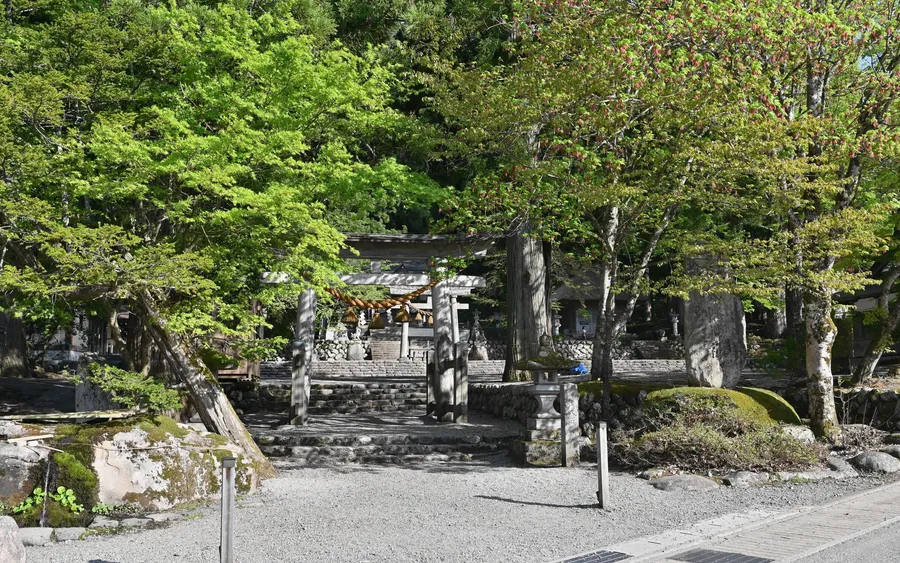
    On the way back toward the bus terminal, Shirakawa Hachiman Shrine is a quiet, wooded stop most of the year — though every October 14th and 15th it becomes the center of the village's Doburoku Festival, when the milky unrefined sake brewed on the shrine grounds each January is handed out to visitors alongside lion dances. Even outside festival dates, it's a calm last stop before heading back.

  10. Buses at Shirakawa-go Bus Terminal10

    3:30 PM — Bus Back to Takayama

    Head back across Deai-bashi to the bus terminal in time for a mid-afternoon departure — leaving by 3:30 or 4:00 PM avoids cutting it too close to the last bus of the day, which runs earlier than you might expect, especially outside peak season. If your schedule allows, this is also the natural point to continue on toward Kanazawa instead of doubling back to Takayama, turning the day trip into a longer Hokuriku loop.

Keep reading

More guides you might like

Nearby

Related destinations

Continue

Related services

Easy Travel in Japan