Skip to content
Easy Travel in Japan
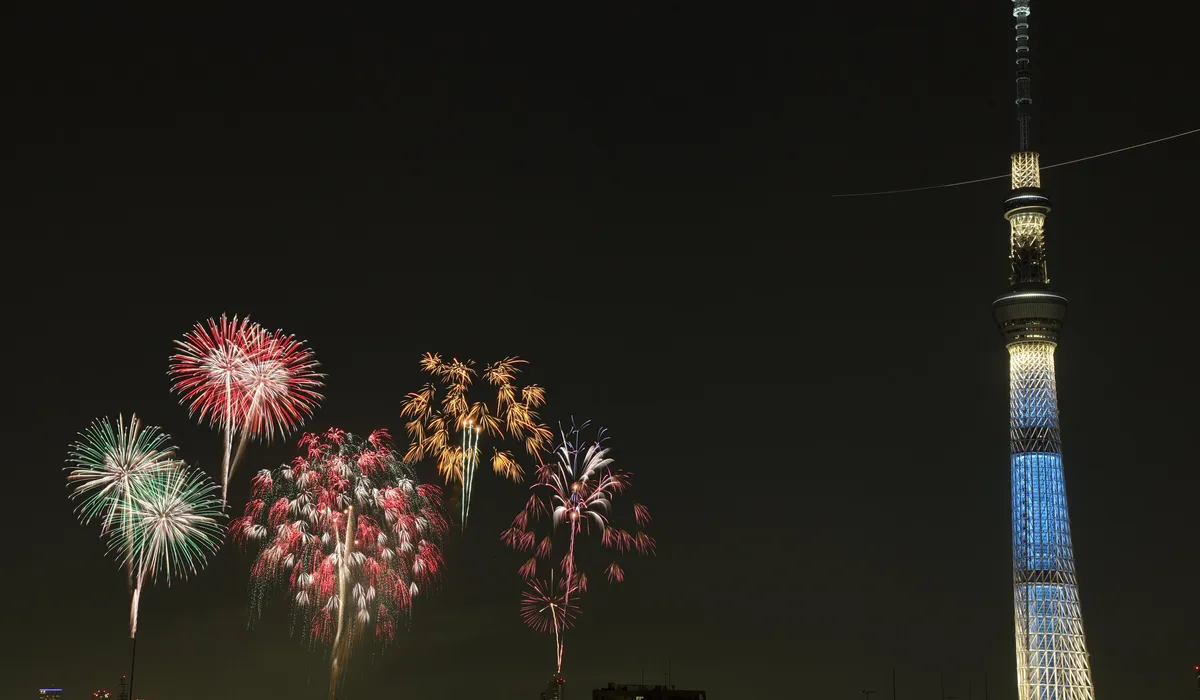
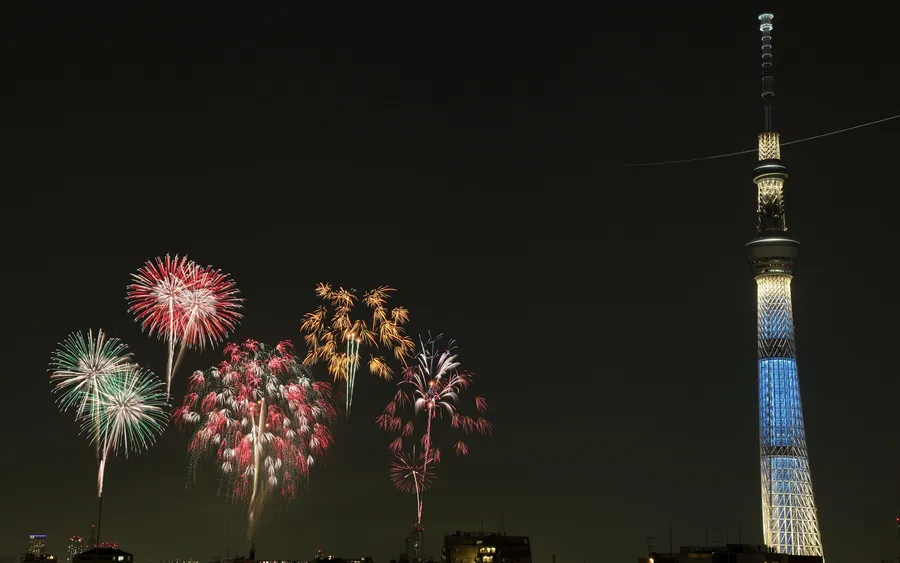
Sumida River Fireworks Festival with Tokyo Skytree, Tokyo

Best Fireworks Festivals in Japan

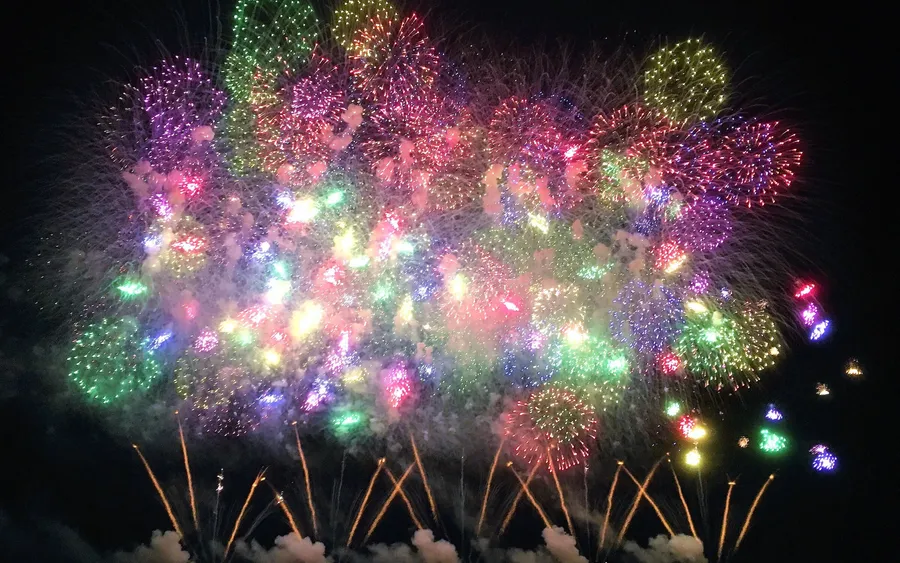
Few things capture a Japanese summer quite like a hanabi taikai — a fireworks festival. The tradition traces back to 1733, when Tokyo held a river-opening ceremony meant to console the spirits of famine and epidemic victims with a burst of light over the water, and the custom spread from there into the thousands of displays now held across the country each summer. Riverbanks and lakeshores fill with visitors in yukata, food stalls sell grilled skewers and shaved ice late into the night, and for a few hours the sky turns into the main event. Dates shift from year to year and events can be postponed for weather, so treat the timing below as a planning guide and confirm the current schedule on each festival’s official site before building a trip around it. If you’re chasing more than one of these across the country, a rail pass can make the city-hopping considerably simpler than booking each leg separately.

  1. Sumida River Fireworks Festival with Tokyo Skytree, Tokyo1

    Sumida River Fireworks Festival

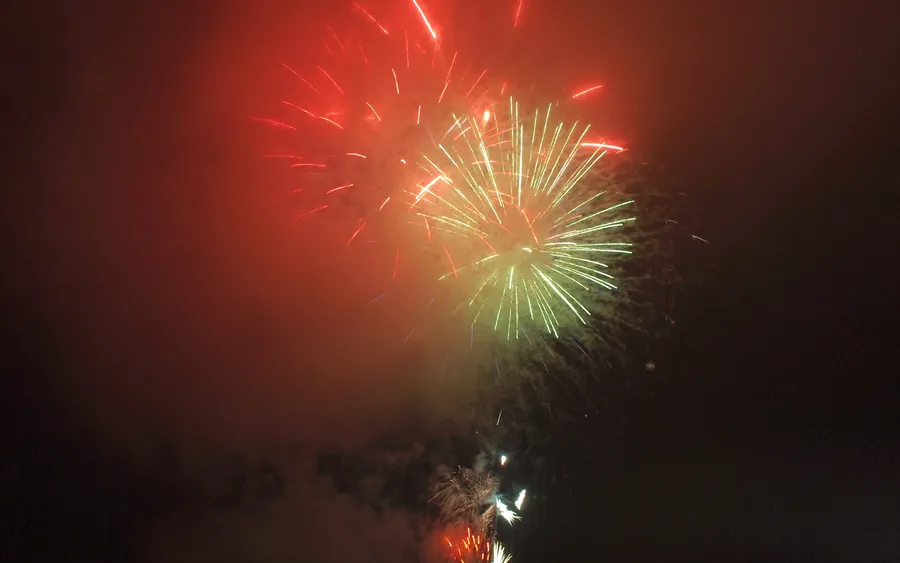
    Tokyo's oldest fireworks festival traces its roots to a 1733 river-opening ceremony meant to console the spirits of famine and plague victims, and it's grown into the city's biggest hanabi night by far. Roughly 20,000 shells go up over about ninety minutes, launched from two points along the river near Asakusa so the show plays out on both banks at once, with Tokyo Skytree lit up in the background. Close to a million people turn out annually, filling bridges, riverside parks, and restaurant terraces well before the first shell fires. Arrive several hours early for a free riverside spot, or book a table with a view if you'd rather watch in comfort.

    Last Saturday of July, evening (exact date confirmed closer to each year)
  2. Nagaoka Fireworks Festival starmine, Niigata2

    Nagaoka Fireworks Festival

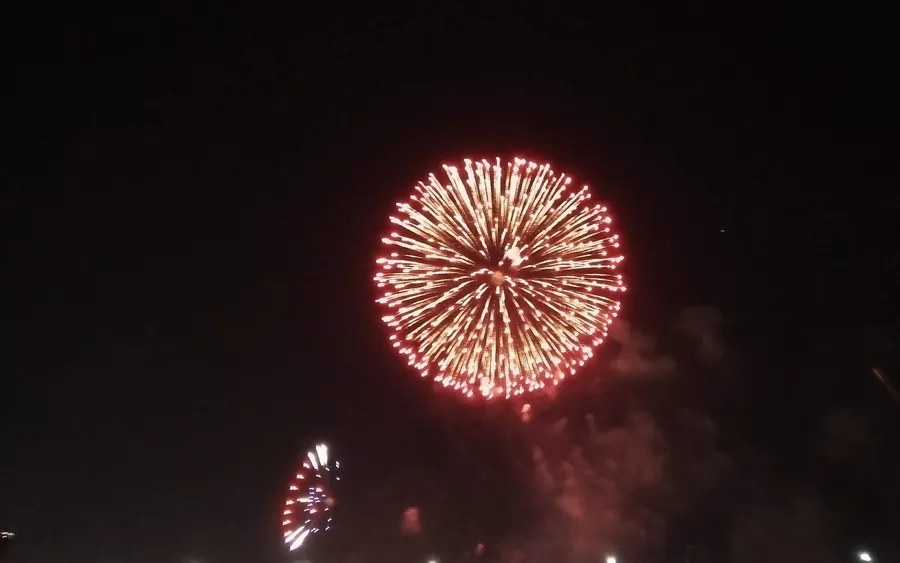
    Held two nights running in early August, Nagaoka is one of the festivals commonly named among Japan's three greatest, drawing around a million visitors to the banks of the Shinano River each year. Its signature moment is the Phoenix, a fireworks formation stretching roughly two kilometers across the sky, first launched in 2005 as a message of recovery after a major regional earthquake and now a fixture of the show. Around 20,000 shells go up across the two nights combined, timed to music along a launch line wide enough that no single vantage point catches the whole thing at once. Riverside parks fill up fast, so plan to stake out a spot well before the first shells go up if you don't have reserved seating.

    August 2–3 each year, evening
  3. Finale of the All-Japan National Fireworks Competition, Omagari, Akita3

    Omagari's National Fireworks Competition

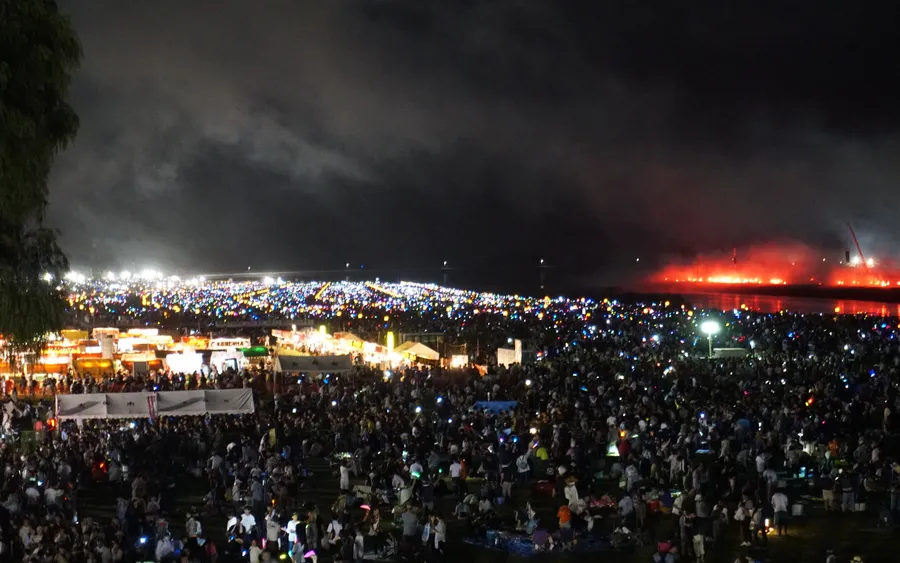
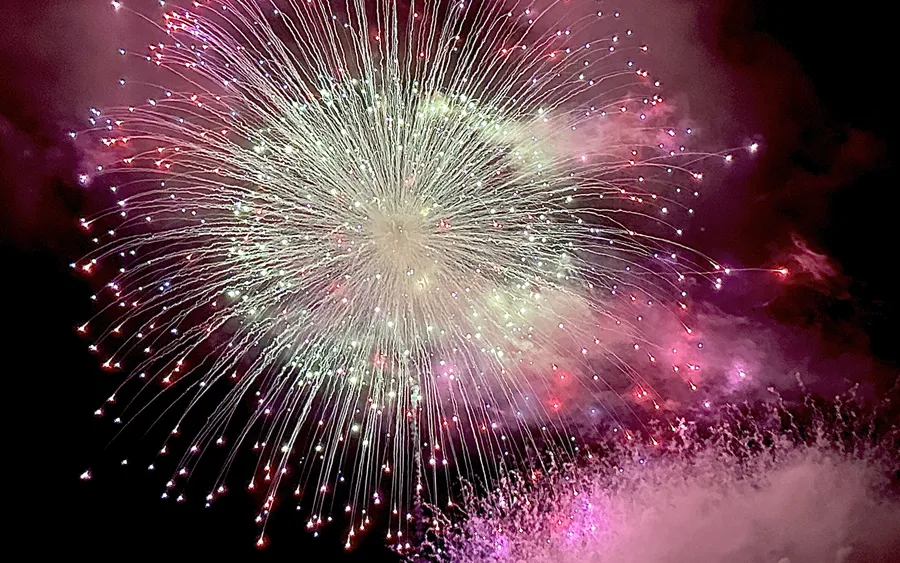
    Omagari, in Akita Prefecture, hosts Japan's most prestigious fireworks competition, where teams of professional pyrotechnicians from across the country are formally judged on both a daytime and a nighttime display rather than simply putting on a show. Around 18,000 shells go up over the Omono River each August, and along with Nagaoka and Tsuchiura's festivals, it's routinely named as one of Japan's three great fireworks festivals. The judging format gives the night a different rhythm from most hanabi taikai — distinct segments from each competing team rather than one continuous show — which rewards staying for the whole thing rather than arriving late. Crowds pack the riverbanks and surrounding rice fields well outside the town center, so expect a long walk from the nearest station.

    Last Saturday of August, day and evening
  4. Fireworks over Lake Suwa, Nagano4

    Lake Suwa Fireworks Festival

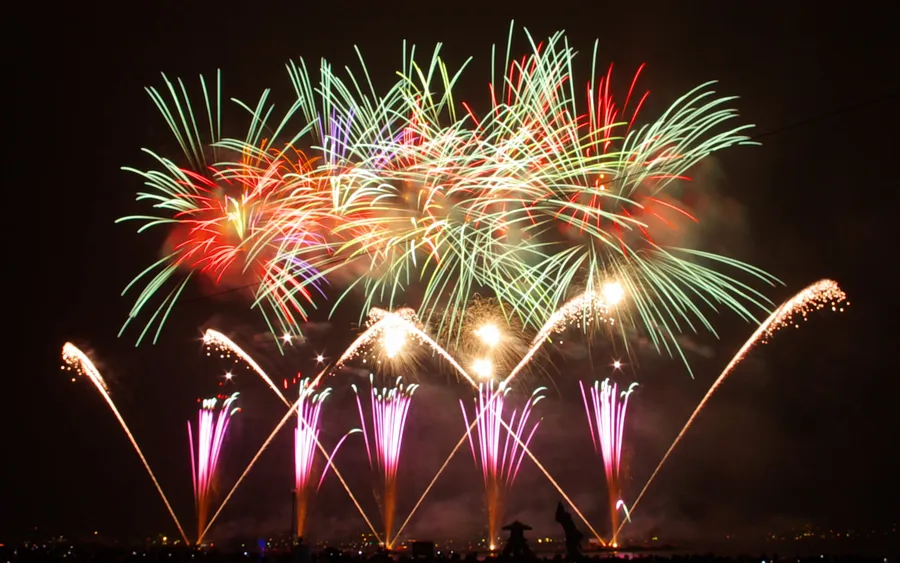
    Fired from barges anchored on Lake Suwa in mid-August, this display sends up something like 40,000 shells in a single night, among the largest one-night totals of any fireworks festival in the country. The surrounding mountains bounce the sound back across the water, and the lake's still surface doubles nearly every burst in reflection, a combination that regularly puts Suwa on shortlists of Japan's most visually striking hanabi taikai. It runs considerably longer than most single-night shows, so pace yourself rather than expecting an early finish. Lakeside parks and the higher ground around the Suwa Basin both offer clear views once the immediate shoreline fills up.

    Mid-August, evening
  5. Sendai Tanabata Fireworks Festival5

    Sendai Tanabata Fireworks Festival

    Unusually for a major hanabi taikai, Sendai's fireworks launch from the middle of the city rather than a riverbank or lakeshore, giving the roughly 16,000 shells an urban backdrop most festivals don't have. It's timed to run just ahead of the city's own Tanabata Matsuri, Japan's largest star festival, so a trip built around one naturally lines up with the other if your dates allow it. The show draws crowds into Nishi Park and the surrounding streets, close enough to downtown that no special transport is needed to reach a good viewing spot. Coming a few days before the paper-streamer decorations go up across the shopping arcades, it works well as an opening night for a longer Tanabata visit.

    Early August, evening (ahead of the Tanabata Matsuri)
  6. Naniwa Yodogawa Fireworks Festival, Osaka6

    Naniwa Yodogawa Fireworks Festival

    One of Osaka's largest single-night events, the Yodogawa fireworks festival draws several hundred thousand people to the riverbank each year for a display that's as much a citywide gathering as it is a fireworks show. It's traditionally been an August fixture, though in recent years the date has shifted to October, so it's worth double-checking the current year's schedule rather than assuming the old midsummer slot. Viewing spots line both banks of the Yodo River, with the areas nearest Shin-Kitano filling up earliest. Between the crowd size and the shifting calendar, this is one to plan around an official announcement rather than a fixed date.

    Date varies by year — recently held in October rather than the traditional August slot
  7. Aomori Fireworks Festival, finale of Nebuta Matsuri7

    Aomori's Fireworks Finale to Nebuta Matsuri

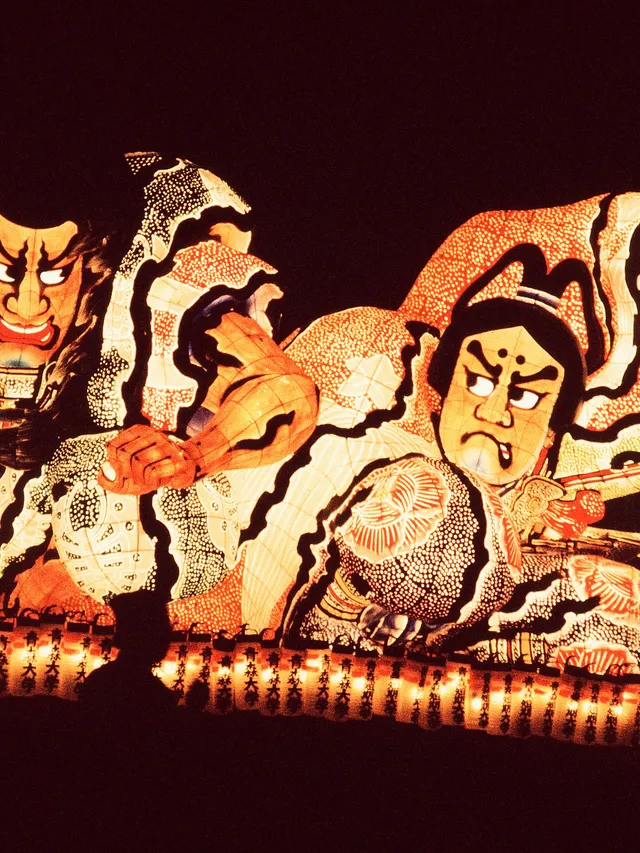
    Aomori closes out its famous Nebuta Matsuri with a fireworks display launched over the harbor, sending roughly 10,000 shells up against the water on the festival's final night. It's a fitting send-off for a week otherwise dominated by illuminated floats and haneto dancers parading through the streets, shifting the spectacle from the ground to the sky for one last night. The waterfront around Aomori Port fills with visitors who've spent the week watching the Nebuta processions, giving the fireworks a celebratory, festival-closing atmosphere rather than a standalone event. If you're only catching one night of Nebuta Matsuri, the fireworks finale is the one to prioritize.

    Early August, evening (final night of Nebuta Matsuri)
Keep reading

More guides you might like

Nearby

Related destinations

Continue

Related services

Easy Travel in Japan