Skip to content
Easy Travel in Japan
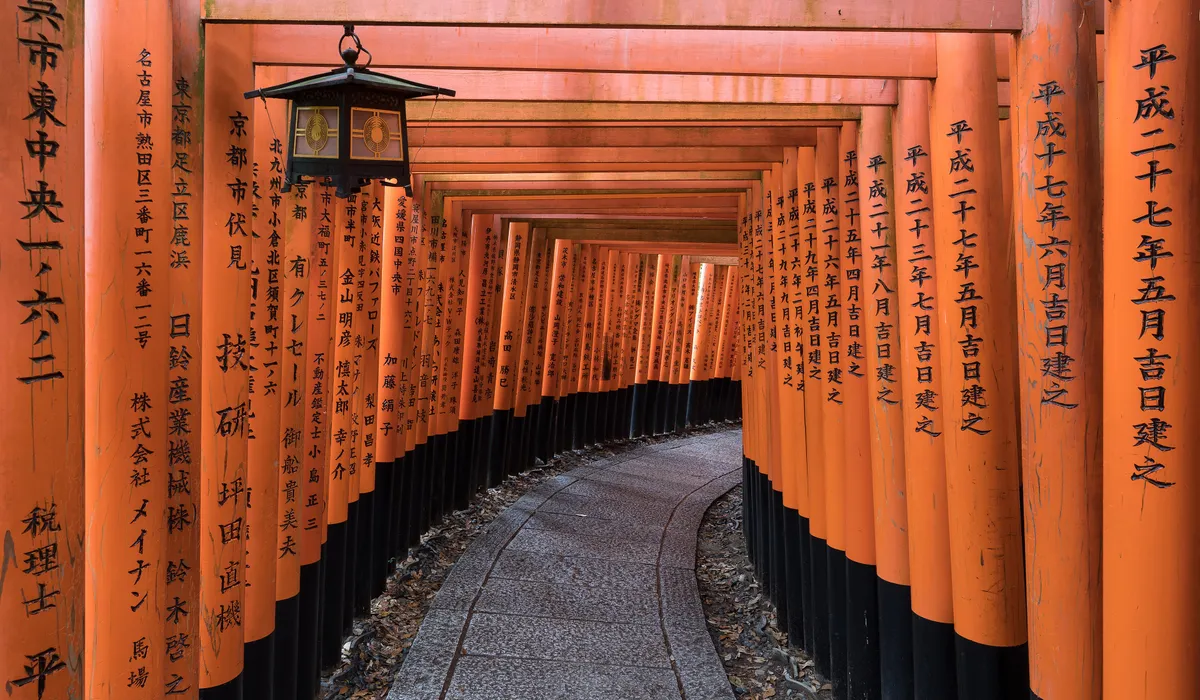
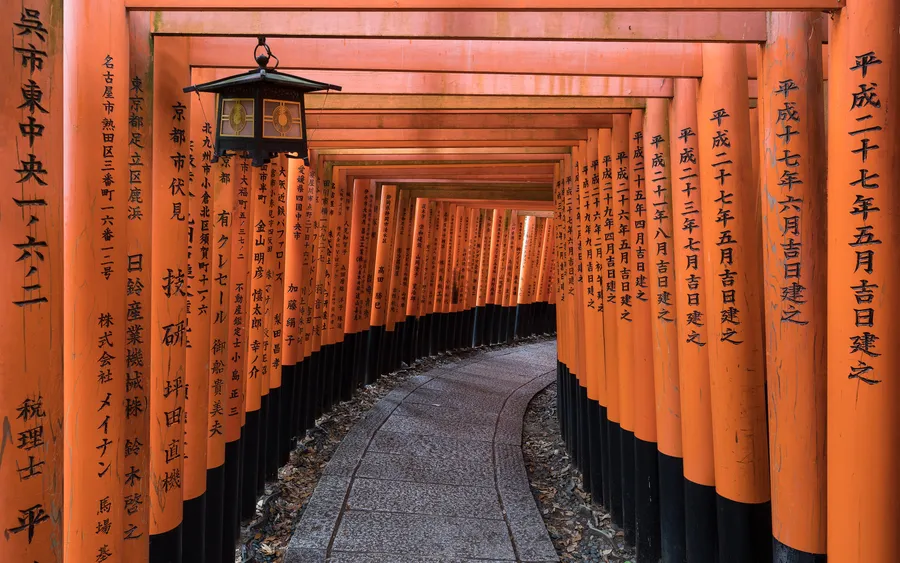
Torii gate path at Fushimi Inari Taisha, Kyoto

The Ultimate Kyoto Travel Guide

Kyoto was Japan’s imperial capital for over a thousand years, and it shows — an unmatched concentration of temples, shrines, and traditional streets that other cities lost to war and redevelopment. Here’s a closer look at the landmarks, flavors, neighborhoods, and experiences that make it worth exploring slowly, whether you have a weekend or a full week.

Attractions

The landmarks that have made Kyoto Japan's classic first stop for over a thousand years.

  1. Torii gate path at Fushimi Inari Taisha, Kyoto1

    Fushimi Inari Taisha

    Kyoto's most photographed shrine, Fushimi Inari was founded in 711 and serves as the head shrine for more than 30,000 Inari shrines across Japan, each one dedicated to the god of rice, sake, and business prosperity. What draws most visitors is the trail up Mount Inari, lined with an estimated 10,000 vermilion torii gates donated over the centuries by companies and individuals hoping for good fortune — the tunnel-like stretch near the base is the classic photo, but the full two-to-three-hour hike to the summit thins the crowds out considerably the higher you climb. Stone fox statues stand guard throughout the grounds, believed to be Inari's messengers, and it's one of the few major sights in the city with no opening hours at all, which makes an early-morning or after-dark visit a genuinely different experience from the midday rush.
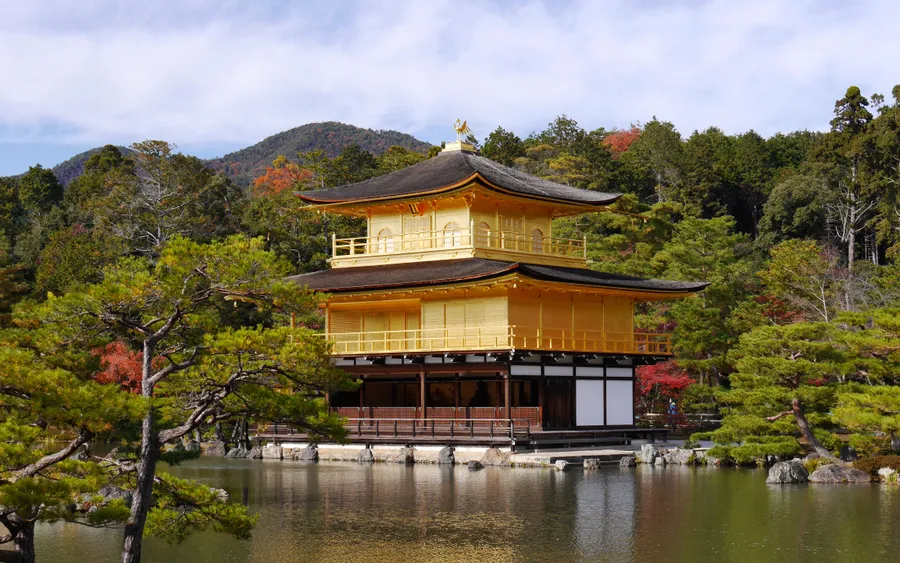
  2. Kinkaku-ji, the Golden Pavilion, reflected in its pond2

    Kinkakuji, the Golden Pavilion

    Kinkakuji was built in 1397 as a retirement villa for the shogun Ashikaga Yoshimitsu before being converted into a temple after his death, and the building you see today — its top two floors covered entirely in gold leaf — is a 1955 reconstruction after a monk burned the original to the ground in 1950. It sits at the edge of a reflecting pond called Kyoko-chi, and on a still day the gold façade doubles almost perfectly in the water, which is the view nearly everyone comes for. The surrounding strolling garden, laid out in the Muromachi period style, is worth the slow lap around the pond rather than a quick look and a photo from the viewing point.

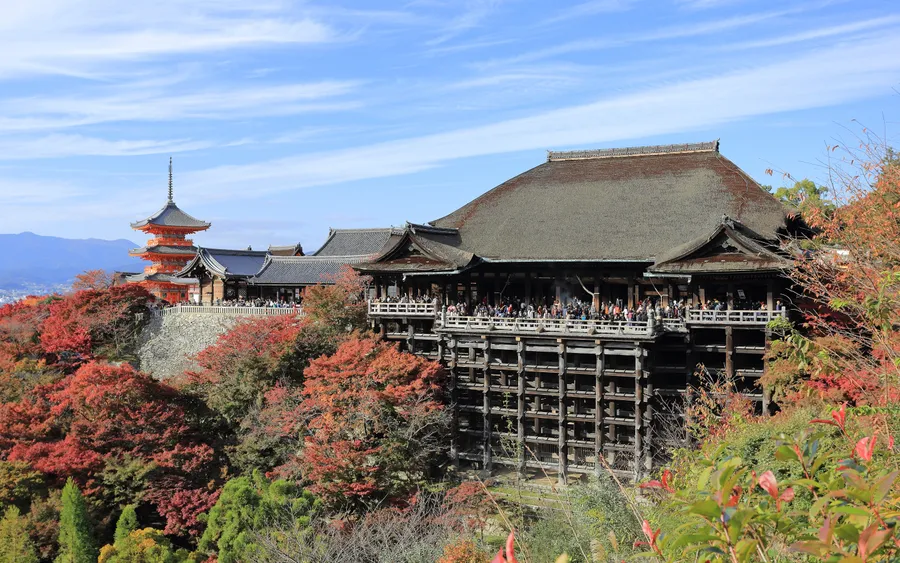
  3. Main hall of Kiyomizudera temple in autumn3

    Kiyomizudera

    Founded in 778, Kiyomizudera takes its name from the Otowa Waterfall that still runs beneath it — kiyomizu means 'pure water.' Its main hall juts out over the hillside on a wooden stage built without a single nail, a carpentry technique that's been rebuilt to the same design many times over the centuries, most recently in 1633. From the stage, the view stretches out over a sea of maple and cherry trees below, which is why the temple gets absolutely packed during cherry blossom season and autumn foliage — an early morning visit, right at opening, is the way to actually enjoy it rather than shuffle through with the crowds.

    6:00 AM – 6:00 PM (later in July–August; extended for seasonal evening illuminations)1-294 Kiyomizu, Higashiyama Ward, Kyoto

Food

Kyoto's cuisine grew up around the imperial court and the tea ceremony, so it leans refined rather than heavy.

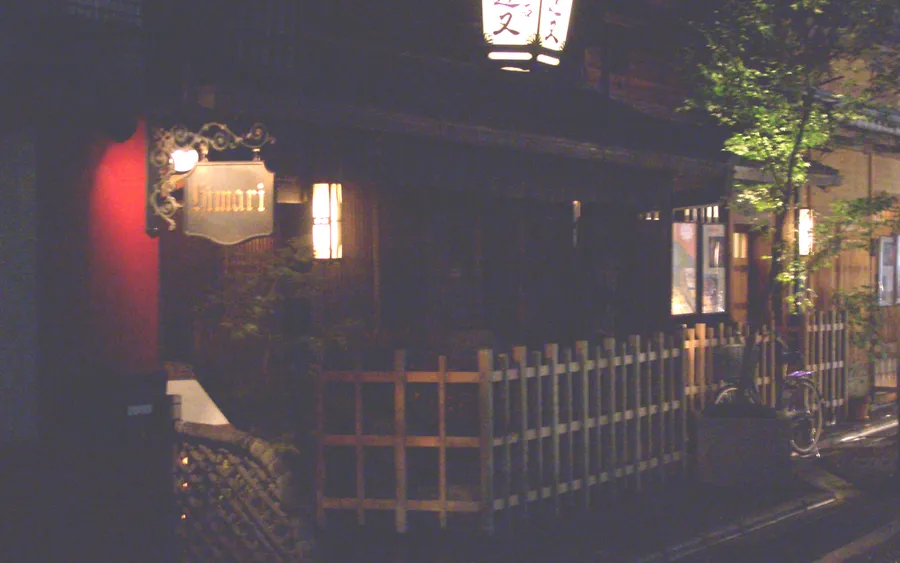
  1. Entrance of a traditional kaiseki restaurant in Kyoto at night1

    Kyo-kaiseki

    Kaiseki is often called the origin of Japanese haute cuisine, and Kyoto's version — kyo-kaiseki — is its most refined form, built around the same restraint that shapes the tea ceremony it grew out of. A full meal unfolds over many small, precisely plated courses, each one built to bring out the natural flavor of a single seasonal ingredient rather than layer on heavy seasoning. Restaurants like Minokichi, founded in 1716 in the Okazaki area near Heian Shrine, have been serving the style for over three centuries, working local Kyoto vegetables and river fish into menus that change with the season. It's a slower, quieter kind of meal than most travelers are used to — worth setting aside a full evening for rather than fitting in between sights.

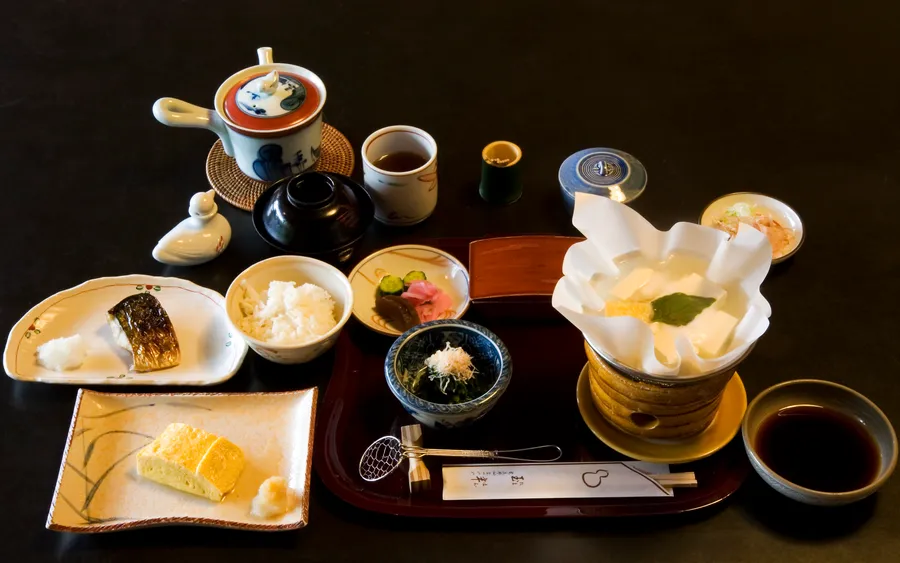
  2. Yudofu hot pot served with rice and side dishes2

    Yudofu

    Yudofu is about as simple as Japanese food gets: blocks of tofu gently simmered in a pot of kombu-infused water and eaten straight from the broth with a dip of soy sauce, grated ginger, and scallion. It's closely tied to Kyoto's temple cuisine — the area around Nanzenji temple has served it to pilgrims and monks for centuries, since Buddhist dietary restrictions kept meat off the table and pushed tofu to the center of the plate instead. The tofu itself is the whole point here; Kyoto's soft, mineral-rich water is often credited for why the local version tastes noticeably cleaner and more delicate than tofu made elsewhere in Japan.

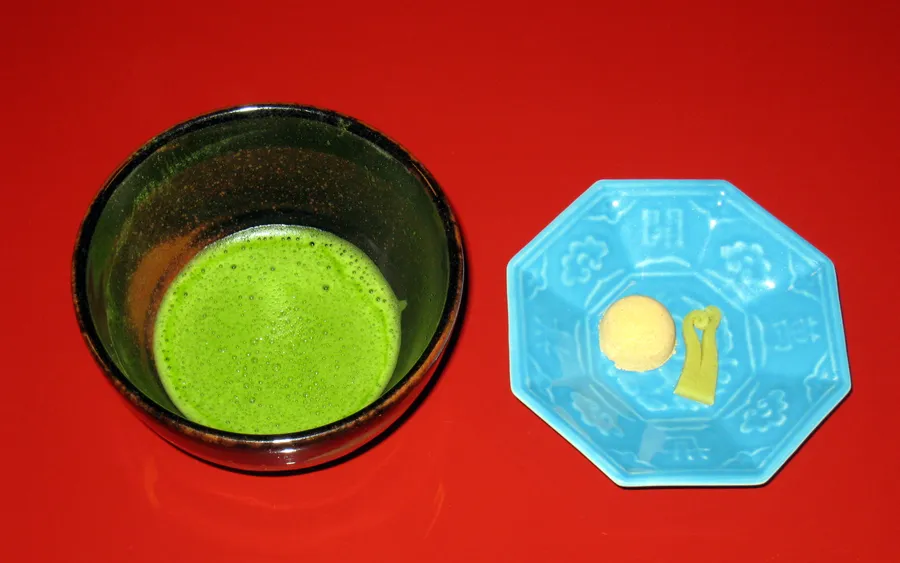
  3. A bowl of matcha served with wagashi sweets3

    Uji Matcha & Wagashi

    Uji, just south of central Kyoto, has grown tea since the 11th century and is widely regarded as producing Japan's finest matcha, thanks to a shading technique developed there hundreds of years ago that concentrates the leaves' color and umami before they're stone-ground into powder. Around the city, matcha shows up whisked into tea-ceremony-style bowls, folded into soft-serve and parfaits, and paired with wagashi — traditional sweets built to balance matcha's bitterness with something soft, sweet, and often shaped to reflect the season. Sitting down for a proper bowl of matcha with a piece of wagashi on the side is a small ritual in itself, and one of the easiest ways to slow down for twenty minutes between temples.

Neighborhoods

Wander these streets and get a feel for how the old capital still moves after dark.

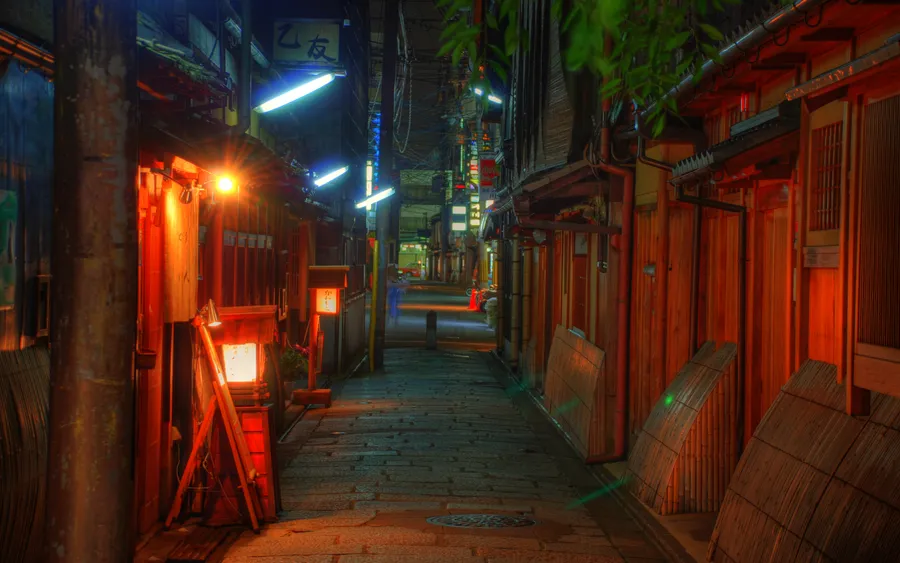
  1. A quiet lantern-lit alley in Gion, Kyoto, at night1

    Gion & Hanamikoji

    Gion is Kyoto's most famous geisha district, and Hanamikoji, the roughly 1,000-meter street running through its heart, is where that history is most visible — rows of machiya townhouses and centuries-old ochaya teahouses behind red lattice windows and bamboo fences. The Ichiriki Chaya, one of the neighborhood's most storied teahouses, has been operating for over 300 years and remains active today. Early evening is when you're most likely to spot a geiko or maiko hurrying between appointments, though most teahouses here are reservation-only and not open to passersby — the etiquette is to admire from a respectful distance rather than chase them down for a photo.

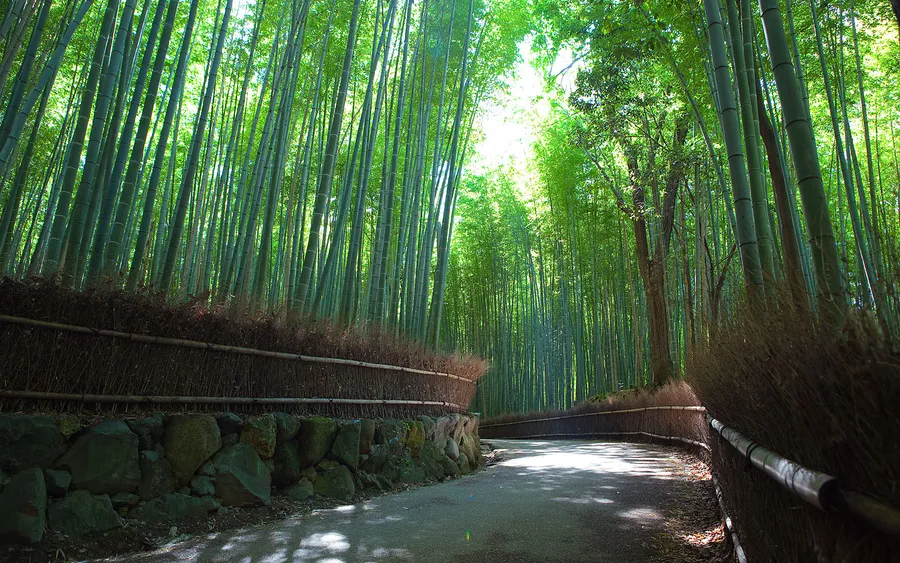
  2. Path through the Sagano Bamboo Forest, Arashiyama2

    Arashiyama & the Bamboo Grove

    On the western edge of the city, Arashiyama centers on a roughly 400-meter path through the Sagano Bamboo Forest, where the stalks grow so dense and tall that the light filtering through them turns a soft green — one of Kyoto's most photographed spots, and genuinely worth the trip even with the crowds. It sits a short walk from the Togetsukyo Bridge, whose name recalls a Heian-era moon-viewing party, and from Tenryuji Temple's landscaped garden, so the area rewards a slow half-day rather than a quick stop. Go right at opening if you want the bamboo path to yourself for even a few minutes.

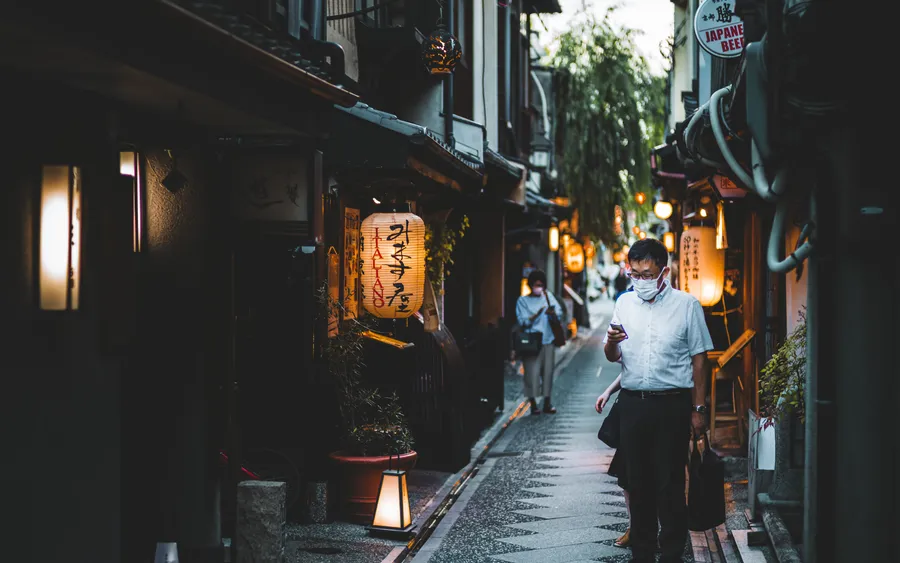
  3. Pontocho Alley in Kyoto lit by paper lanterns at dusk3

    Pontocho Alley

    A single narrow lane running between the Kamo River and Shijo-dori, Pontocho has been a center of Kyoto's teahouse and geisha culture since the Edo period. By day it's quiet enough to walk past without noticing; after dark, paper lanterns flicker on along the wooden machiya facades and the alley fills with a mix of exclusive kaiseki restaurants and far more casual izakayas, so there's something here whatever your budget. In summer, a handful of restaurants build platforms out over the Kamo River for open-air dining — one of the more memorable ways to eat dinner in the city if you can time it right.

Experiences

A few ways to slow down and see a quieter, more contemplative side of the city.

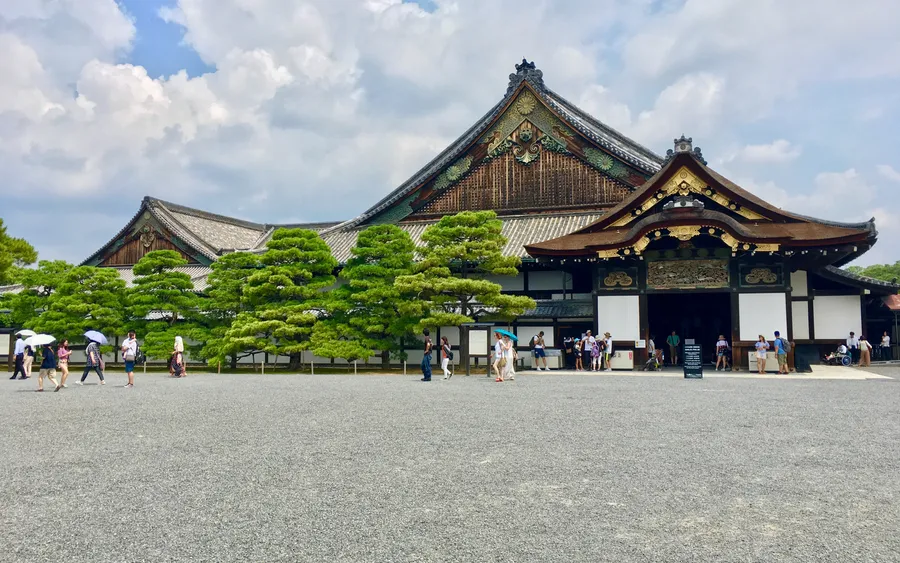
  1. Nijo Castle, Kyoto1

    Nijo Castle's nightingale floors

    Built in 1603 as the Kyoto residence of shogun Tokugawa Ieyasu, Nijo Castle is best known for the Ninomaru Palace's 'nightingale floors' — corridors engineered so that the floorboards chirp underfoot, a security measure meant to make it impossible for an intruder to sneak up unheard. The palace's sliding doors are covered in elaborate gold-leaf paintings by artists of the Kano school, and the surrounding grounds, now a UNESCO World Heritage Site, are worth a slow lap on their own. It's an easy add-on to a morning in central Kyoto, and one of the more playful, hands-on ways to experience Edo-period architecture rather than just look at it.

    8:45 AM – 4:00 PM (grounds close 5:00 PM); closed Tuesdays in Jan, Jul, Aug & Dec, and Dec 26–Jan 4541 Nijojocho, Nakagyo Ward, Kyoto
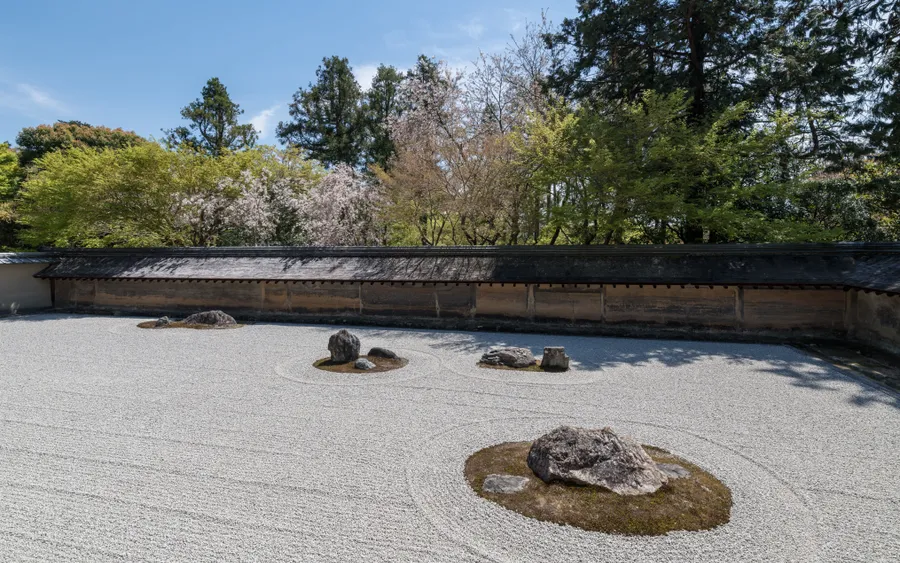
  2. The kare-sansui rock garden at Ryoanji temple, Kyoto2

    Ryoanji's rock garden

    Ryoanji's kare-sansui, or dry rock garden, is one of the most studied and imitated pieces of landscape design in Japan — fifteen stones set in raked white gravel, arranged around the year 1500 so that no matter where you sit along the veranda, at least one stone is always hidden from view. Nobody knows for certain what the arrangement is meant to represent, and that ambiguity is really the point: it's designed for quiet, open-ended contemplation rather than a single correct interpretation. Sitting on the wooden veranda for even ten minutes, away from the noisier sights elsewhere in the city, is as close as a first-time visitor gets to the meditative headspace the garden was built to encourage.

    8:00 AM – 5:00 PM (Mar–Nov); 8:30 AM – 4:30 PM (Dec–Feb)13 Ryoanji Goryonoshitacho, Ukyo Ward, Kyoto
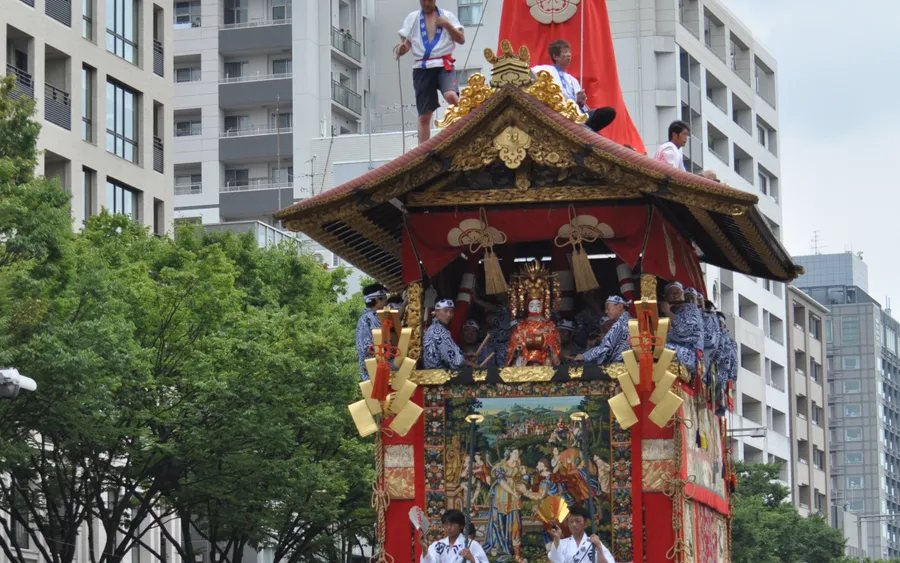
  3. A decorated float in the Gion Matsuri procession, Kyoto3

    The Gion Matsuri

    Hosted by Yasaka Shrine, the Gion Matsuri is one of Japan's three great festivals and fills the entire month of July, tracing back to 869, when it began as a ritual to appease the gods blamed for a citywide plague. Its centerpiece is the Yamaboko Junko, two processions of enormous, hand-assembled wooden floats — some over 25 tons — that roll through the streets on July 17 and July 24, accompanied by musicians playing traditional flute, drum, and gong. The evenings just before each procession, known as yoiyama, turn the streets around the floats into a lantern-lit festival in their own right, with food stalls and crowds out well into the night — worth building a Kyoto trip around if your dates line up.

Keep reading

More guides you might like

Nearby

Related destinations

Continue

Related services

Easy Travel in Japan