Skip to content
Easy Travel in Japan
Former Dutch Trading Post, Dejima, Nagasaki

The Perfect 2-Day Nagasaki Itinerary

Nagasaki’s two days split naturally along its two defining threads. Day one covers the peace memorials and the trading post that made the city Japan’s window to the world, closing with the night view from Mount Inasa; day two moves through the churches and merchant houses of the old foreign settlement, paired with the noodle soups and sponge cake that came out of centuries of cross-cultural exchange. It’s built as a standalone two-day trip, but Nagasaki’s position on the Nishi Kyushu Shinkansen means either day works just as well as a stop between Fukuoka and the rest of Kyushu.

Day 1: Peace Park & Nagasaki History

The memorials, the museum, and the reconstructed trading post that anchor Nagasaki's modern and early-modern history.

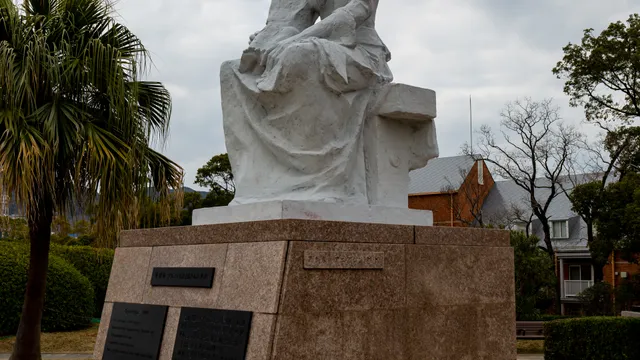
  1. Statue of Peace, Nagasaki Peace Park1

    9:00 AM — Nagasaki Peace Park & Hypocenter Park

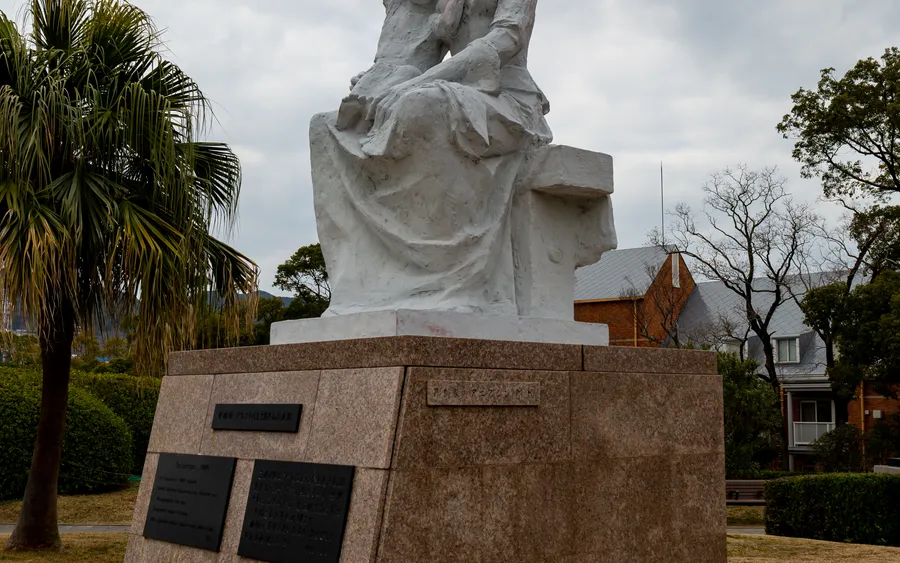
    Start in the Urakami district at Nagasaki Peace Park, built around the site where the atomic bomb detonated on August 9, 1945. Walk from the Statue of Peace and the international memorial sculptures lining the Fountain of Peace area to adjoining Hypocenter Park, marked by a simple black pillar at the exact point of detonation — both are free and open around the clock, and worth an unhurried hour before the museum.

    Park grounds: always open, free admission9 Matsuyamamachi, Nagasaki 852-8118
  2. Nagasaki Atomic Bomb Museum2

    10:30 AM — Atomic Bomb Museum

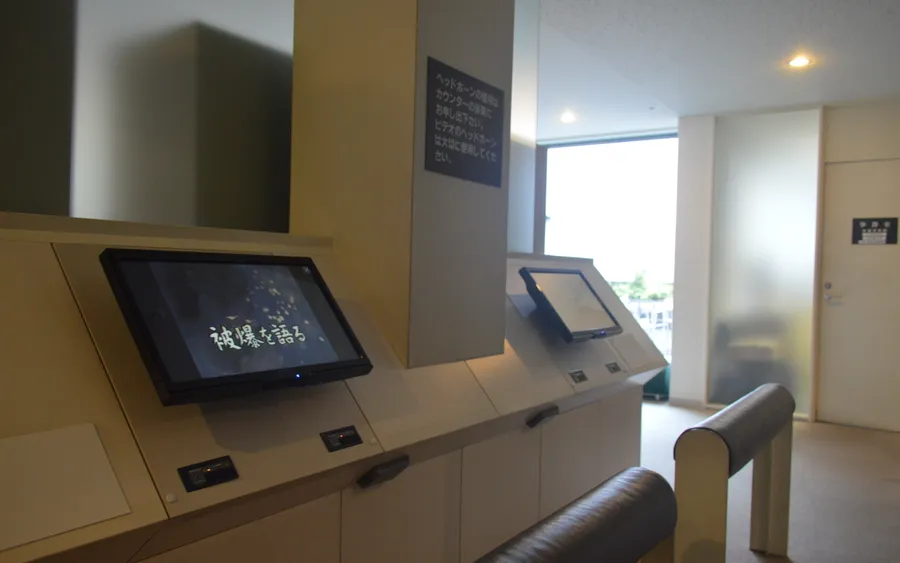
    Spend a couple of hours at the adjoining Atomic Bomb Museum, which documents the bombing and its aftermath through recovered artifacts — including a clock stopped at 11:02, the exact moment of detonation — photographs, and survivor testimony. It's a heavy, essential stop, and one best not rushed through on the way to lighter parts of the day.

    8:30 AM – 5:30 PM (Sep–Apr), 8:30 AM – 6:30 PM (May–Aug); ¥200 adult admission7-8 Hiranomachi, Nagasaki 852-8117
  3. Champon, Nagasaki3

    1:00 PM — Champon Lunch in Chinatown

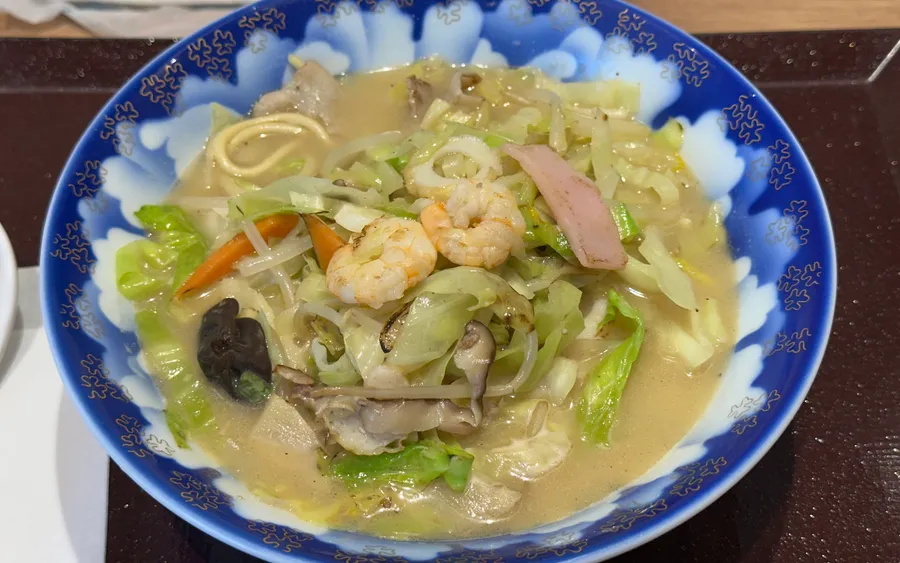
    Take the tram to Shinchi Chinatown, the oldest of Japan's three officially recognized Chinatowns, for champon — a rich, milky pork-and-chicken broth loaded with seafood and vegetables, invented around 1899 at the restaurant Shikairo to feed the city's Chinese student community. Several restaurants along the district's compact main crossing have served the dish for generations, so it's hard to go wrong picking one at random.

  4. Former Dutch Trading Post, Dejima, Nagasaki4

    2:30 PM — Dejima

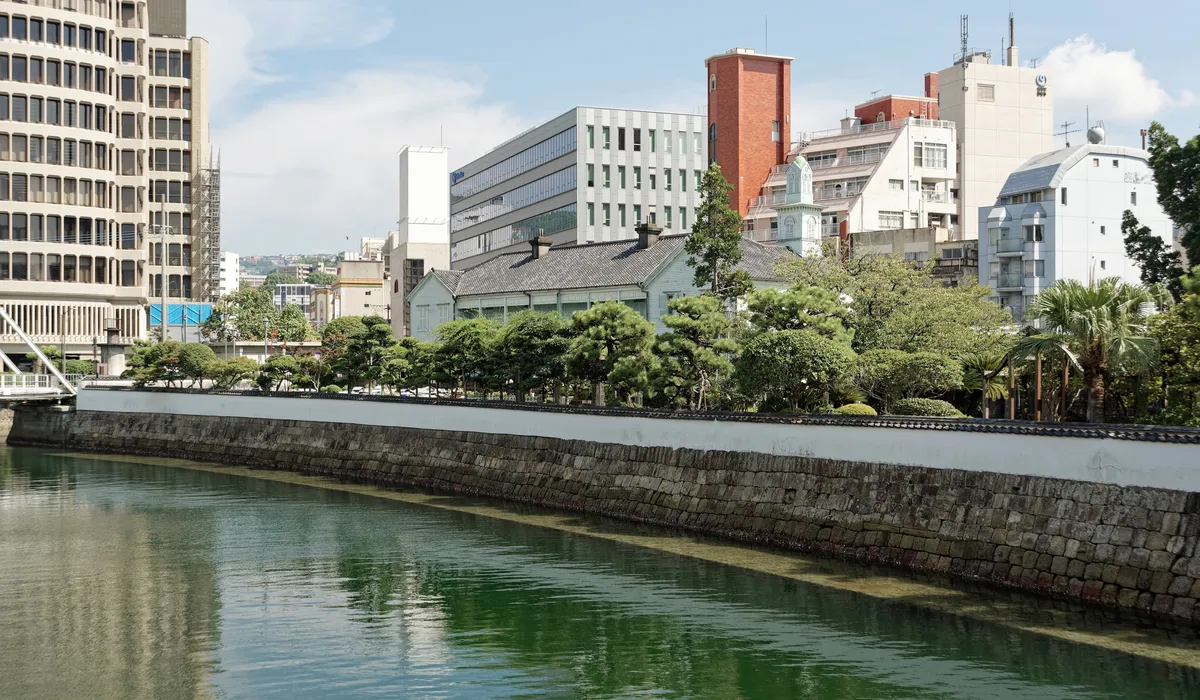
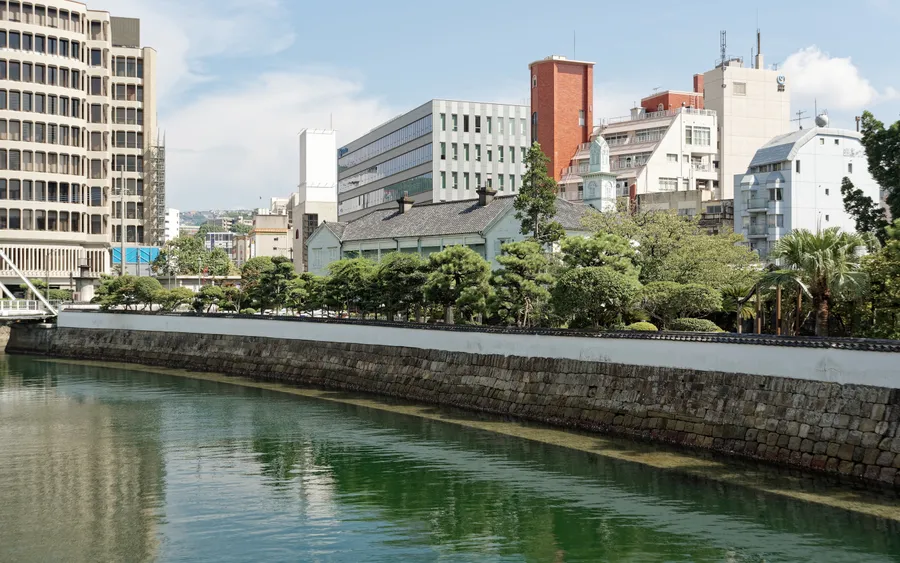
    A short walk from Chinatown, Dejima was built in 1636 as a fan-shaped artificial island and served as the sole officially sanctioned point of contact between Japan and the West for over two centuries, home to a resident Dutch trading post. Roughly fifteen of its buildings have been reconstructed on their original foundations using archival records, and a couple of hours is enough to walk through the warehouses, residences, and displays that bring the isolation-era trade story to life.

    8:00 AM – 9:00 PM, last admission 8:40 PM; ¥510 adult admission6-1 Dejimamachi, Nagasaki 850-0862
  5. Night view of Nagasaki from Mount Inasa5

    7:00 PM — Mount Inasa at Sunset

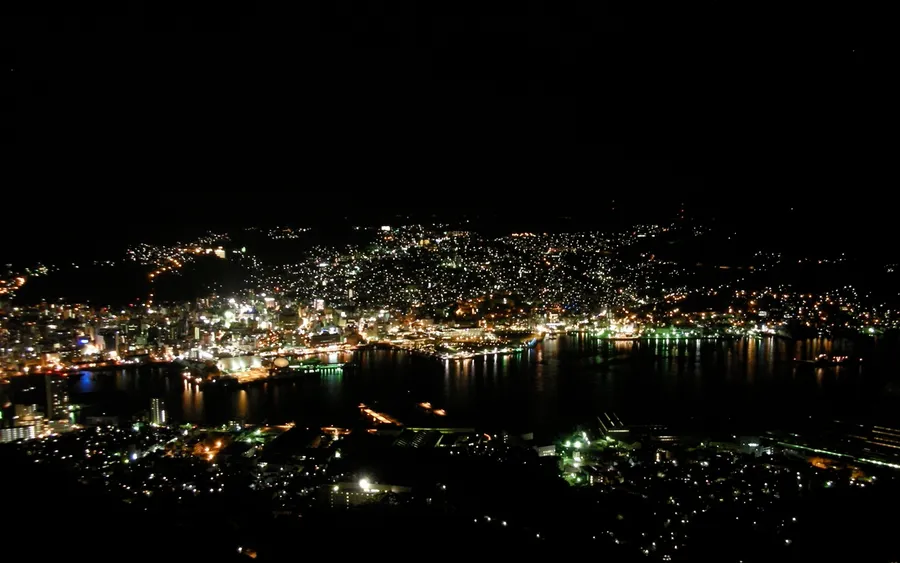
    Close out the day at Mount Inasa, whose 333-meter summit gives Nagasaki its best-known panorama, certified among both Japan's and the world's 'new three great night views.' A five-minute ropeway ride in glass-walled gondolas climbs from the Fuchi Shrine station near the base — time it for sunset so the view shifts from daylight over the harbor into the full spread of city lights below.

    Ropeway: 9:00 AM – 10:00 PM, departures every 15–20 min; ¥1,040 one-way, ¥1,900 round-trip364-1 Inasamachi, Nagasaki 852-8114

Day 2: The Foreign Quarter & Local Flavors

Churches, merchant houses, and Ming-dynasty temple architecture from Nagasaki's centuries as Japan's window to the world, paired with the noodle soups and sweets that came out of it.

  1. Oura Church, Nagasaki1

    9:00 AM — Oura Church

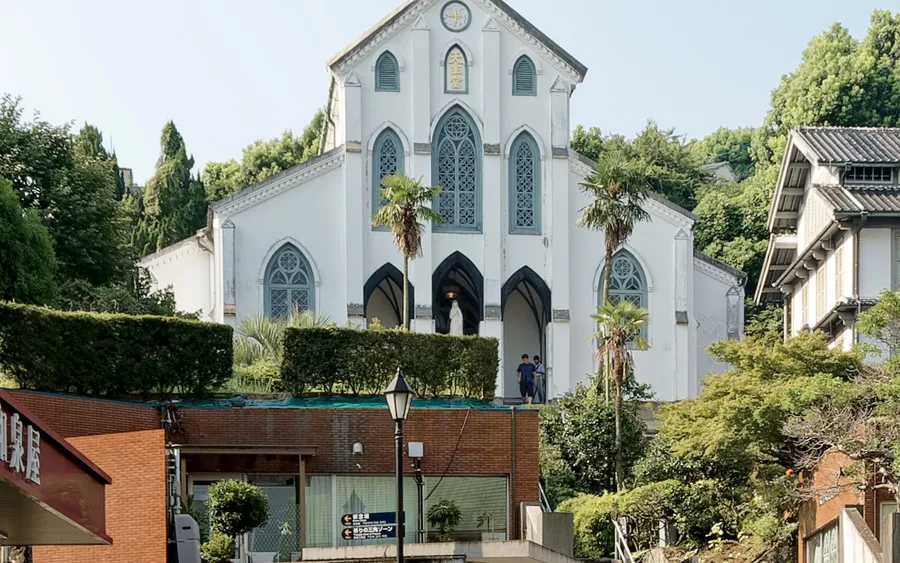
    Start day two at Oura Church, completed in 1864 and generally considered the oldest surviving Christian church building in Japan. Built to commemorate 26 Christians executed here in 1597, it later became the site where descendants of Japan's underground 'Hidden Christians' revealed themselves after more than two centuries of secrecy — part of why it anchors the UNESCO-listed Hidden Christian Sites of the Nagasaki region.

    8:30 AM – 6:00 PM, last entry 5:30 PM; ¥1,000 adult admission5-3 Minamiyamatemachi, Nagasaki 850-0931
  2. Glover Garden, Nagasaki2

    10:00 AM — Glover Garden

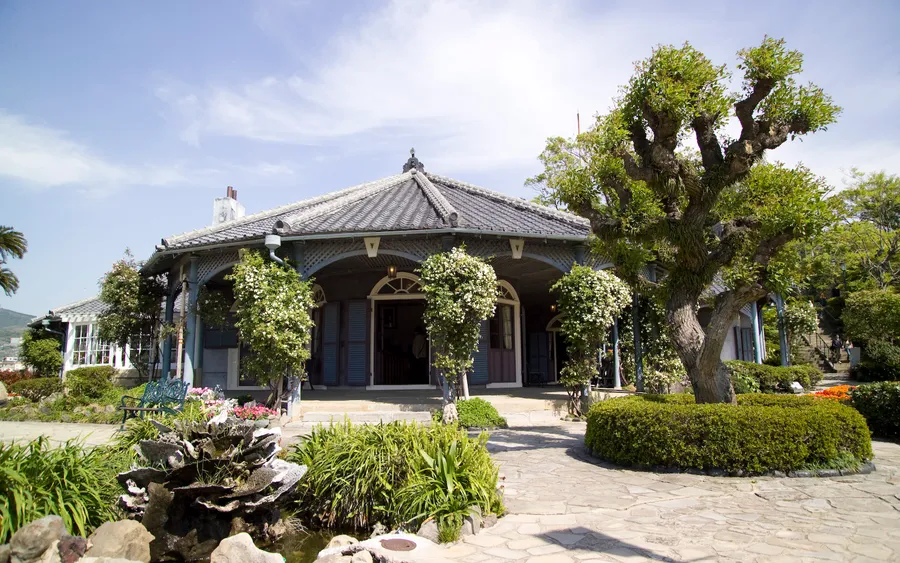
    Walk up the hill from Oura Church to Glover Garden, a terraced park preserving the 1863 residence of Scottish merchant Thomas Blake Glover, considered the oldest surviving Western-style building in Japan. Give it an hour to explore the grounds and the harbor views, and look for the mustache that inspired the Kirin beer logo on the way through the exhibits.

    8:00 AM – 6:00 PM, last entry 40 min before close; ¥620 adult admission8-1 Minamiyamatemachi, Nagasaki 850-0931
  3. Sara udon3

    12:30 PM — Sara Udon Lunch

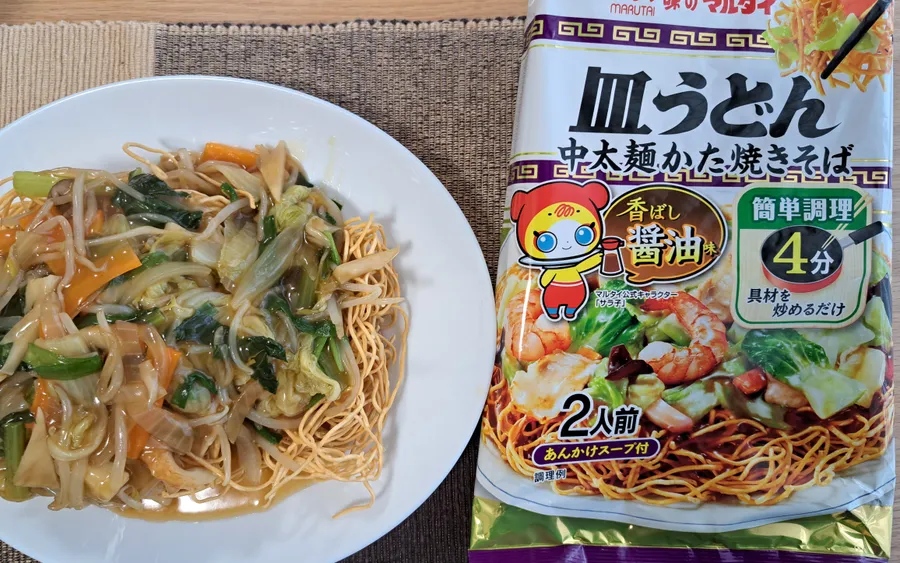
    Head back toward central Nagasaki for sara udon, champon's crispier cousin, developed at Shikairo as a version that traveled better for delivery — the same seafood-and-vegetable topping ladled over noodles fried until crunchy rather than served in broth. Choose between thin, deep-fried noodles or thicker pan-fried ones; most restaurants offer both.

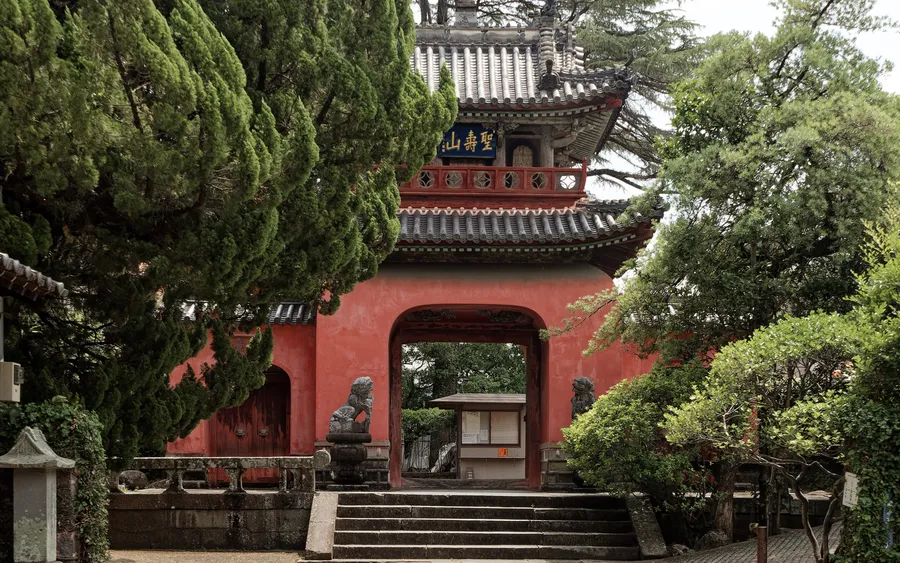
  4. Sanmon gate, Sofukuji Temple, Nagasaki4

    2:00 PM — Sofukuji Temple

    Visit Sofukuji, founded in 1629 for Nagasaki's Chinese community, whose inner gate and main hall were built in Ningbo, China, then shipped and reassembled here — a rare, direct example of Ming-dynasty temple architecture rather than a Japanese interpretation of it. The vivid red front gate is one of the most photographed spots in the city, and the temple is an easy walk from Chinatown if you want to loop back through.

    8:00 AM – 5:00 PM; ¥300 adult admission7-5 Kajiyamachi, Nagasaki 850-0831
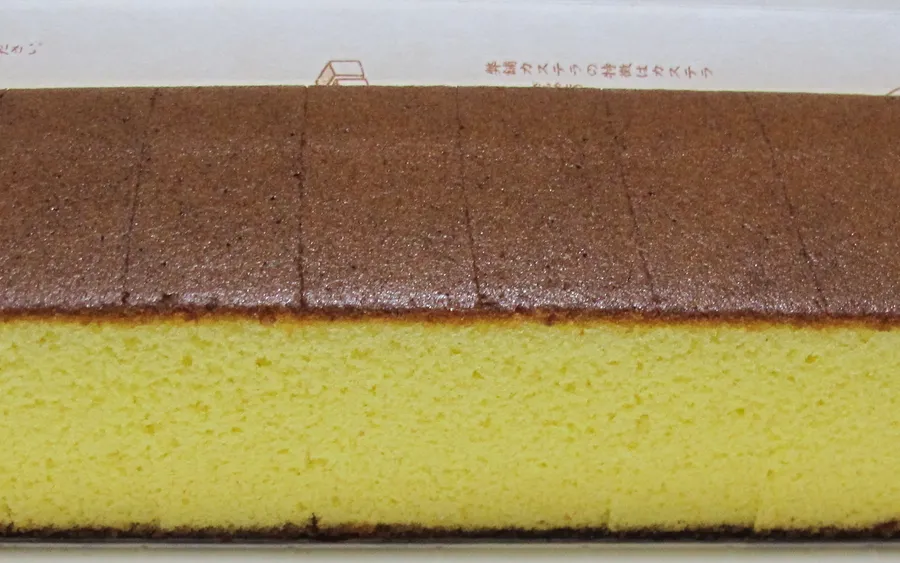
  5. Fukusaya castella5

    3:00 PM — Castella Shopping

    Close out the trip with castella, the dense, fine-grained sponge cake Portuguese traders brought to Nagasaki in the 16th century and local confectioners refined over the centuries since. Fukusaya, making castella since 1624, is one of the oldest and most respected names, and a boxed loaf travels well as the classic Nagasaki souvenir to bring home.

Keep reading

More guides you might like

Nearby

Related destinations

Continue

Related services

Easy Travel in Japan