Skip to content
Easy Travel in Japan
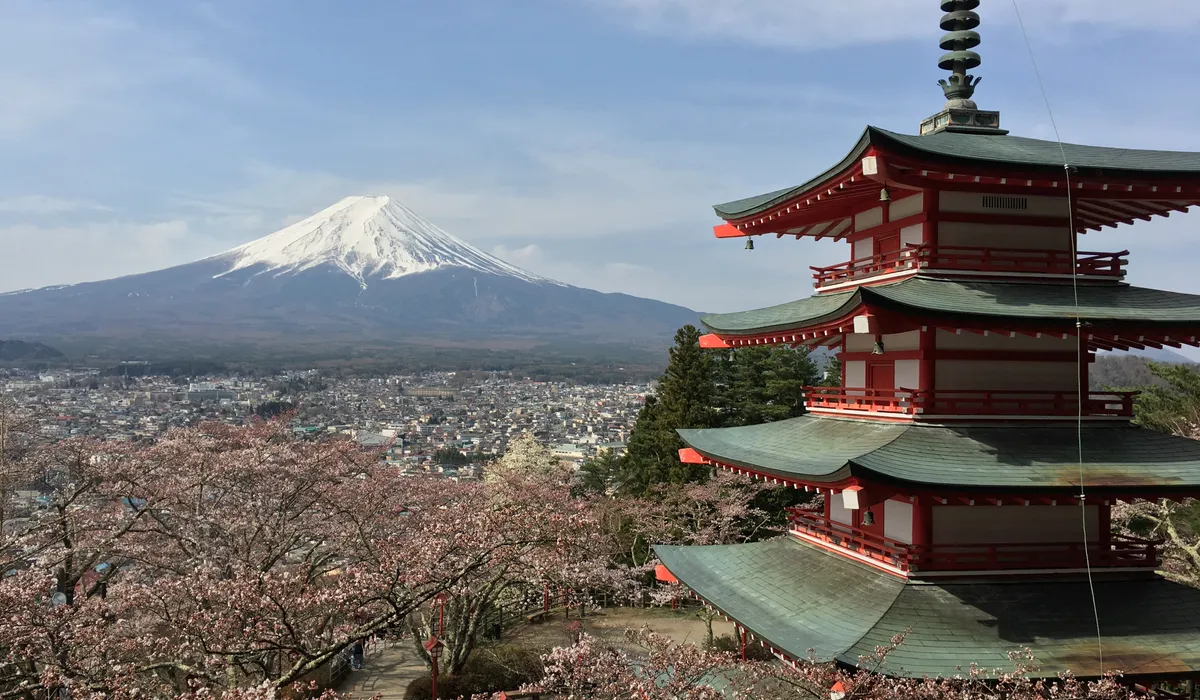
Mount Fuji framed by Chureito Pagoda and cherry blossoms

12 Best Things to Do in Japan

Japan rewards travelers who mix the big-name landmarks with a few things that only really make sense once you’re standing there — a deer bowing for a cracker, a gate that seems to float on the tide, monkeys soaking in a snow-dusted hot spring. These twelve experiences span the country from the Japanese Alps to a subtropical reef off Okinawa, and none of them need much more than a train ticket and a loosely planned itinerary to fit into a first trip.

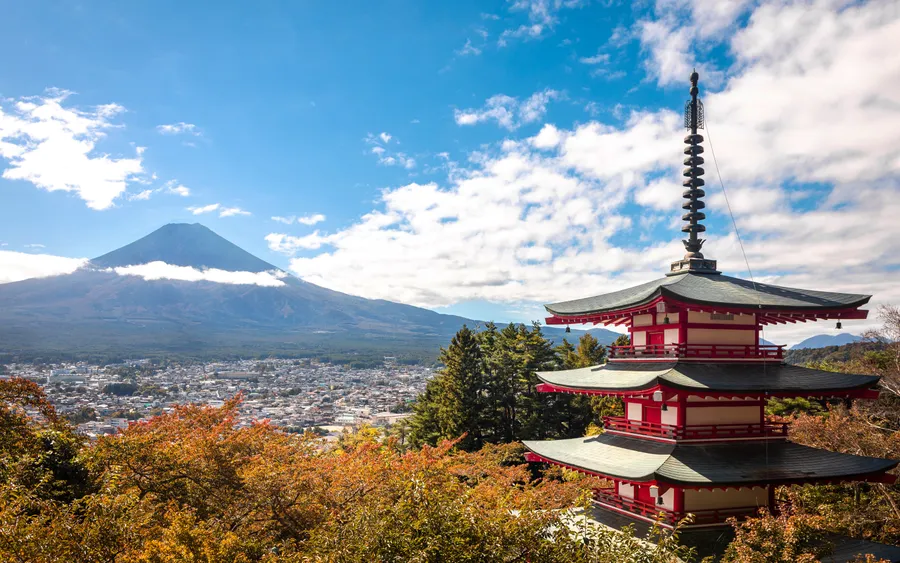
  1. Chureito Pagoda and Mount Fuji1

    Catch the Postcard View of Mount Fuji

    The single most photographed view of Mount Fuji sits above the town of Fujiyoshida, where a five-story pagoda built in 1963 frames the volcano's snow-capped cone almost too perfectly to be real. Getting there means climbing 398 stone steps through Arakurayama Sengen Park, past a small shrine, to the observation deck at the top — a climb that pays off fastest for early risers, since clouds tend to roll in by late morning and cherry blossom season fills the steps with tripods before sunrise. On a clear day the reward is unmistakable: Fuji's full silhouette, the pagoda's red tiers in the foreground, and the rooftops of Fujiyoshida spread out below. It's an easy add-on to a Fuji Five Lakes day trip and one of the rare views in Japan that genuinely looks the way it does in the photos.
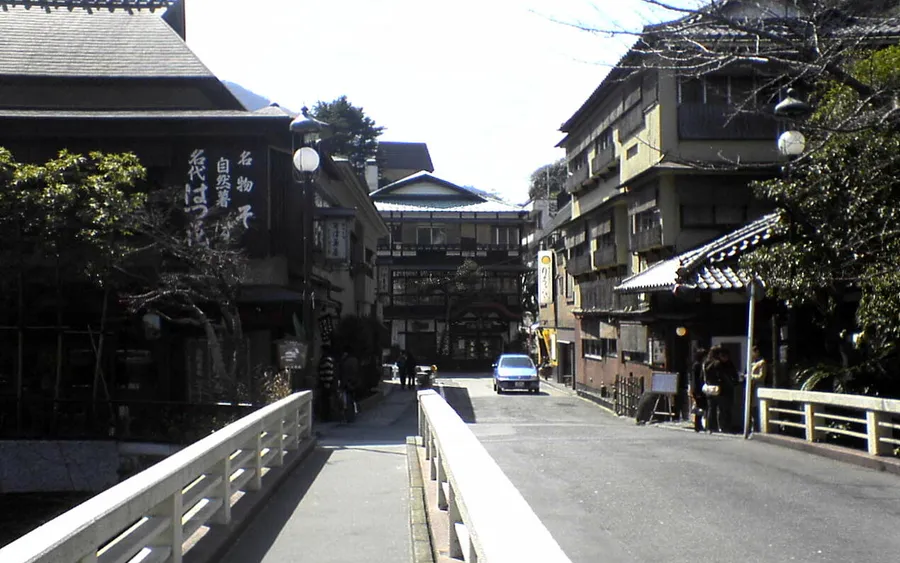
  2. Hakone-Yumoto Onsen Street2

    Soak Away the Day in a Hakone Onsen

    Hakone has been a hot spring retreat since long before it became a day-trip staple from Tokyo, and staying overnight — rather than rushing through the Hakone Loop — is where the region actually shows what it's known for. A typical ryokan stay means changing into a yukata robe, sitting down to a multi-course kaiseki dinner, and soaking in mineral-rich water heated by the same volcanic activity behind the sulfurous vents at nearby Owakudani. Many inns draw water straight from Hakone's onsen springs into both shared baths and private in-room tubs, so there's rarely a reason to leave the property once you've checked in. Pair it with the ropeway ride over Owakudani and a slow crossing of Lake Ashi earlier in the day, and Hakone stops feeling like a rushed side trip and starts feeling like the whole point.

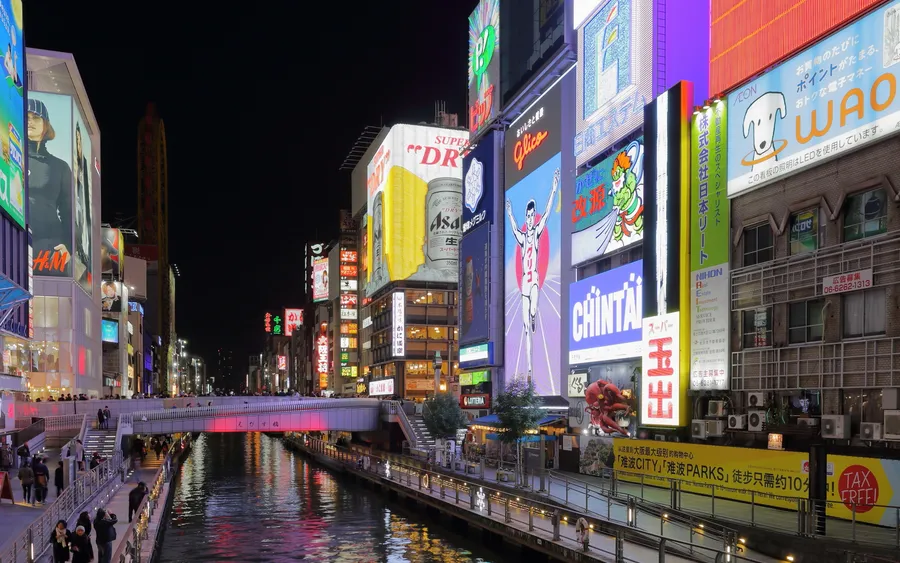
  3. Dotonbori canal lit up with neon signs at night3

    Eat Your Way Through Dotonbori and Nishiki Market

    Osaka has been nicknamed 'the nation's kitchen' for centuries, and Dotonbori — the neon-lit canal-side strip that's been an entertainment district since the 1620s — is still the best place to see why, with takoyaki griddles and kushikatsu counters running late into the night under the glow of the Glico 'running man' sign. An hour away by train, Kyoto's Nishiki Market takes a quieter, more old-fashioned approach: a five-block covered arcade of family-run stalls, some generations old, selling pickles, skewers, and seasonal sweets meant for grazing rather than sitting down to a full meal. Between the two, a single day of market-hopping covers a real cross-section of Japanese street food, from Osaka's deep-fried, sauce-heavy classics to Kyoto's more delicate, seasonal side. Skip breakfast — both streets reward showing up with an empty stomach.

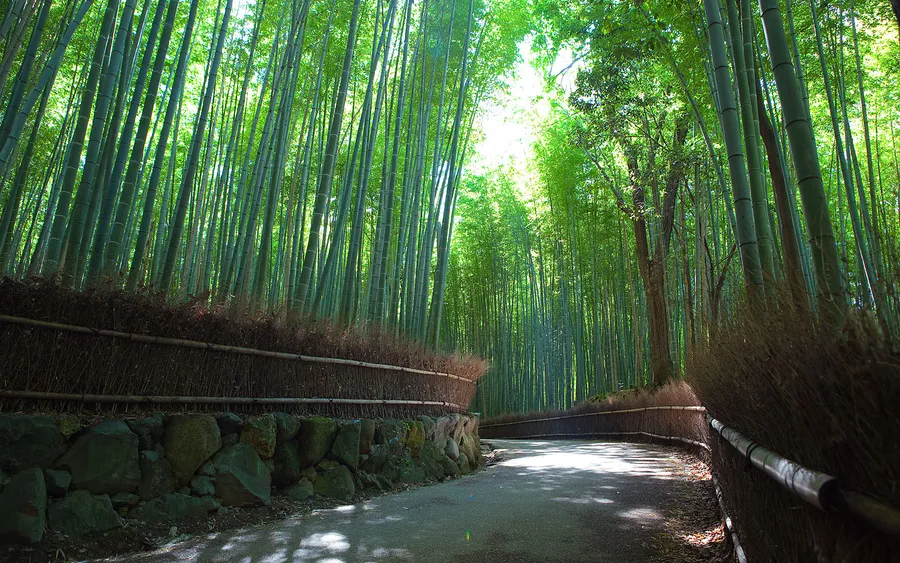
  4. Path through the Sagano Bamboo Forest, Arashiyama4

    Walk Through Kyoto's Bamboo Forest at Arashiyama

    On Kyoto's western edge, a roughly 400-meter path cuts straight through the Sagano Bamboo Forest, where the stalks grow so dense and tall overhead that daylight filters down in a soft green wash — one of the most photographed stretches of path in Japan, and one that looks almost nothing like a photo until you're standing in it. The grove sits within easy walking distance of the Togetsukyo Bridge and Tenryuji Temple's landscaped garden, so it's easy to build a slow half-day around this one corner of the city rather than treating it as a five-minute stop. Bamboo this size can grow more than a meter in a single day under the right conditions, part of why the forest feels less like a park and more like something still actively growing around you. Arrive right at opening if you want more than a few seconds of the path to yourself — by mid-morning it's one of the busiest single spots in the city.

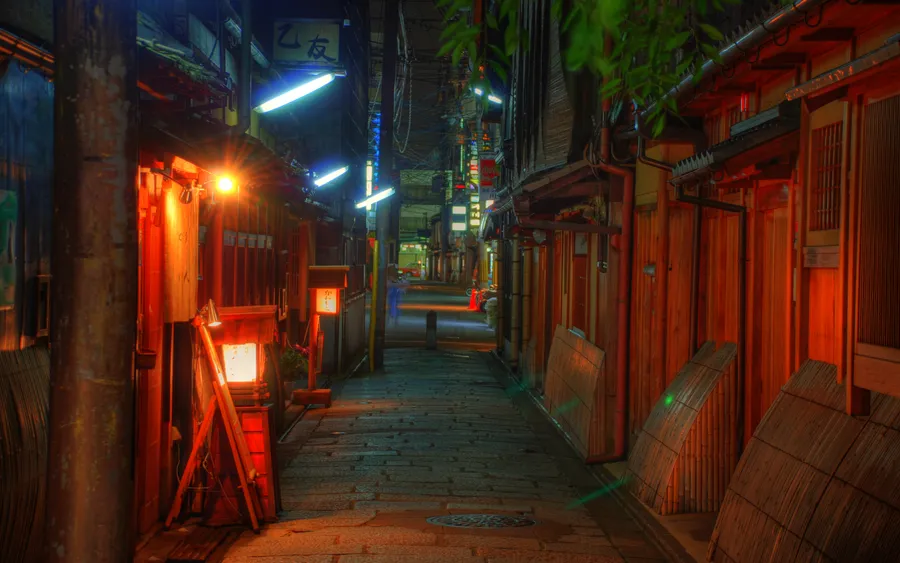
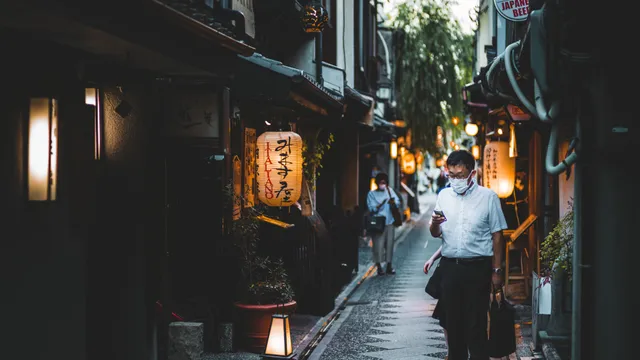
  5. A quiet lantern-lit alley in Gion, Kyoto, at night5

    Wander Gion's Lantern-Lit Streets at Dusk

    Gion is Kyoto's best-known geisha district, and Hanamikoji, the street running through its center, is where that history is easiest to see: rows of wooden machiya townhouses, centuries-old teahouses behind red lattice screens, and lanterns that flicker on just as the sky starts to fade. The Ichiriki Chaya, one of the district's most storied teahouses, has been operating in the same spot for more than 300 years. Early evening is the best window for spotting a geiko or maiko on her way to an appointment, though the accepted etiquette is to watch from a respectful distance rather than block the street for a photo — these are working women heading to a job, not performers posing for tourists. Even without a sighting, the walk itself is worth it: after dark, Gion is one of the few corners of a modern Japanese city that still looks and feels distinctly Edo-period.

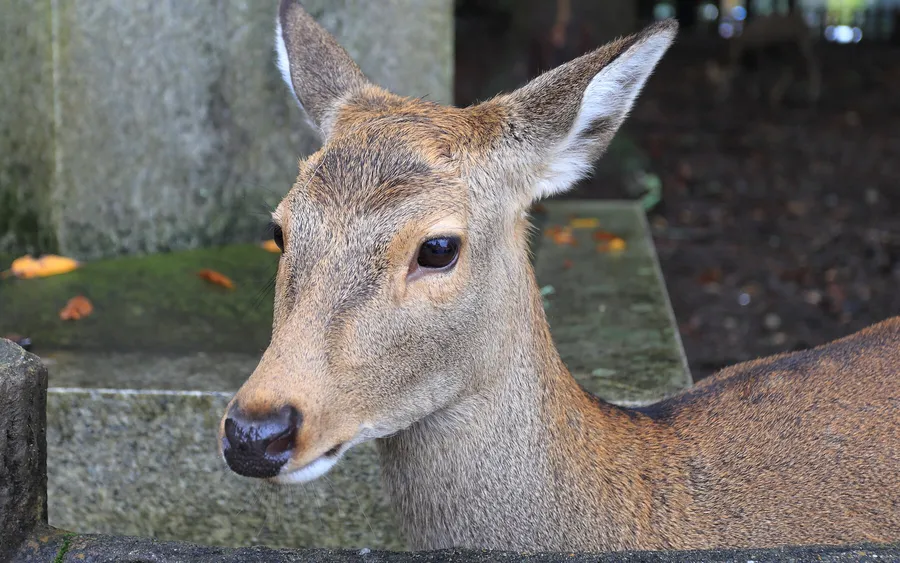
  6. Sika deer, Nara Park6

    Meet the Bowing Deer of Nara Park

    More than a thousand sika deer roam freely through Nara Park, wandering in and out of temple grounds as though they own the place — which, under the Shinto tradition tied to Kasuga Taisha shrine, they more or less do, having been regarded as sacred messengers of the gods for centuries. Vendors around the park sell shika senbei, plain crackers meant specifically for the deer, and ones that have learned the routine will lower their heads in something that looks remarkably like a bow before angling in for their treat. The deer carry official protected status as a Natural Monument, and the park connects directly to Todai-ji's Great Buddha hall and the lantern-lined paths of Kasuga Taisha, so a deer encounter is rarely the only thing on the day's itinerary here. Keep a hand on your snacks and your map alike — a hungry deer has no particular respect for either.

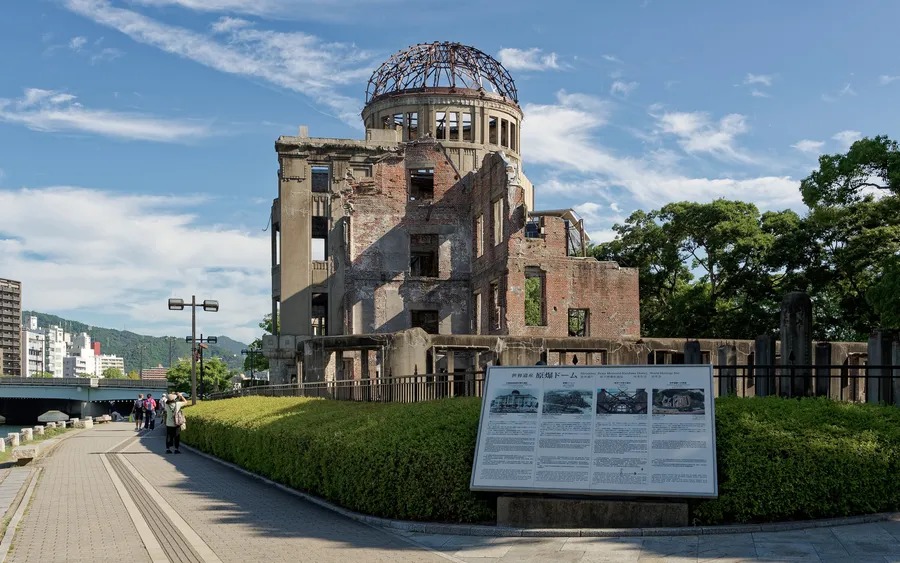
  7. Hiroshima Peace Memorial (Atomic Bomb Dome)7

    Pay Respects at Hiroshima's Peace Memorial Park

    The Atomic Bomb Dome, the skeletal ruin of a former exhibition hall left standing exactly as it was found, has been preserved since 1966 as the city's decision never to rebuild it. A short walk across the Motoyasu River leads into Peace Memorial Park itself, where the Cenotaph and the Children's Peace Monument sit ahead of the Peace Memorial Museum's unflinching exhibits, built largely around personal belongings and survivor testimony. It's not a quick stop — plan for an unhurried morning rather than folding it into a longer sightseeing list — but it's widely considered essential context for understanding modern Hiroshima, a city that has rebuilt itself into one of Japan's most livable places since 1945. Many visitors pair it with a same-day ferry across to Miyajima, turning a heavy morning into a lighter afternoon.

    Viewable from outside only, 24 hours; interior closed to visitors1-10 Otemachi, Naka-ku, Hiroshima 730-0811
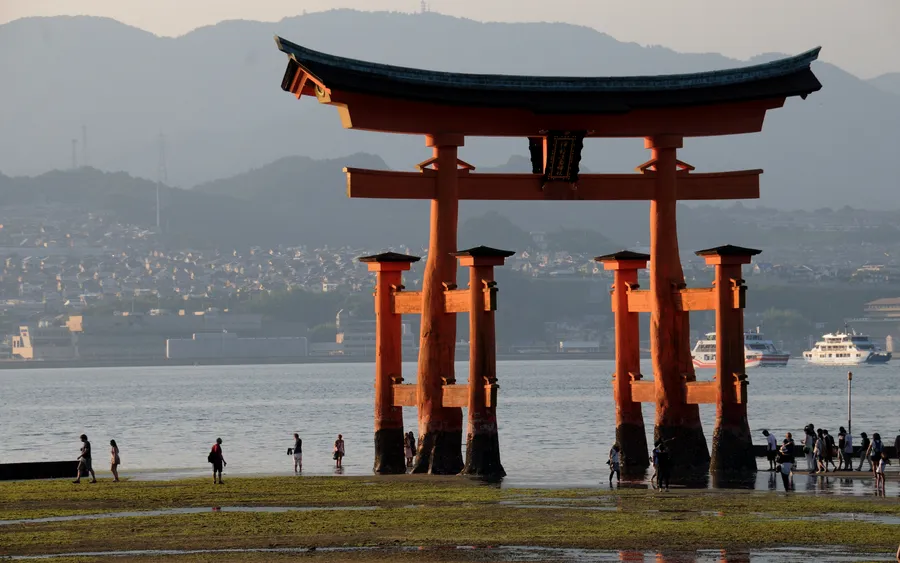
  8. Visitors walking out to the Itsukushima torii gate at low tide, Miyajima8

    See the Floating Torii Gate of Miyajima

    At high tide, Itsukushima Shrine's vermilion torii gate appears to hover directly on the surface of the water, one of Japan's three most celebrated views and reason enough on its own for the short ferry ride from Hiroshima. Twice a day, the tide recedes far enough to walk out across the exposed sand and stand at the gate's base — a completely different experience from the floating view, and one that reveals the trick behind it: the two main pillars aren't sunk into the seabed at all, just held down by several tonnes of stone packed into the crossbeam overhead. Tides shift by roughly 50 minutes each day, so it's worth checking a tide table before building a visit around either view rather than hoping to catch both by chance. The island's own deer — fewer in number than Nara's but just as unbothered by visitors — wander the shrine approach and the shopping street behind it.

    6:30 AM – 6:00 PM (Mar–Oct 14), 6:30 AM – 5:30 PM (Oct 15–Nov), 6:30 AM – 5:00 PM (Dec–Feb)1-1 Miyajima-cho, Hatsukaichi, Hiroshima 739-0588
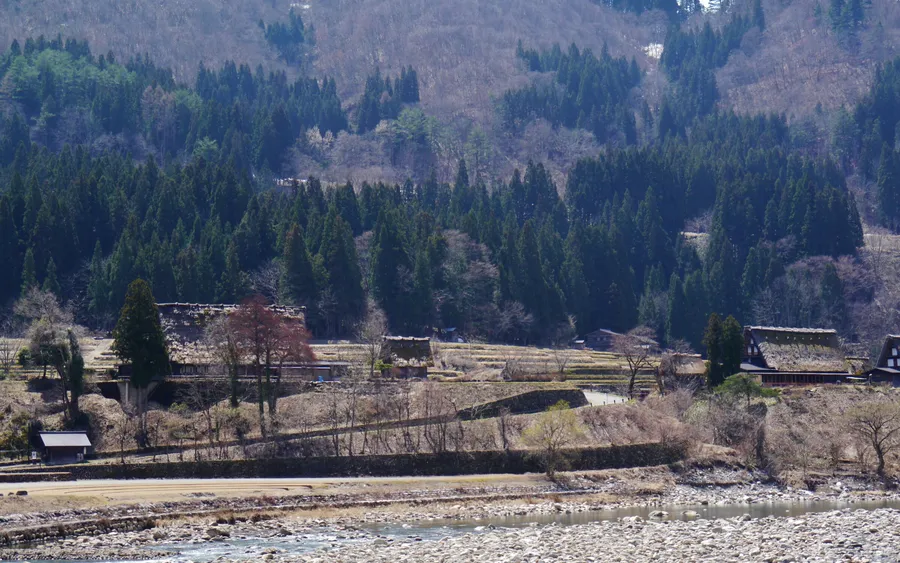
  9. Ogimachi village and rice paddies, Shirakawa-go9

    Step Into the Thatched-Roof Village of Shirakawa-go

    Tucked into the mountains of Gifu Prefecture, Ogimachi is a UNESCO World Heritage village of around 60 gassho-zukuri farmhouses, many of them still lived in rather than preserved behind glass. The name means 'built like hands in prayer,' a reference to the roofs' steep triangular pitch — close to 60 degrees — engineered generations ago to shed the region's heavy mountain snowfall instead of collapsing under it. A shuttle bus or a 20-to-30-minute uphill walk leads to the Shiroyama viewpoint above the village, where the classic panorama of thatched rooftops against the Ryohaku mountains unfolds all at once, especially striking under a fresh coat of snow in winter. It's a genuine detour off the usual Kansai-to-Tokyo route, but the payoff is a working village that still looks the way Japanese farming settlements did centuries ago.

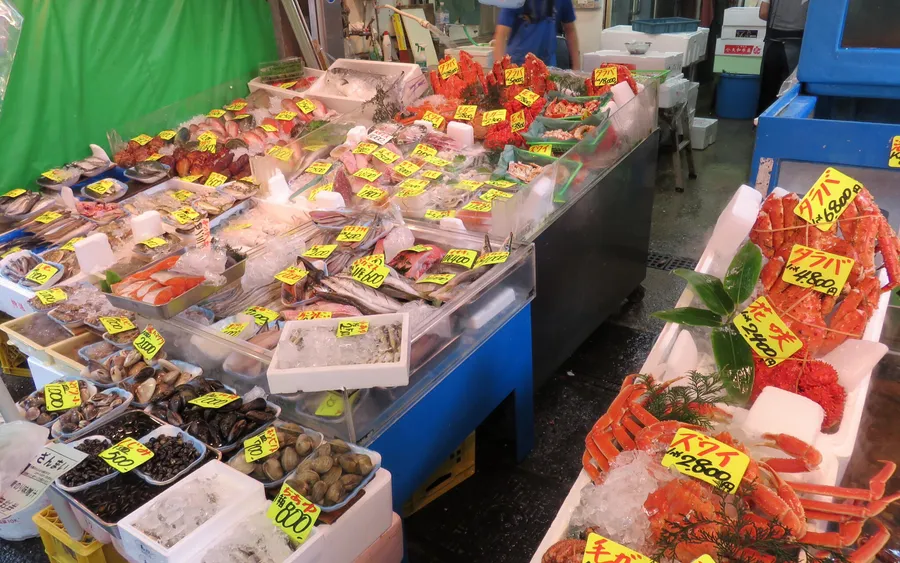
  10. Tsukiji Outer Market, Tokyo10

    Start the Day at Tokyo's Tsukiji Outer Market

    Tsukiji's wholesale tuna auctions moved to the newer Toyosu Market back in 2018, but the outer market's narrow lanes of seafood stalls, knife shops, and standing sushi counters never actually left, and they're still one of the best places in Tokyo for an early, unhurried breakfast. Show up hungry and skip the sit-down meal — freshly grilled skewers, tamagoyaki on a stick, and just-sliced sashimi are all made for eating standing up as you work your way down the street. Mornings here are noticeably calmer than the old auction-era crowds, which makes this a genuinely relaxed way to start a Tokyo day rather than the scrum it's sometimes described as. Come before mid-morning, since some of the best stalls sell out and close once the day's fresh stock runs low.

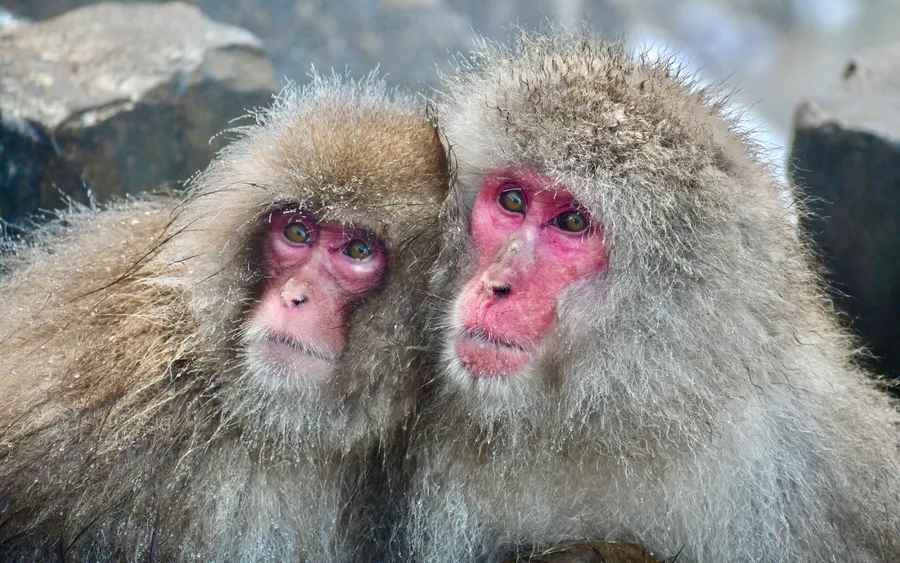
  11. Snow monkeys, Jigokudani Monkey Park11

    Watch Wild Snow Monkeys Soak in Nagano

    In a forested valley about 40 to 50 minutes from Nagano city, wild Japanese macaques bathe in a naturally heated hot spring pool built specifically for them at Jigokudani Monkey Park — one of the only places on Earth where you can watch a primate other than humans voluntarily take a hot bath. Reaching the park requires a final 30-minute walk through forest and along a mountain stream, part of what keeps the encounter feeling like a genuine wildlife sighting rather than a zoo exhibit. The monkeys are present year-round, but winter is when the payoff is highest: steam rising off the water, snow piled around the pool's edge, and macaques grooming each other or dozing with their eyes half-closed just a few meters from the boardwalk. Pair it with a stop at Nagano's 1,400-year-old Zenko-ji temple on the way in or out to make a full day of it.

    8:30 AM – 5:00 PM (Apr–Oct); 9:00 AM – 4:00 PM (Nov–Mar)6845 Hirao, Yamanouchi, Shimotakai District, Nagano 381-0401
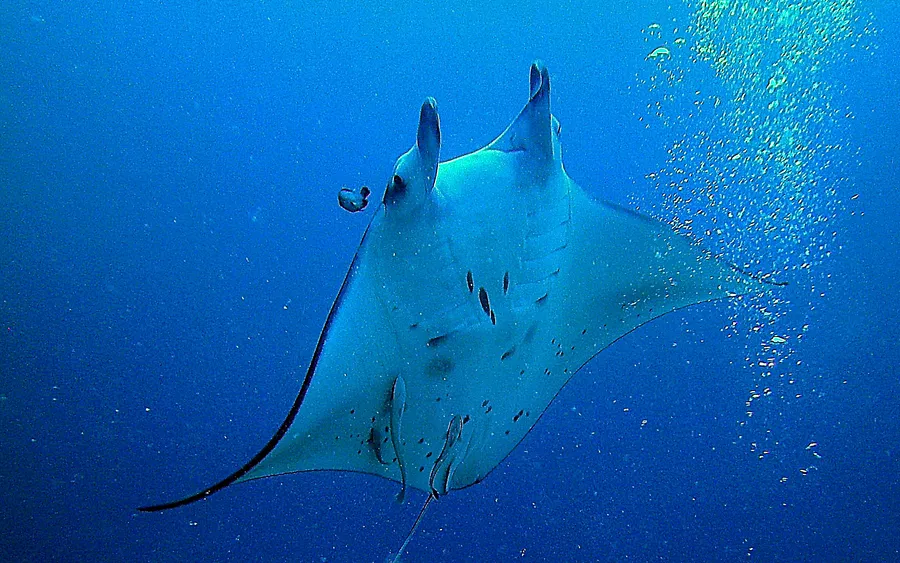
  12. Manta ray diving12

    Snorkel with Manta Rays Off Ishigaki Island

    Off the coast near Kabira Bay, a natural cleaning station called Manta Scramble draws reef manta rays that gather to have parasites picked off by smaller fish — and unusually for a site this reliable, the water is shallow and calm enough for snorkelers to join certified divers rather than watch from the boat. Sightings run roughly June through October and peak around August and September, though the site has been a known gathering point since local dive guides first identified it in the 1980s. Guided tours supply all the gear, so this is genuinely open to first-timers rather than requiring prior diving experience. Ishigaki's subtropical waters make it one of the few places in Japan where a beginner-friendly ocean encounter this dramatic is realistically on the table.

    Manta season: roughly Jun–Oct, peak Aug–Sep
Keep reading

More guides you might like

Nearby

Related destinations

Continue

Related services

Easy Travel in Japan